MG Hector Tomahawk EV real world range tested, explained
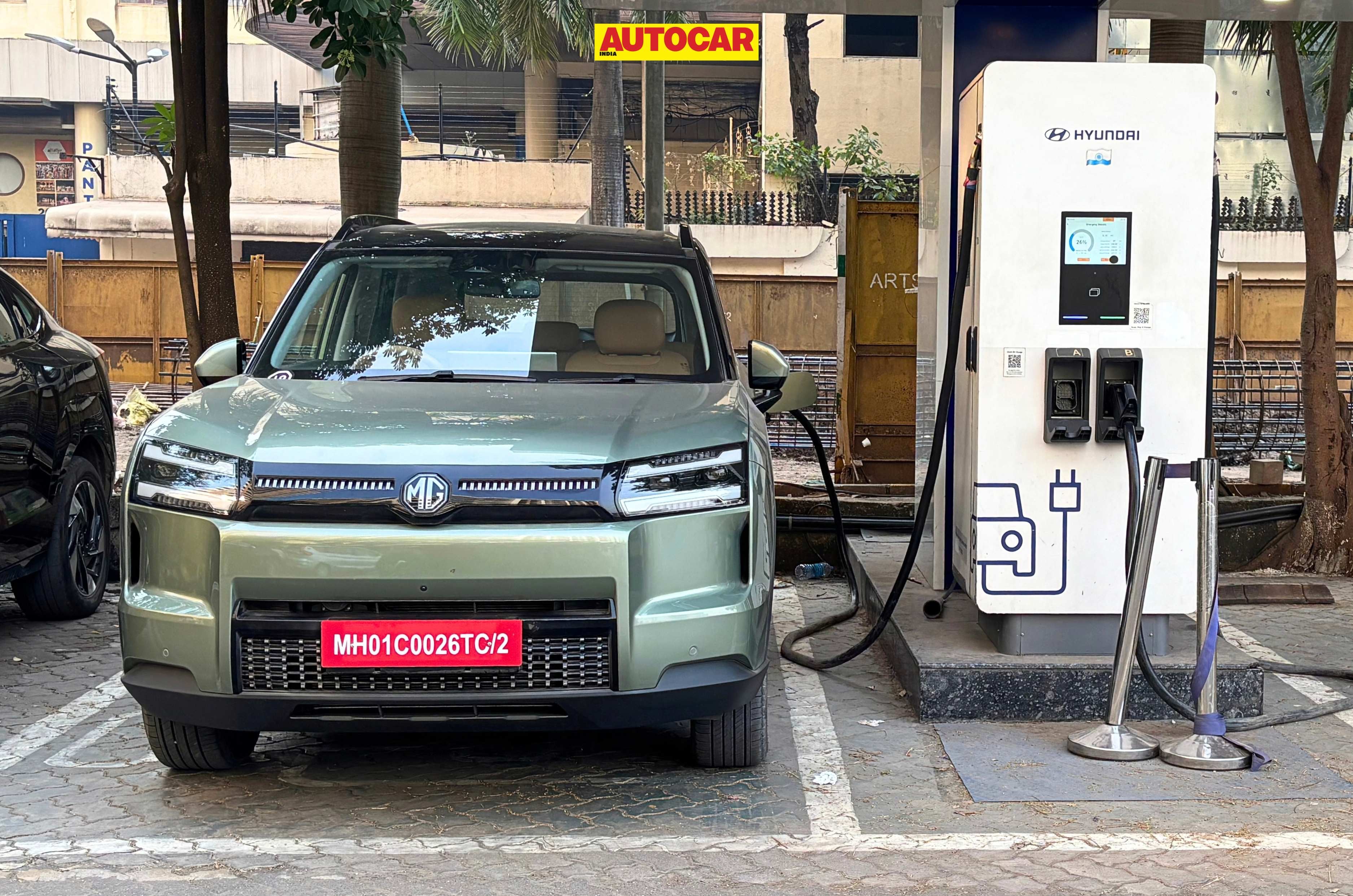
The Hector Tomahawk EV is MG's newest SUV in the market, and despite its name, it's based on an all-new 'ADAPT' architecture and shares nothing with the ICE version of the Hector. Priced between Rs 19.50 lakh and Rs 23.50 lakh (ex-showroom), the Hector Tomahawk EV is available in 5-seater and 7-seater variants.
We put the MG Hector Tomahawk EV through our real-world tests to find out how efficient it really is.
- Claimed range is 517km from its 69.2kWh battery
- Driven in 'Eco' mode, with regen set to 'Strong' (city) and 'Comfort' (highway)
- Weighs 1,908kg
MG Hector Tomahawk EV real-world range tested
The MG Hector Tomahawk EV is powered by a single Permanent Magnet Synchronous Motor (PMSM) mounted on the front axle, and produces 204hp and 310Nm. It is only available with a 69.2kWh battery pack and uses Lithium Iron Phosphate (LFP) cell chemistry. It comes with three driving modes - Eco, Standard and Sport - and four regen modes - Comfort, Standard, Strong and Intelligent. For our tests, the Tomahawk EV was driven in 'Eco' mode with the regen set to 'Strong' and 'Comfort' mode in the city and on the highway, respectively.
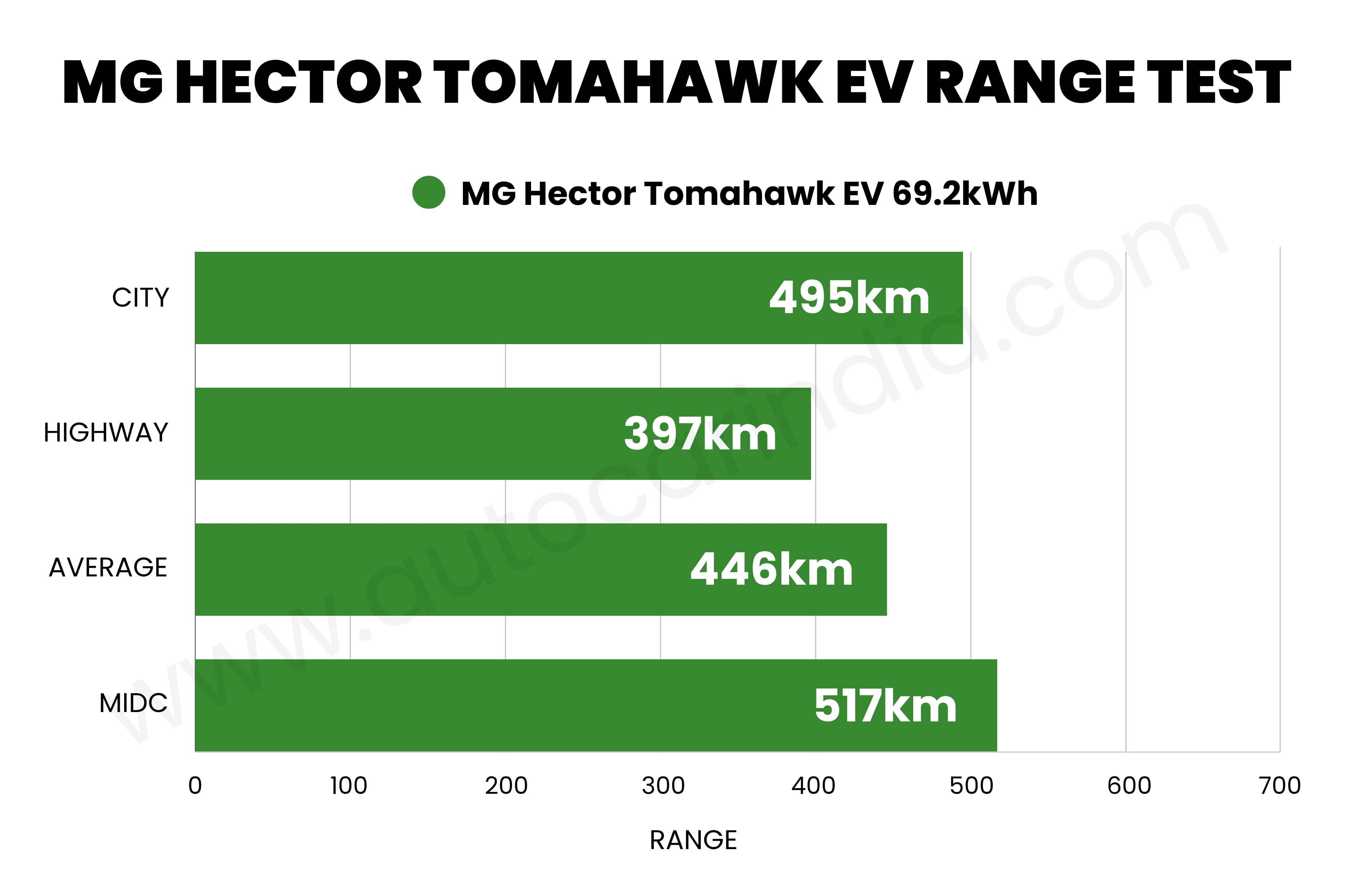
In the city, this MG delivered 7.15km/kWh, whereas on the highway, the efficiency was 5.73km/kWh. This extrapolates to a range of 495km and 397km in the city and on the highway, respectively. With an overall efficiency of 6.44km/kWh, you can expect a real-world range of about 446km on a full charge, which is respectable.
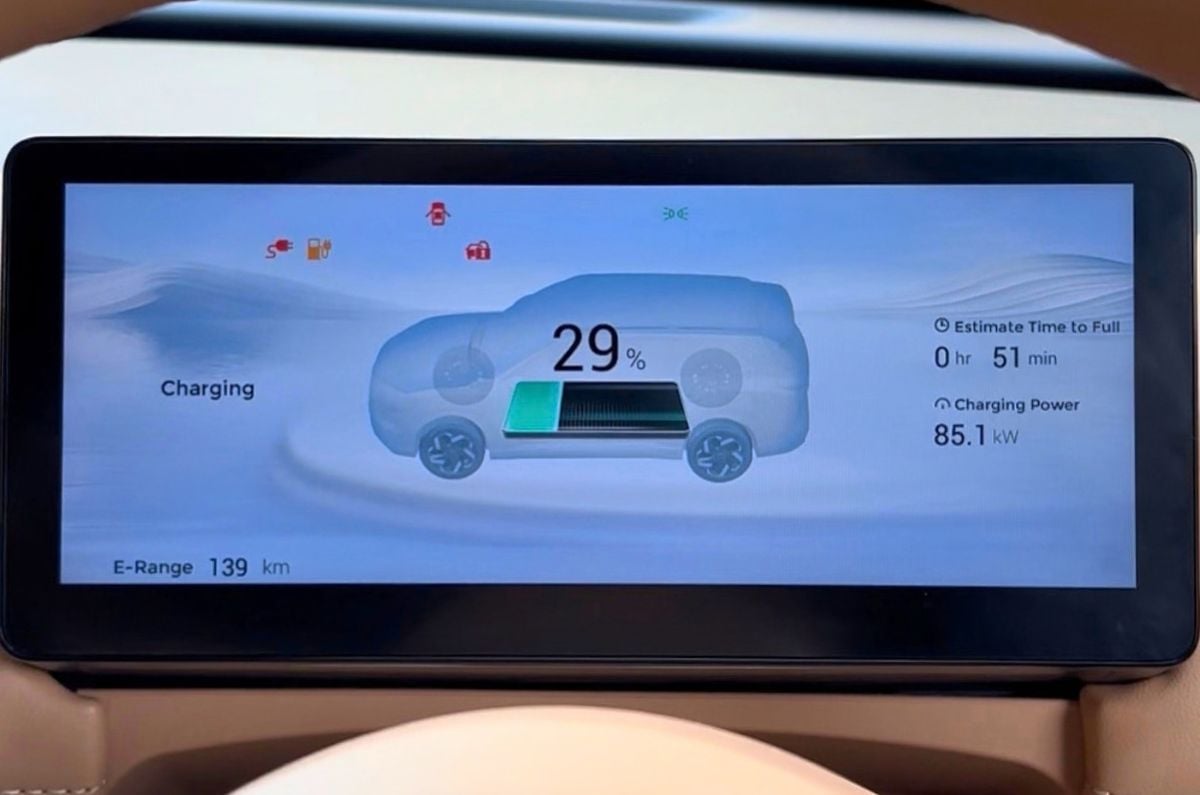
During our tests, we noticed that the regen modes are quite mild, even in its strongest setting. And while the city efficiency is quite good, a stronger regen could’ve made it even more efficient in the city. Also, the regen takes around a second to kick in after you lift off the throttle, which makes it slightly less predictable in the city.
EVs are generally less efficient on highways than in the city, and the bulky, upright design of the Tomahawk doesn’t help with aerodynamics either.
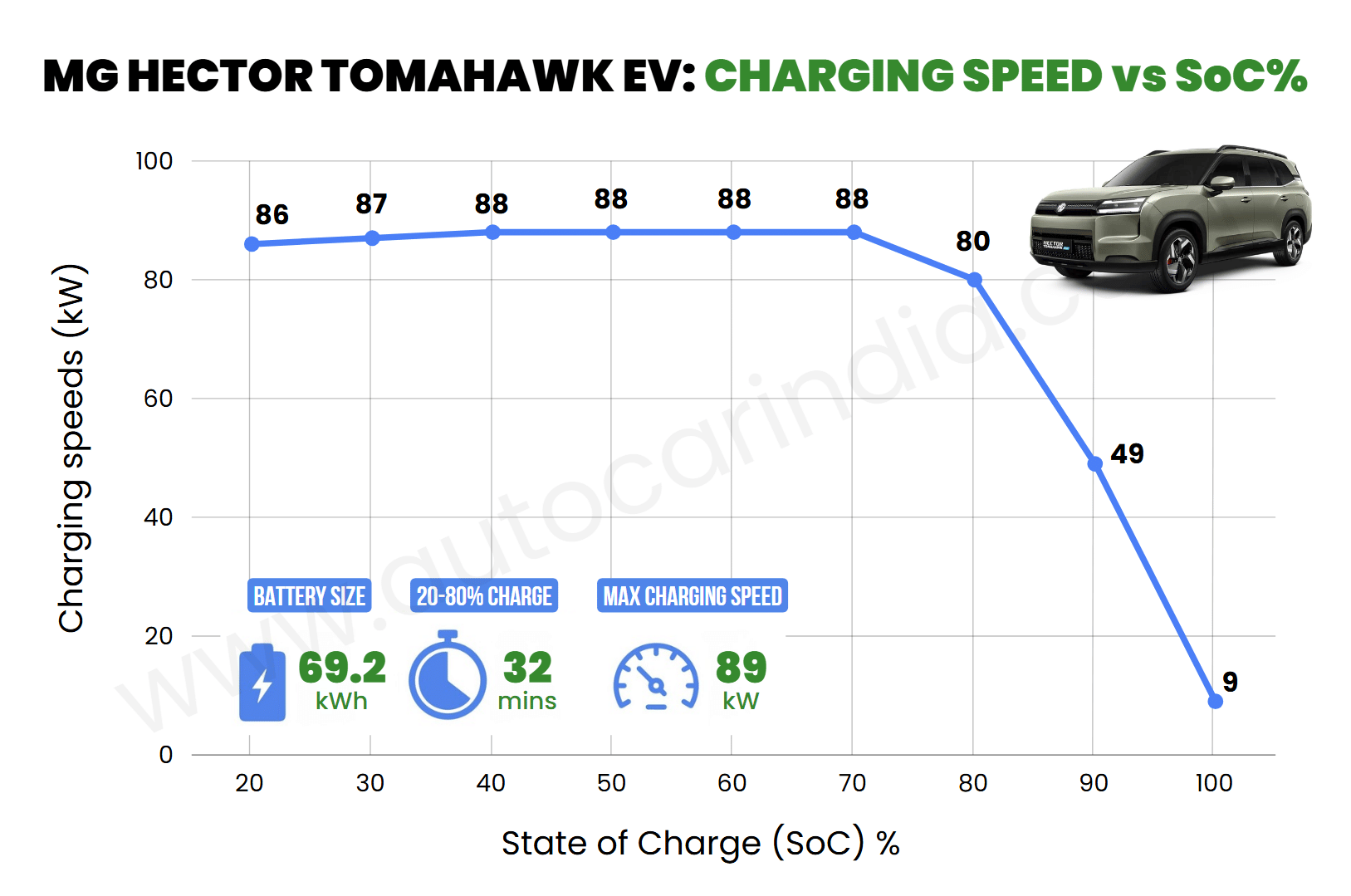
MG claims that the Hector Tomahawk EV can recharge its battery from 30-80 percent in 35 minutes when connected to a 90kW DC fast charger. However, we were able to recharge its battery from 20-80 percent in 32 minutes when connected to a 150kW DC fast charger. This is faster than what MG claims, and we saw peak charging speeds of about 89kW during this session.
Autocar India’s range testing
Before our real-world range tests, the battery of our test car was fully charged, and we maintained tyre pressures in accordance with the manufacturer’s recommendations. The car was driven on a weekday in Mumbai city and on the adjoining state highway in a fixed loop, and we maintained the set average speeds. At the end of each cycle, we calculated the range based on the percentage charge consumed.
Throughout our tests, the climate control was set to 22deg C in a full-auto setting, and other electricals, such as the audio system, indicators and ventilated front seats, were used when required, just as a regular user would. We take pride in our testing data, which isn’t merely consistent but also gives users an accurate indication of what they can expect in the real world.
from Autocar India https://ift.tt/xeFN4vd


Comments
Post a Comment