Skoda Kylaq vs Mahindra XUV 3XO drag race: lights out
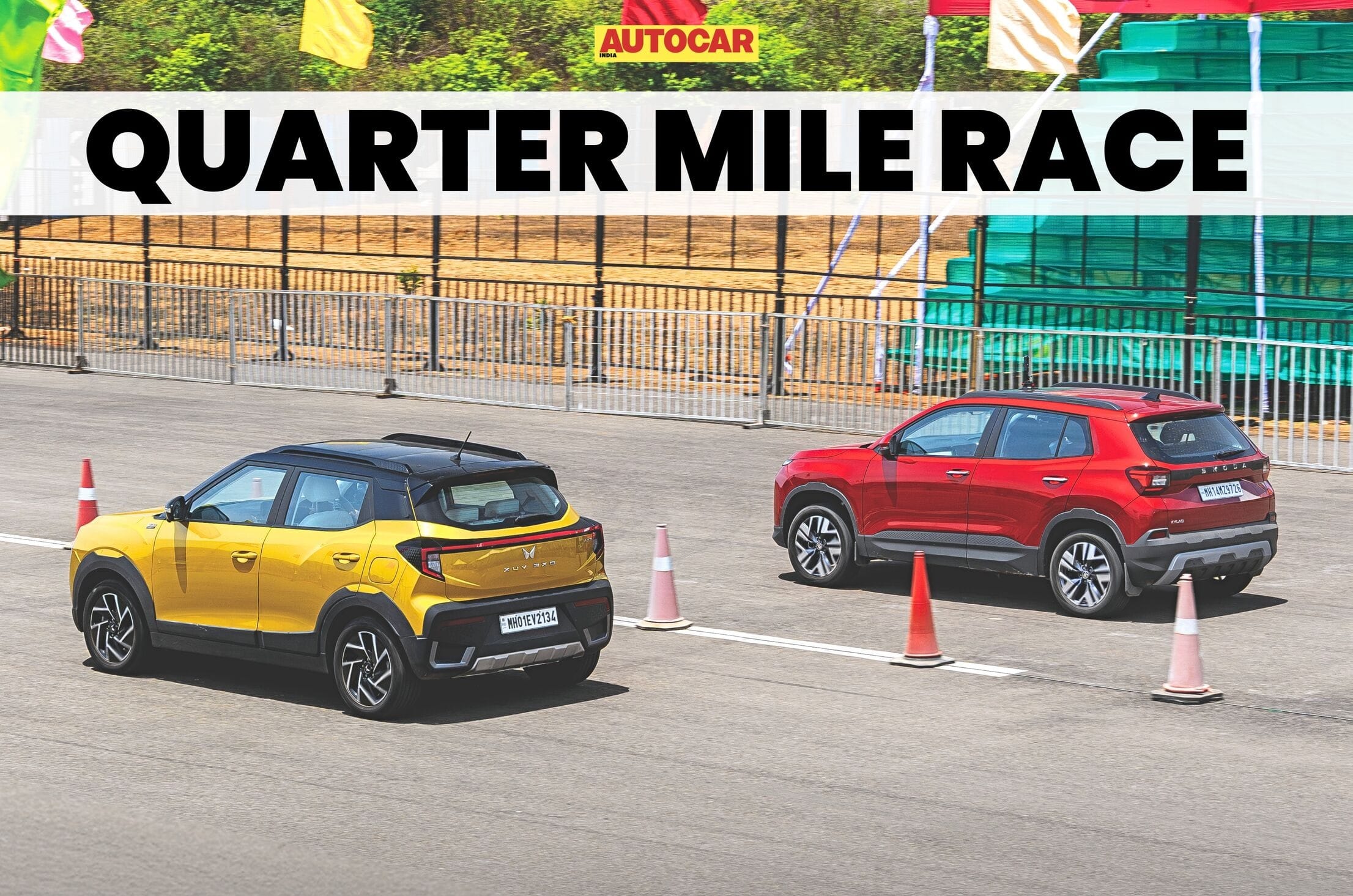
There’s no simpler way to compare one car’s performance to another than with a head-to-head quarter-mile race. In this edition of Autocar India’s quarter-mile racing series, we line up some exciting head-to-head contests, beginning with the compact SUV segment. We’ve brought together what are arguably the two most exciting offerings in this segment – the Skoda Kylaq and the Mahindra XUV 3XO – for a battle down the airstrip.
Skoda Kylaq vs Mahindra XUV 3XO specifications
Both the Skoda Kylaq and the Mahindra XUV 3XO use 3-cylinder direct injection, turbo-petrol engines and 6-speed torque converter auto gearboxes. However, the latter has a slight advantage with bigger displacement, and likewise also produces more power and torque – 16hp and 52Nm more than the former. On the flip side, the XUV 3XO is 156kgs heavier. Will that have a bearing on the final results? Let’s find out.
Skoda Kylaq vs Mahindra XUV 3XO drag race
| Skoda Kylaq vs Mahindra XUV 3XO AT: drag race times | ||
| Skoda Kylaq TGDi AT | Mahindra XUV 3XO TGDi AT | |
| Race 1 | 18.21 seconds | 17.23 seconds |
| Race 2 | 17.95 seconds | 17.78 seconds |
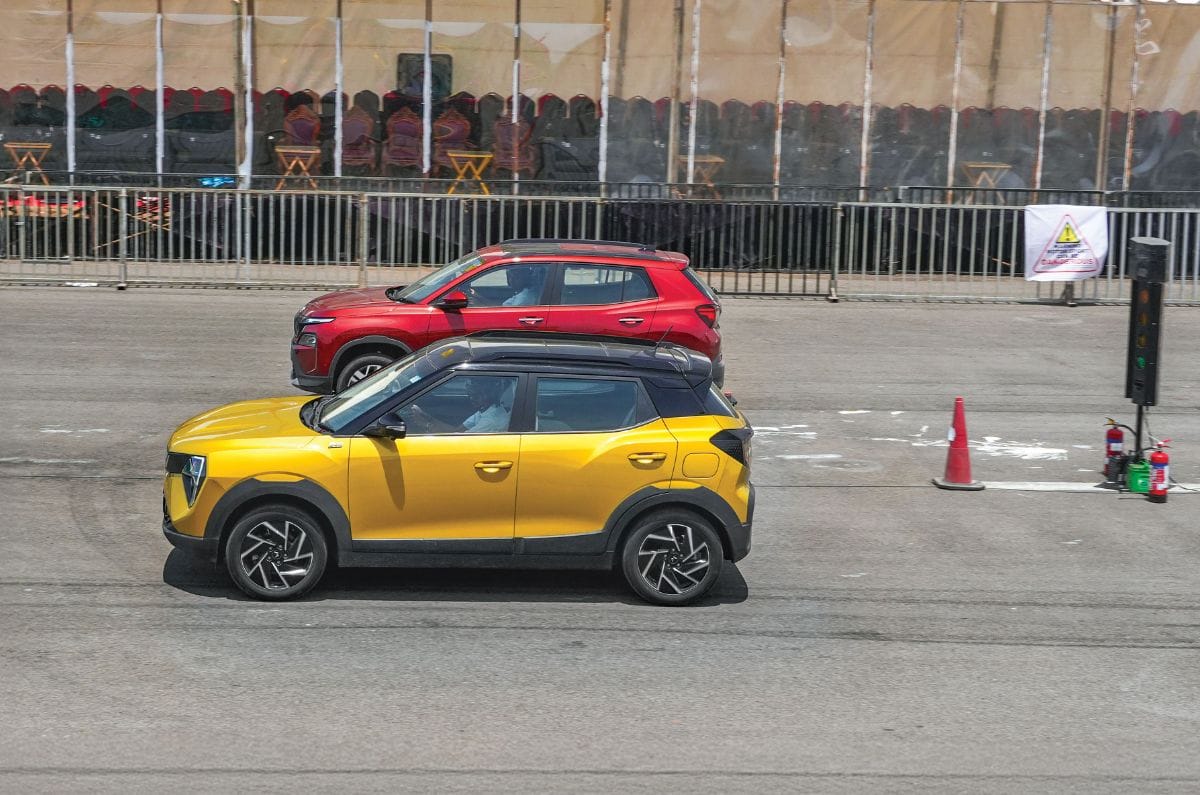
The Mahindra XUV 3XO is the most powerful compact SUV on sale currently, while the Skoda Kylaq is one of the most fun to drive. But on the drag strip, it pans out as you’d expect. With the XUV 3XO in its sportiest ‘Zoom’ drive mode, it launches without much drama and gets the jump on the Kylaq. And then, given its power advantage, it holds on to that lead till the finish line in Race 1, recording a time over half a second quicker than the Skoda.
In Race 2, both compact SUVs launch in sync, but the XUV 3XO yet again manages to pull a lead and stay in the lead till the finish line. Its time, however, was slower than in Race 1 because of a tiny bit of hesitation from the gearbox during launch, while the Kylaq improved on its timing from Race 1.
Autocar India’s testing standards
Before we conduct our performance tests, we check and maintain tyre pressures based on the manufacturer’s recommendation and ensure the car has a full tank of fuel. The car is then tested in a controlled environment, and the data is collected via highly accurate GPS-based timing equipment.
With inputs from Saptarshi Mondal
from Autocar India https://ift.tt/oBrxQlE


Comments
Post a Comment