Mercedes-Benz CLA real world range tested, explained
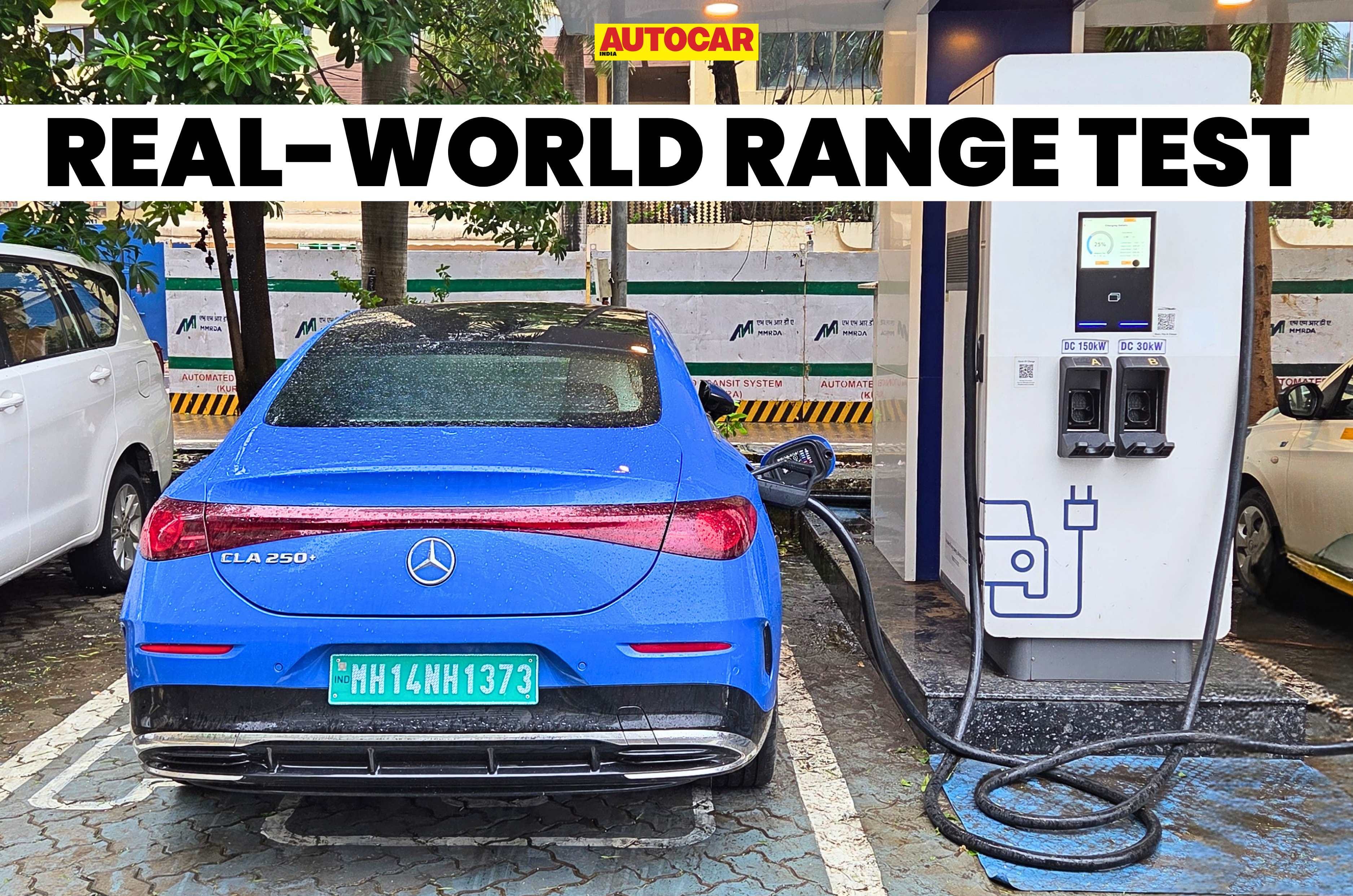
Launched in April 2026, the Mercedes-Benz CLA is currently the entry point to the manufacturer’s EV lineup in India. It is offered in two variants – 200 and 250+. The CLA 200 gets a 58kWh battery with a claimed WLTP range of 542km, whereas the higher-spec CLA 250+ gets a 85kWh battery and has a WLTP claimed range of 792km. We put the CLA 250+ variant to the test to calculate its real-world efficiency.
- Low drag coefficient of 0.21Cd and weighs 2,055kg
- We used ‘ECO’ driving mode throughout the test
- 20-80 percent on a 150kW DC fast charger takes 35 minutes
Mercedes CLA 250+ real-world range
The CLA 250+ makes 272hp of power and 335Nm of torque, with a RWD setup. Before starting our range test, we charged the 85kWh battery to 100 percent and switched it to the most efficient 'Eco' mode.
In the city, with the regen set to strongest mode, it delivered an efficiency of 6.87km/kWh that translates to a range of 584km. On the highway, with the regen set to ‘Normal’, it delivered an efficiency of 7.52km/kWh for a 640km range. With an average efficiency of 7.2km/kWh, you can expect a real-world range of 612km on a single charge, which is really good.
In the city, the strongest regen setting enabled it to recoup energy effectively, which helped boost the efficiency. Whereas, the two-speed gearbox with a taller 5:1 ratio second gear that enables greater efficiency at higher speeds, coupled with the low drag coefficient of 0.21Cd and the normal regen mode that allows for coasting, helped it to be even more efficient on the highway which isn’t usually the case with EVs.
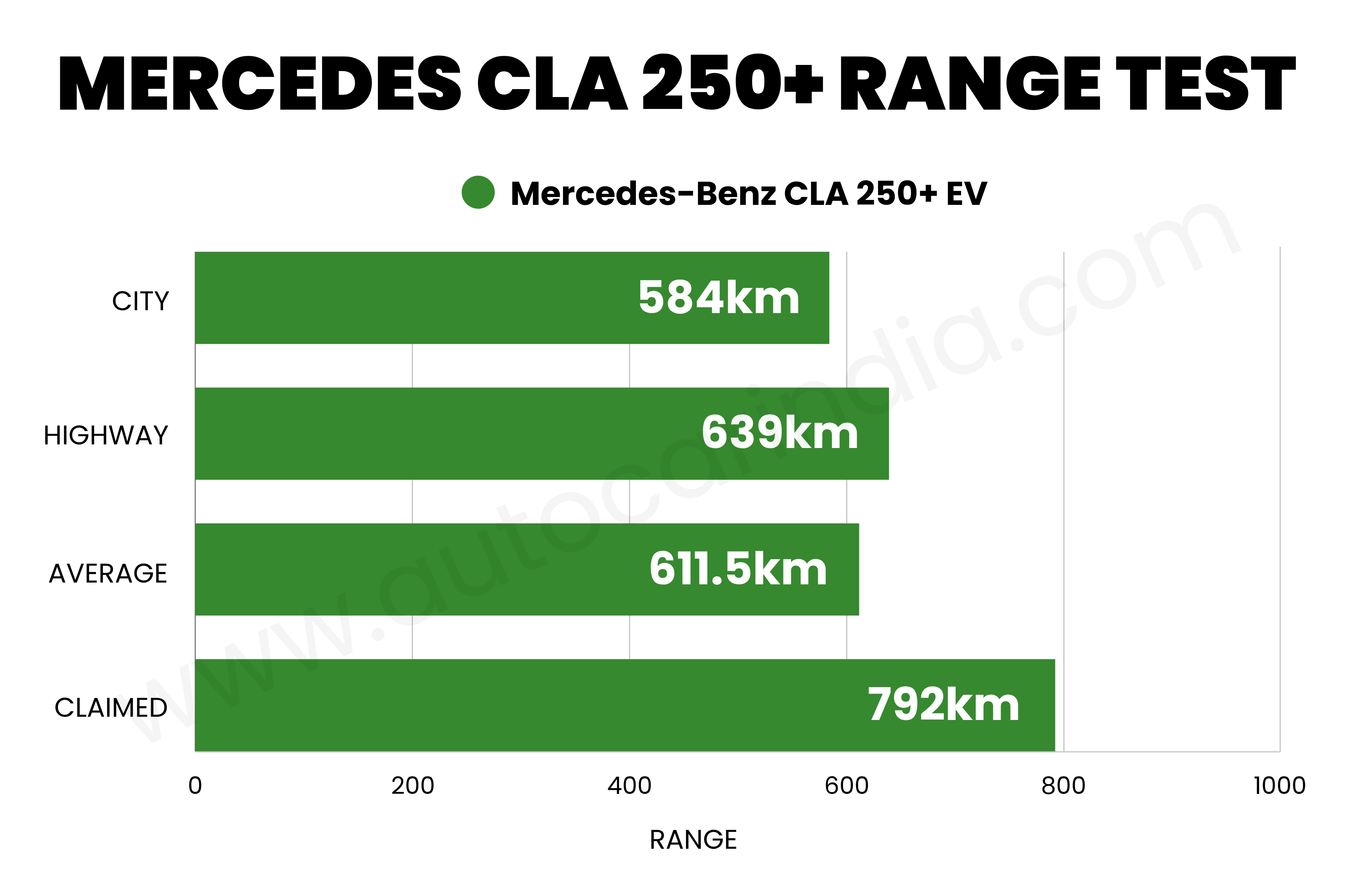
The Mercedes CLA 250+ can be charged at speeds of up to 320kW but those chargers are few and far between in our country. In our charging test using a 150kW DC fast charger, we saw an average charging speed of around 92kW with a peak charging speed of 125kW. To charge from 20-80 percent, it took 35 minutes and consumed 53.89kWh in total.
Autocar India’s range testing
Before our real-world range tests, the battery of our test car was fully charged, and we maintained tyre pressures in accordance with the manufacturer’s recommendations. The car was driven on a weekday in Mumbai city and on the adjoining state highway in a fixed loop, and we maintained the set average speeds. At the end of each cycle, we calculated the range based on the percentage charge consumed.
Throughout our tests, the climate control was set to 22deg C in a full-auto setting, and other electricals, such as the audio system, indicators and heated and massaging front seats, were used when required, just as a regular user would. We take pride in our testing data, which isn’t merely consistent but also gives users an accurate indication of what they can expect in the real world.
from Autocar India https://ift.tt/Qp6cGTH


Comments
Post a Comment