Upgrading tyres for performance: Sticky Business
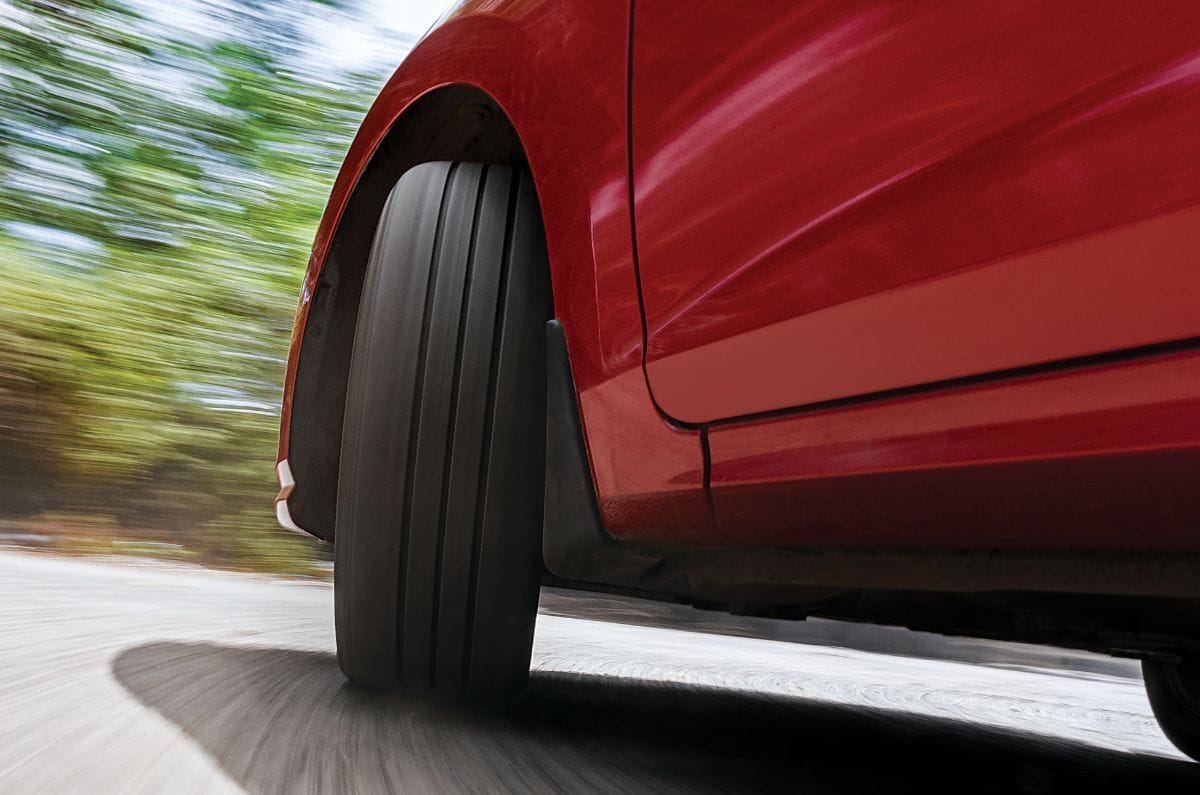
Tyres may not be the most glamorous topic of discussion in the automotive world, despite arguably being the most important. Most enthusiasts, when talking about the most track-focused supercar, will focus on horsepower and torque figures or incredible downforce, but seldom, if ever, will you find a mention of those black circles doing all the dirty work. The truth, however, is that whether your car has 50hp or 500, it means absolutely nought if it can’t be transmitted to the road. Which is why, if you are serious about extracting the most performance from your car, tyres are the first things you should consider upgrading.
Why upgrade from OEM tyres
The tyres that manufacturers choose to equip their cars with have to serve several very specific criteria. For one, they have to be as efficient as can be to achieve those ARAI mileage figures that customers swear by. They also need to be quiet and absorbent so you aren’t put off by tyre roar and a harsh ride when you take a test drive. These parameters mean that manufacturers often choose tyres with the least rolling resistance possible – great for hypermiling, but not so for sporty driving.
Cost is another deciding factor. India is a competitive market, and every rupee saved is a rupee earned for the manufacturer. Unfortunately, this usually means the tyres on your brand-new car have probably come from the lowest bidder. While this practice doesn’t make these tyres inherently unsafe, they can mean your car won’t live up to its full performance potential.
Tyre Jargon
First, let’s understand the broad categories of tyres available. As the names suggest, summer, winter and all-season tyres have specific operating windows where they perform at their best. Summer tyres typically work best in temperatures between 7°C and 35°C and offer the most dry grip; however, when temperatures drop below this window, the compound hardens and is unable to cope. Winter tyres, on the other hand, have a softer compound and perform best in sub-zero temperatures. All-season tyres are the most common in India and offer a middle ground between the two extremes.
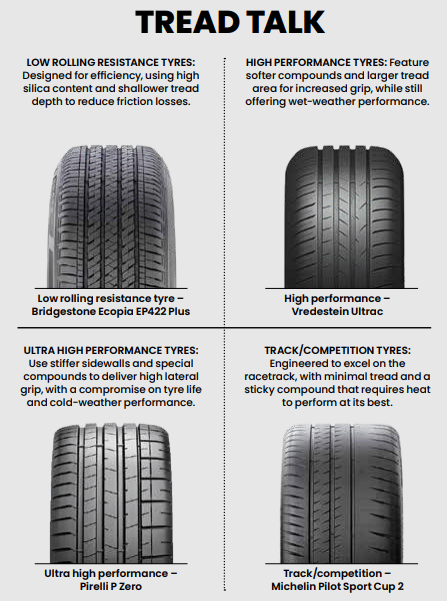
Performance tyres can be further broken down into High Performance (HP), Ultra High Performance (UHP), Max Performance, Extreme Performance and Track/Competition tyres – going from performance-oriented yet budget-friendly to track-only semi-slicks. HP and UHP summer tyres are most commonly available in India and offer excellent dry grip while still providing superb traction in the wet.
Understanding Tyre Ratings
With so many options on the market, choosing the right tyre is a daunting task. Every tyre manufacturer will, obviously, tell you that their tyres are the best, but thankfully, legislation has given us a rating system to help understand their performance and make an informed decision just by studying the sidewall. The first things to consider are the speed rating and load index. Speed ratings are alphabetical, and while different charts exist, typically they start at L – meaning the tyre is rated up to 120kph – and go upto (Y), rated for speeds upto 300kph. Load ratings indicate how much weight an individual tyre is designed to handle – usually starting at the number 60 (a max load of 250kg) and stretching up to 120 (indicating a max load of 1,400kg).
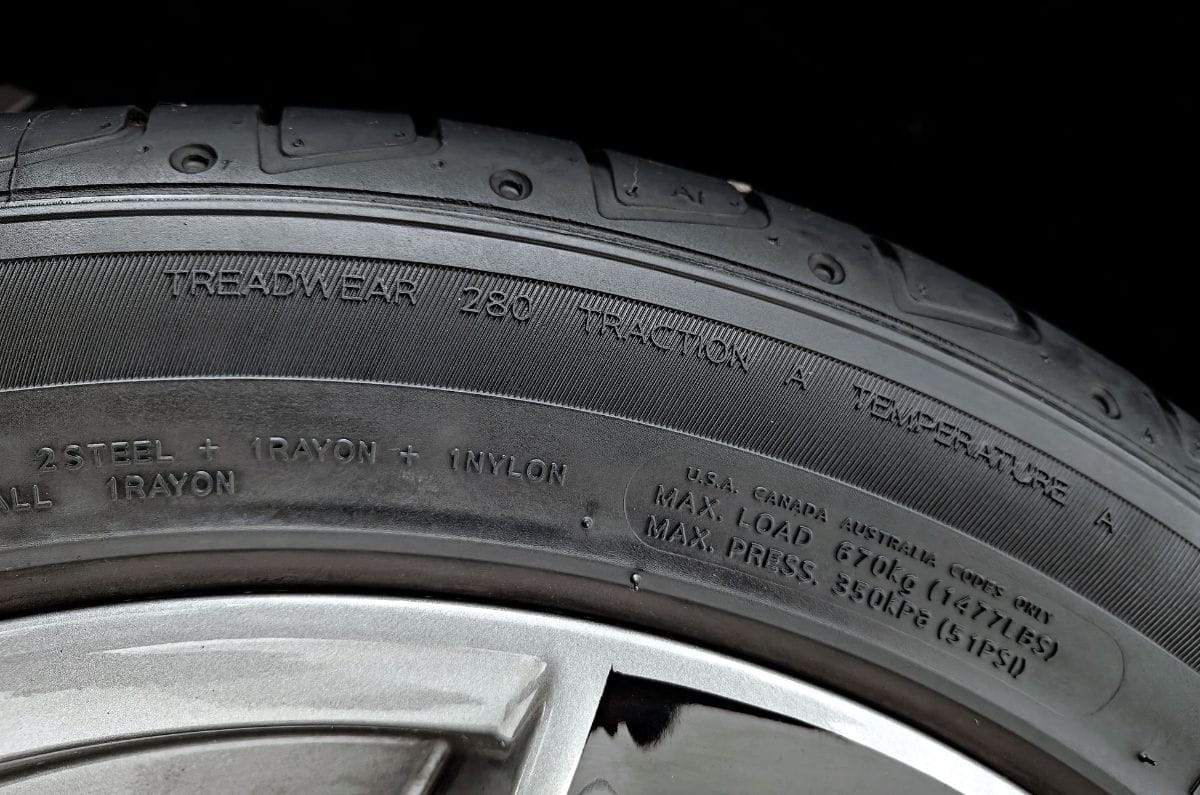
In addition to these, the Uniform Tyre Quality Grading (UTQG) system paints a clearer picture of a tyre’s intended use. It starts with treadwear – usually a three-digit number that indicates a tyre’s wear rate compared to a reference tyre. A higher treadwear number means the tyre is likely to last longer. This isn’t indicative of a tyre’s sporting credentials; rather, a tyre that lasts longer is likely made of a harder compound and therefore compromises outright grip. Next is the traction grade – ranging from AA, A, B to C. These indicate the tyre’s ability to stop on wet pavement, with AA being the best and C the worst. And finally, there is the temperature rating that signifies the tyre’s ability to resist and dissipate heat under controlled testing, rated best to worst from A to C.
Upsizing Wheels
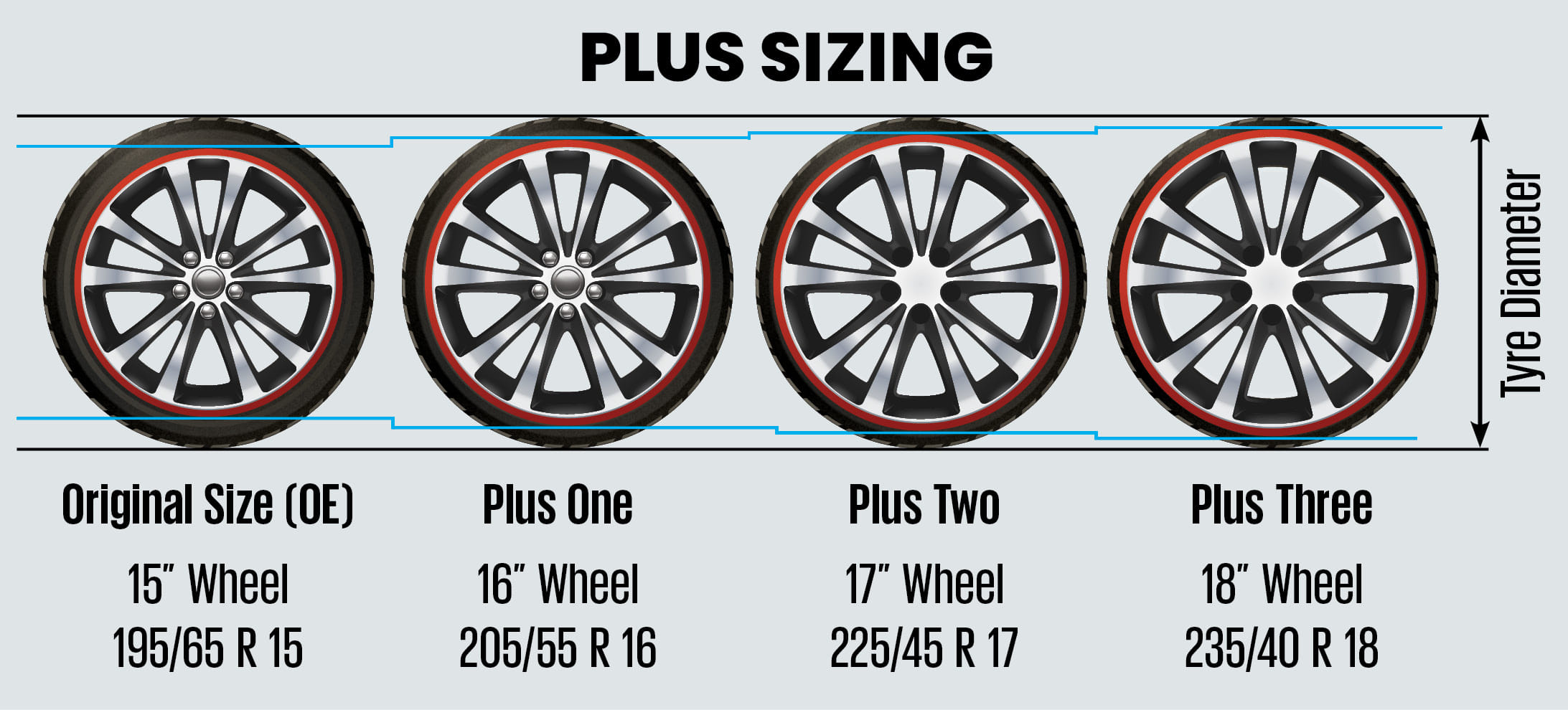
A limiting factor in finding performance rubber can be the size of your car’s wheels. HP and UHP tyres are usually low-profile in nature, which means you may need to upsize your wheel rims. The key thing to remember is that while the rim size goes up, the overall diameter of the tyre must remain as close to stock as possible; less than 3 percent increase is recommended. Larger wheels can also be heavier, increasing unsprung mass and negatively affecting ride and handling. However, going up an inch or two while sticking close to the stock setup in terms of overall dimensions and weight can open up a host of options for performance tyres. Lower-profile tyres also have less flex in the sidewall, which aids handling and improves steering feel, but they do compromise ride quality.
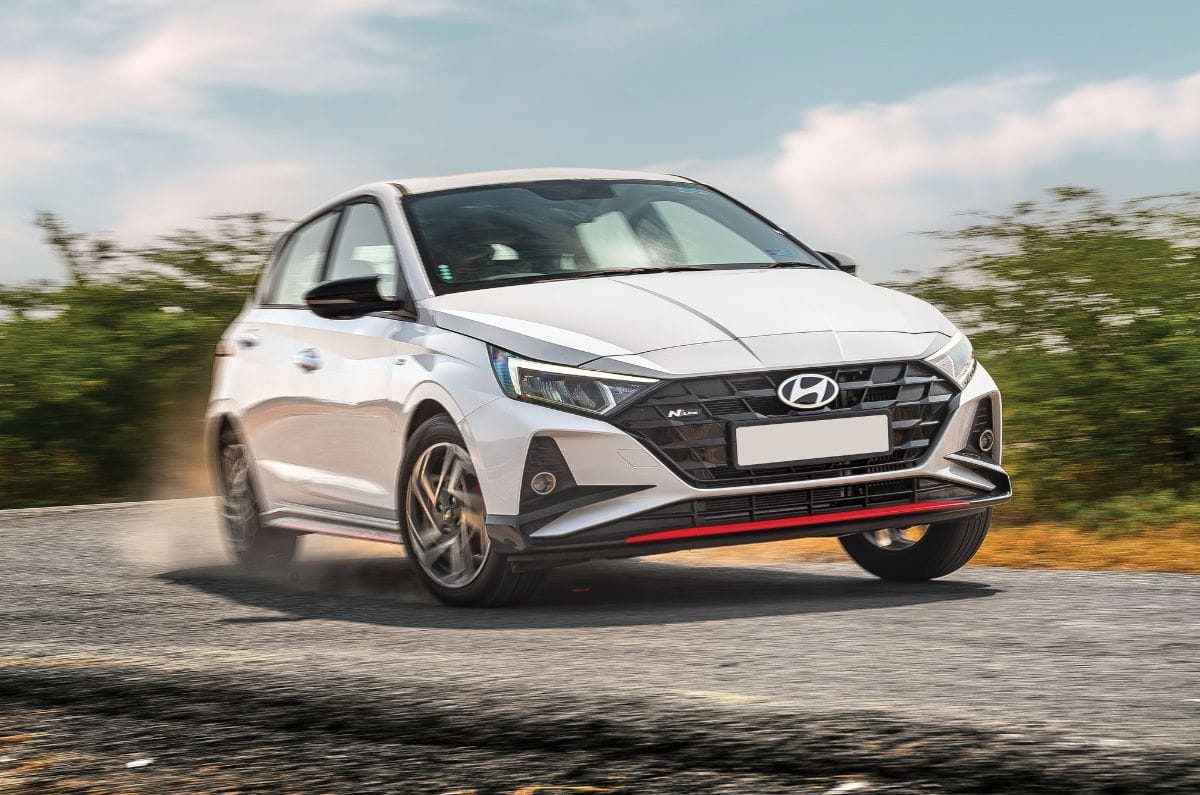
The aftermarket has plenty of wheel options for most cars on sale in India; however, there are a few potential pitfalls. One of the most common is when aftermarket wheels go out of production, making replacement a challenge. In such a case, a single cracked rim can require the replacement of an entire set due to the unavailability of a single unit. To avoid this, always buy from wheel manufacturers who have a long-standing presence in the market. Another way of avoiding this issue could be to go the OEM+ route – using larger wheels from a different car, ideally from the same manufacturer. For instance, the largest factory wheel on a Maruti Swift is 15 inches, but the 16-inchers from a Baleno are a straight swap. This method is also more cost-effective and sustainable as the used market will offer a plentiful supply.
Sidebar
It goes without saying that grippier tyres will impact fuel efficiency, but it’s a small compromise in the pursuit of performance. When you change tyres, remember to have them balanced. Tyre balancing can be done at every service, given the fact that wear and damage from our roads will cause small changes in the mass of the wheel. You should also have the wheels aligned if you notice abnormalities like a pulling to one side when driving, or uneven tyre wear, or vibrations on the wheel.
from Autocar India https://ift.tt/iVmHWwe


Comments
Post a Comment