Vinfast VF7 road test review
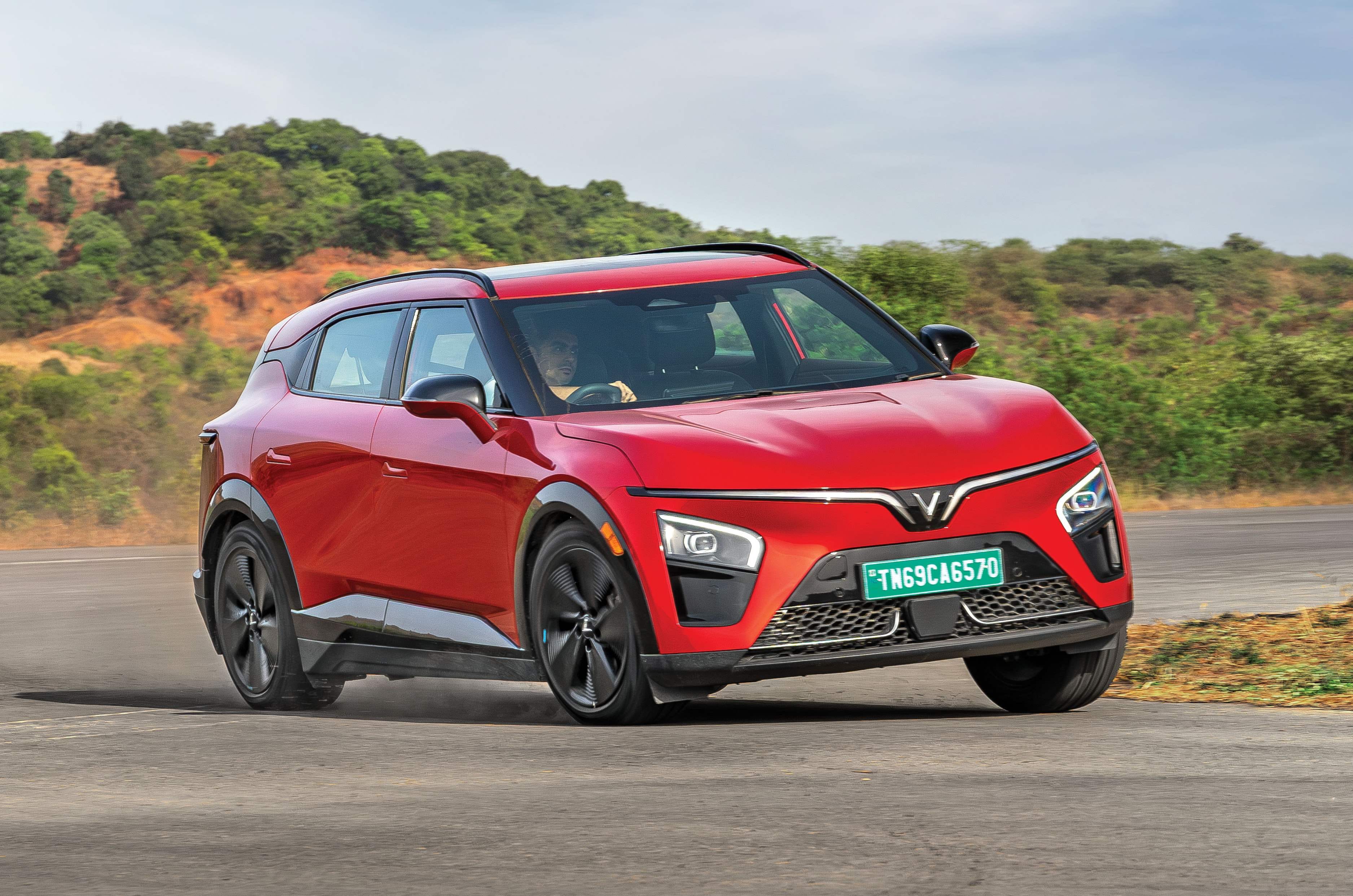
Vietnamese carmaker Vinfast was quick to establish its presence in India with its two offerings – the VF6 and VF7 – and, over the past few months, has secured a spot among the top five bestselling EV manufacturers in the country. Both crossovers contribute almost equally to volumes, and in a recent interaction, Vinfast India CEO Tapan Kumar Ghosh credited strong design appeal, competitive pricing and ownership schemes aimed at lowering total cost of ownership for driving demand.
In this test, we examine the company’s flagship crossover in India, the VF7, which takes on rivals such as the Mahindra XEV 9e and Tata Harrier EV. It’s offered with two battery options – 59.8kWh and 70.8kWh. The smaller pack is paired with a single motor driving the front wheels, while the larger battery also gets a dual-motor, all-wheel-drive setup in higher variants. We put the top-spec dual-motor AWD version to the test to see how it performs in the real world.
Design and Engineering – 7/10
Looks distinctive, but lacks the size and butch appeal of rivals.
Vinfast VF7 dimensions and specs | |
| Length | 4,550mm |
| Width | 1,893mm |
| Height | 1,596mm |
| Front track | 1,604mm |
| Rear track | 1,604mm |
| Ground clearance | 190mm |
| Construction | Monocoque, five-door crossover |
| Weight | 2,218kg |
| Tyres | 245/50 R19 |
| Boot capacity (f/r) | 537 litres |
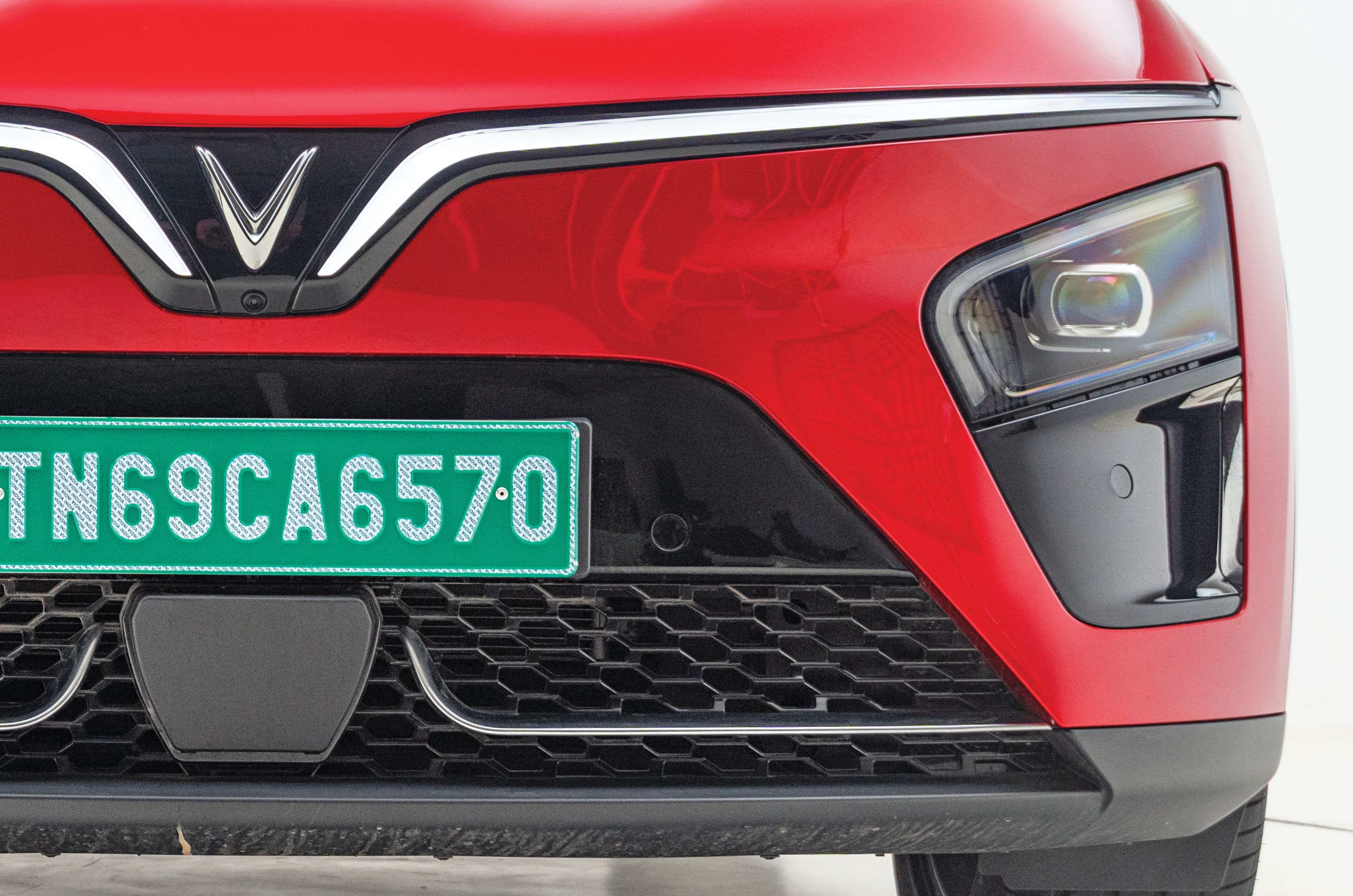
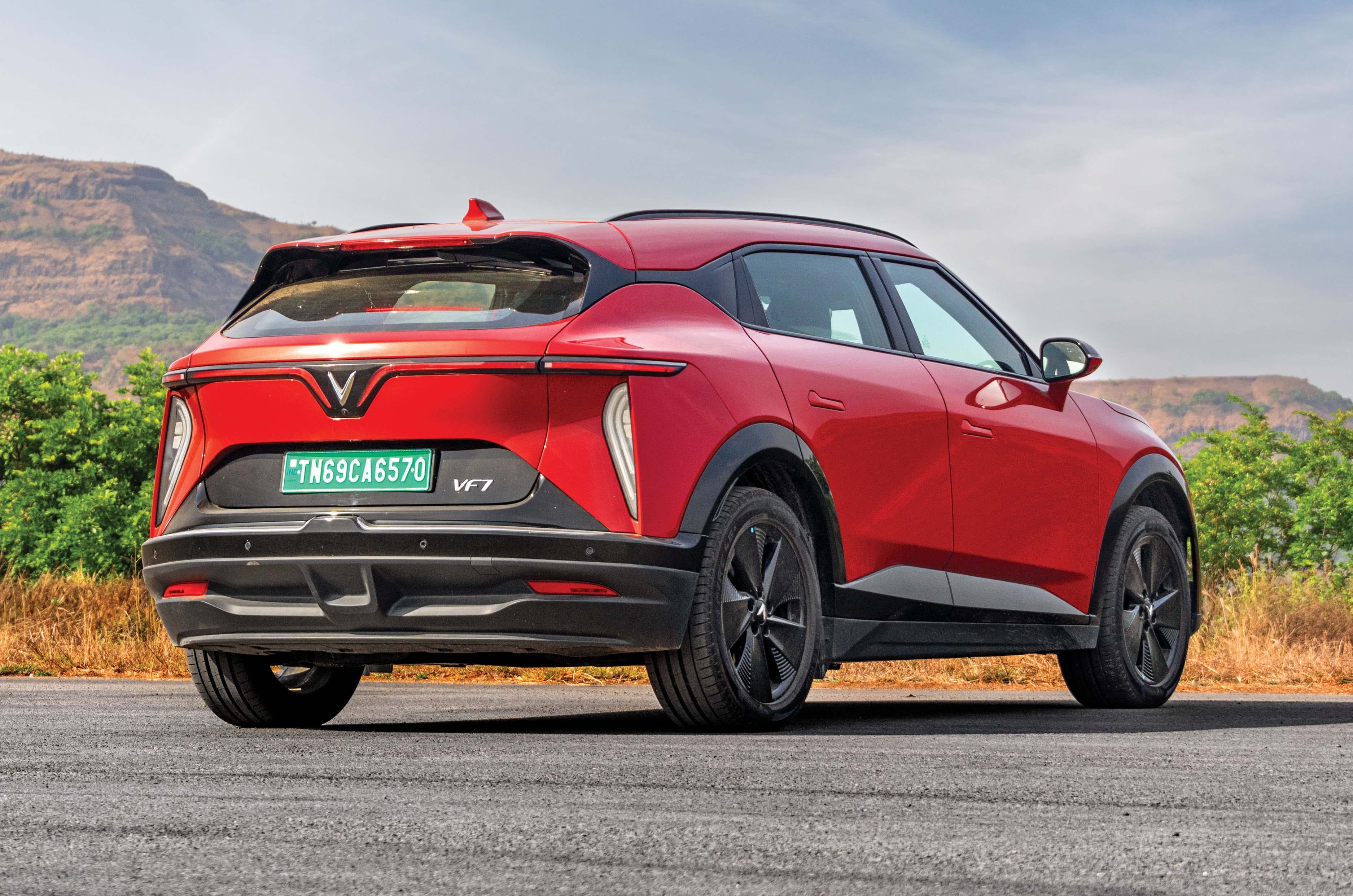
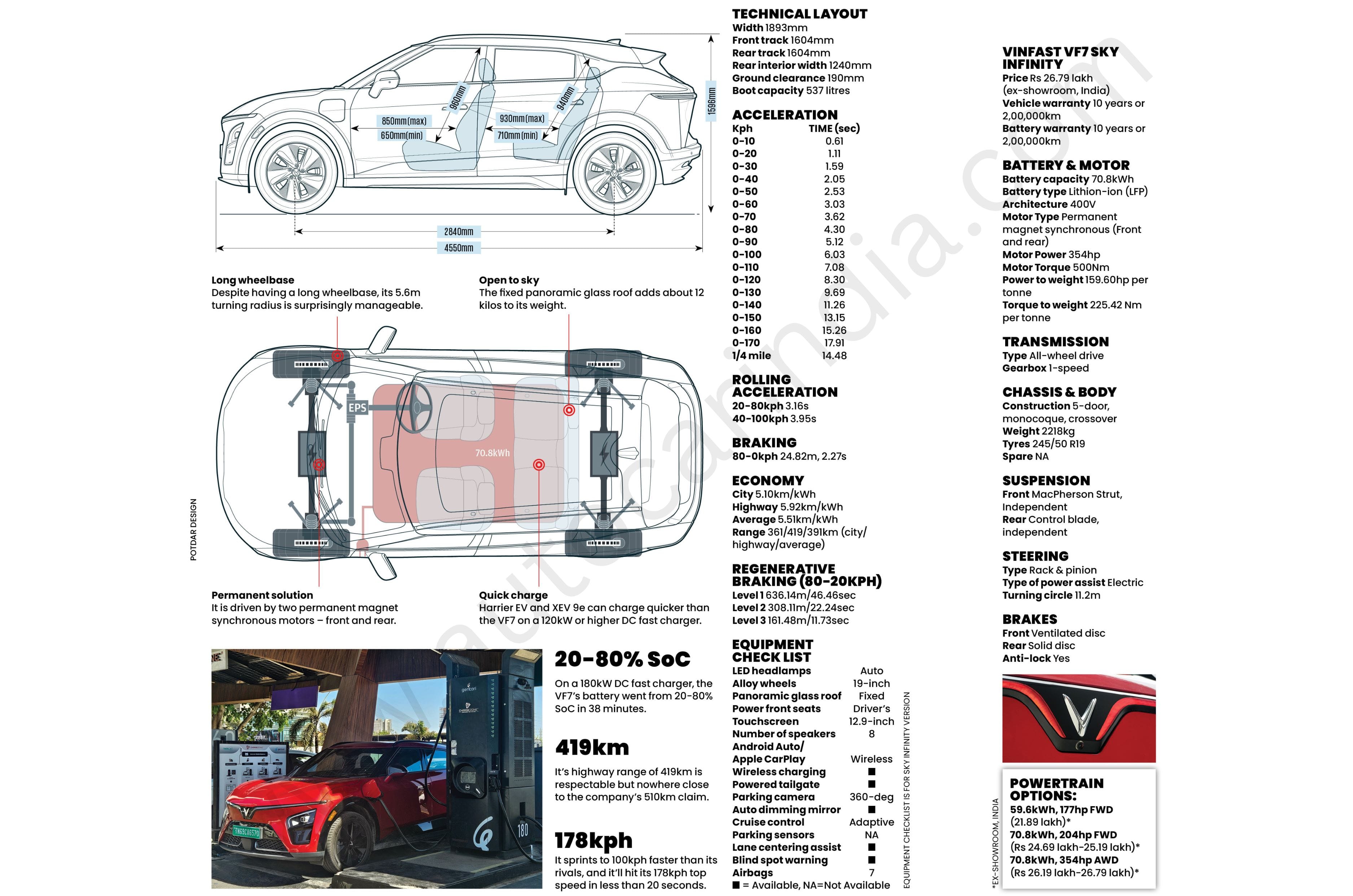
In terms of dimensions, the Vinfast VF7 measures 4,550mm in length, 1,893mm in width and 1,596mm in height, making it smaller than both the Mahindra XEV 9 and Tata Harrier EV. However, its 2,840mm wheelbase is longer than its Indian rivals. It adopts a more crossover-like stance with a drooping nose and a sloping roofline, and as a result, the VF7 doesn’t look butch or imposing, adjectives which can be used to describe the Tata and Mahindra EVs.
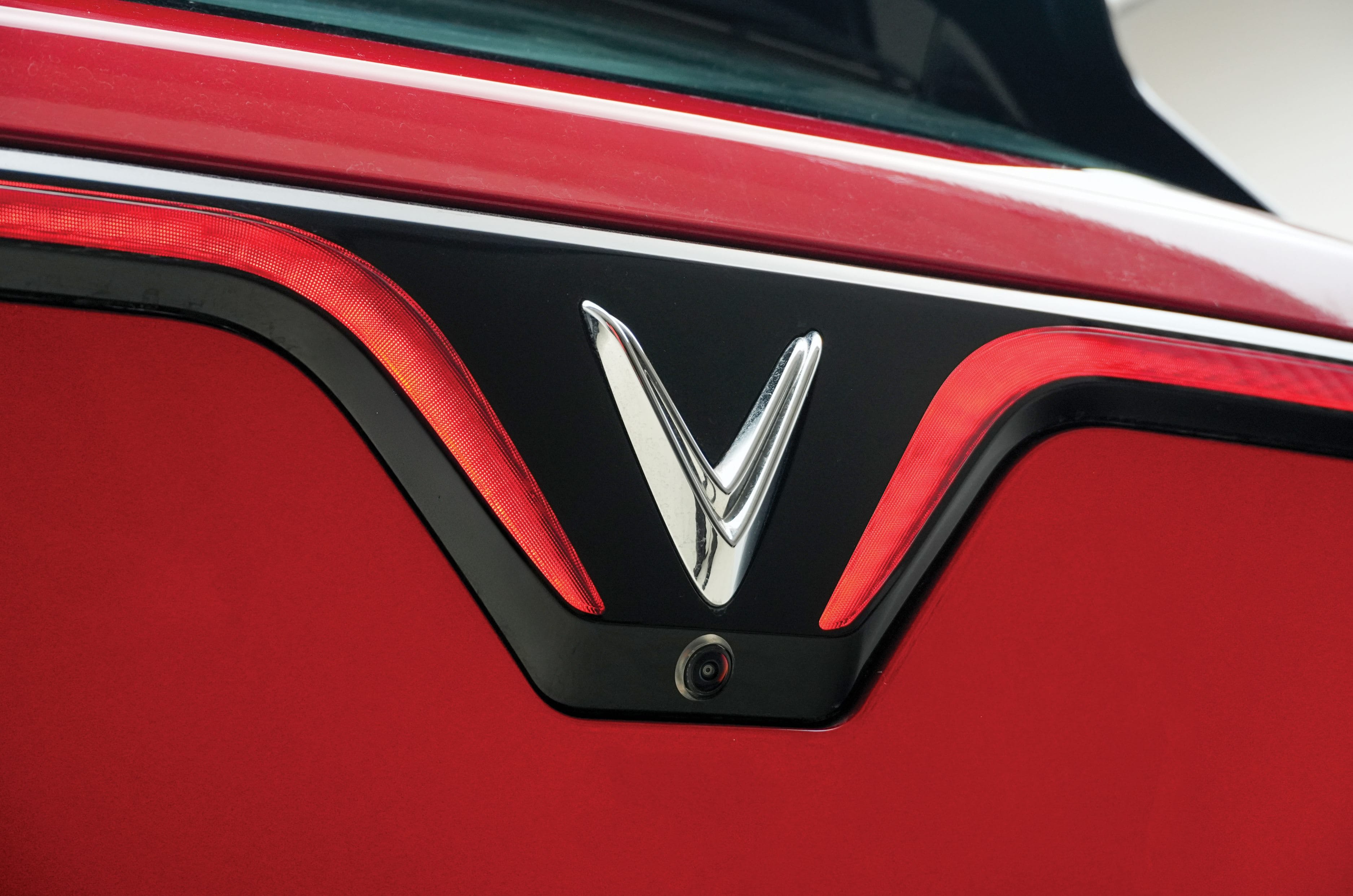
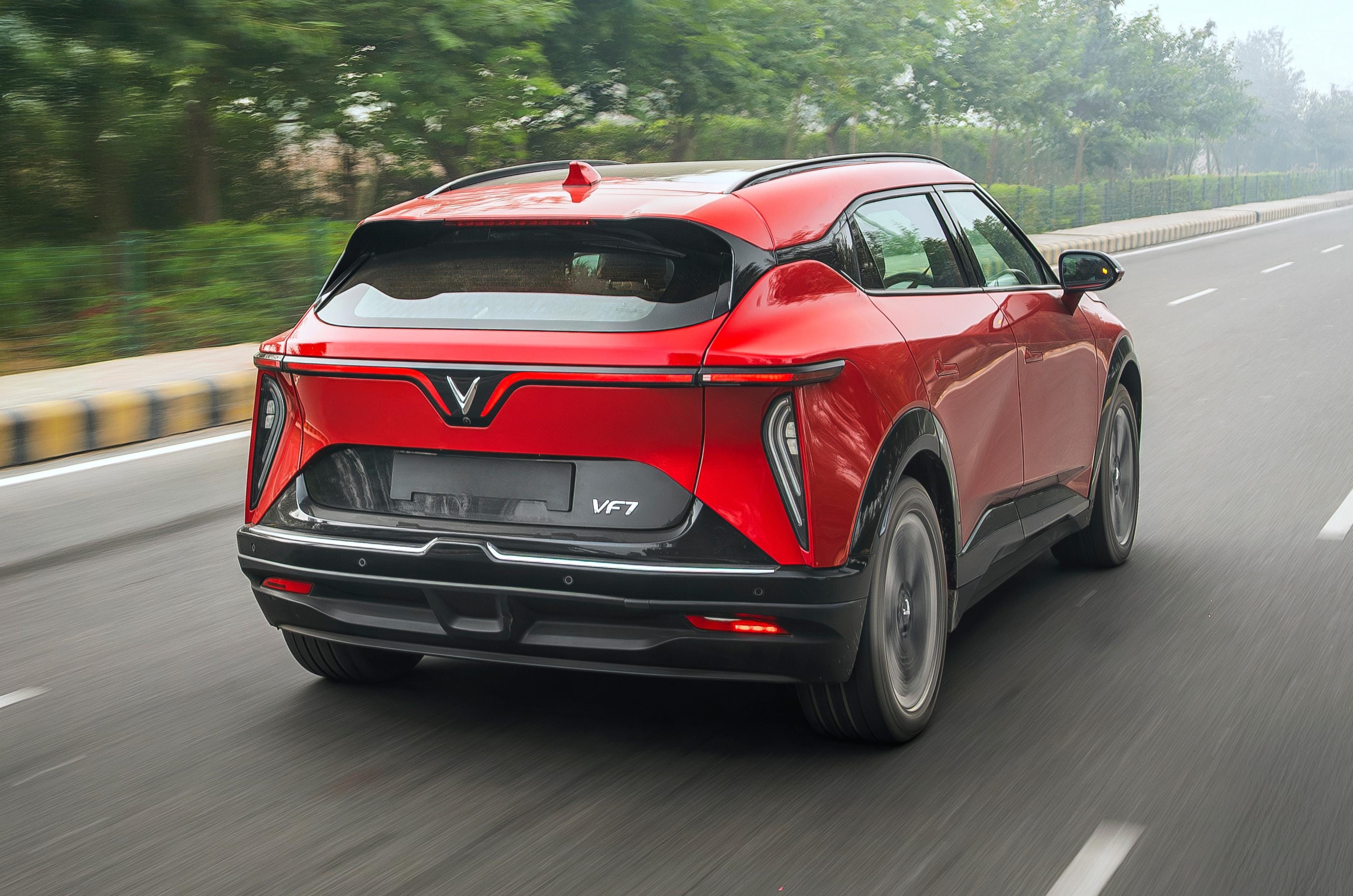
That said, it’s full of interesting details. Up front, the V-shaped LED DRL – a common design element across Vinfast models – flanks the company’s logo. Gloss-black body cladding around the 19-inch black wheels and along the lower doors add to its crossover credentials, while the pinched C-pillar lends it a floating roof effect. The raked rear windscreen and roof spoiler look striking, and like the front, the LED light bar extends from the V logo at the rear.
Interior space and comfort – 8/10
Richly appointed interior with a spacious cabin.
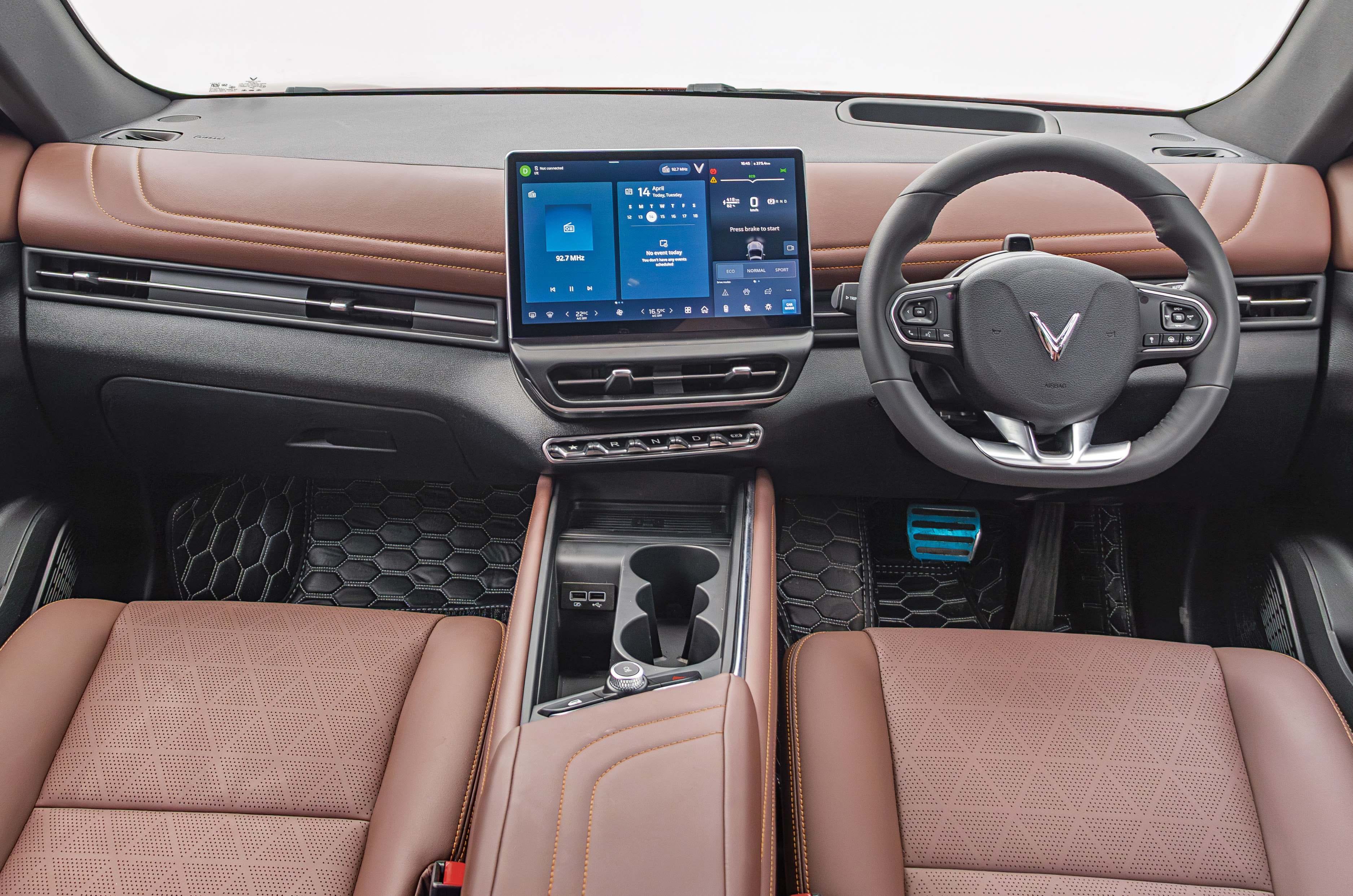
The VF7’s restrained luxury theme continues on the inside with a minimalistic cabin layout. First impressions are positive, with a richly appointed interior – the dashboard, door pads, seats and steering wheel are draped in vegan leather finished in a premium brown-and-black colour scheme. The touchscreen commands centre stage, with toggle switches beneath it for the drive selector. Underlining the car’s driver-centric focus, the screen is angled towards the driver, and the steering wheel and stalks appear reminiscent of certain BMW models. Some may find the steering diameter slightly small and the rim a touch too thick.
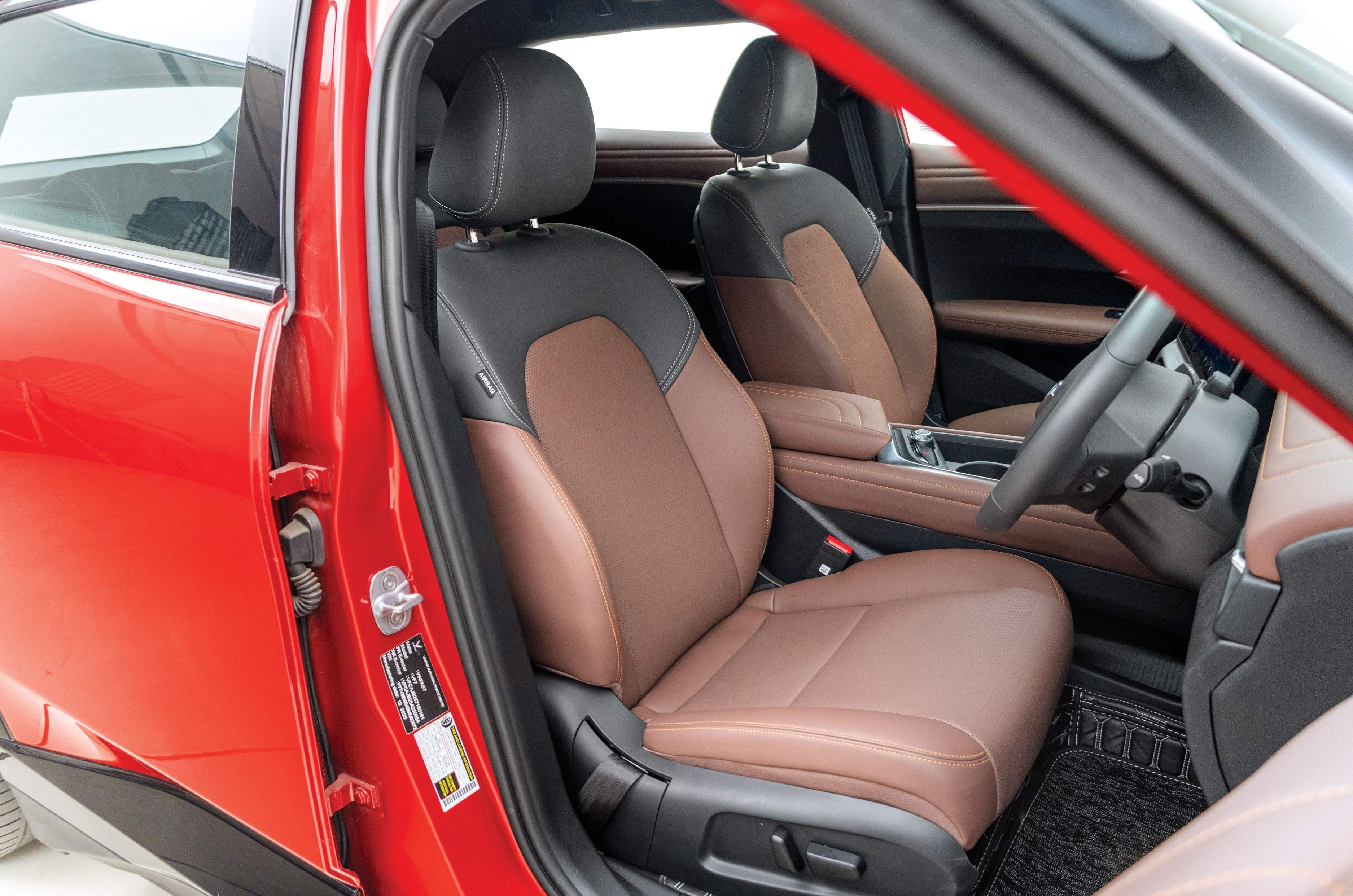
Fit and finish impress, and even though several hard plastics are used, overall material quality feels good. Taller drivers may need to set the seat to its lowest position and the steering wheel to its highest, else the wheel tends to brush against your thigh due to the high cabin floor. The powered front seats are comfortable, but there’s no lumbar adjustment, and some may find the seat base cushioning a bit excessive.
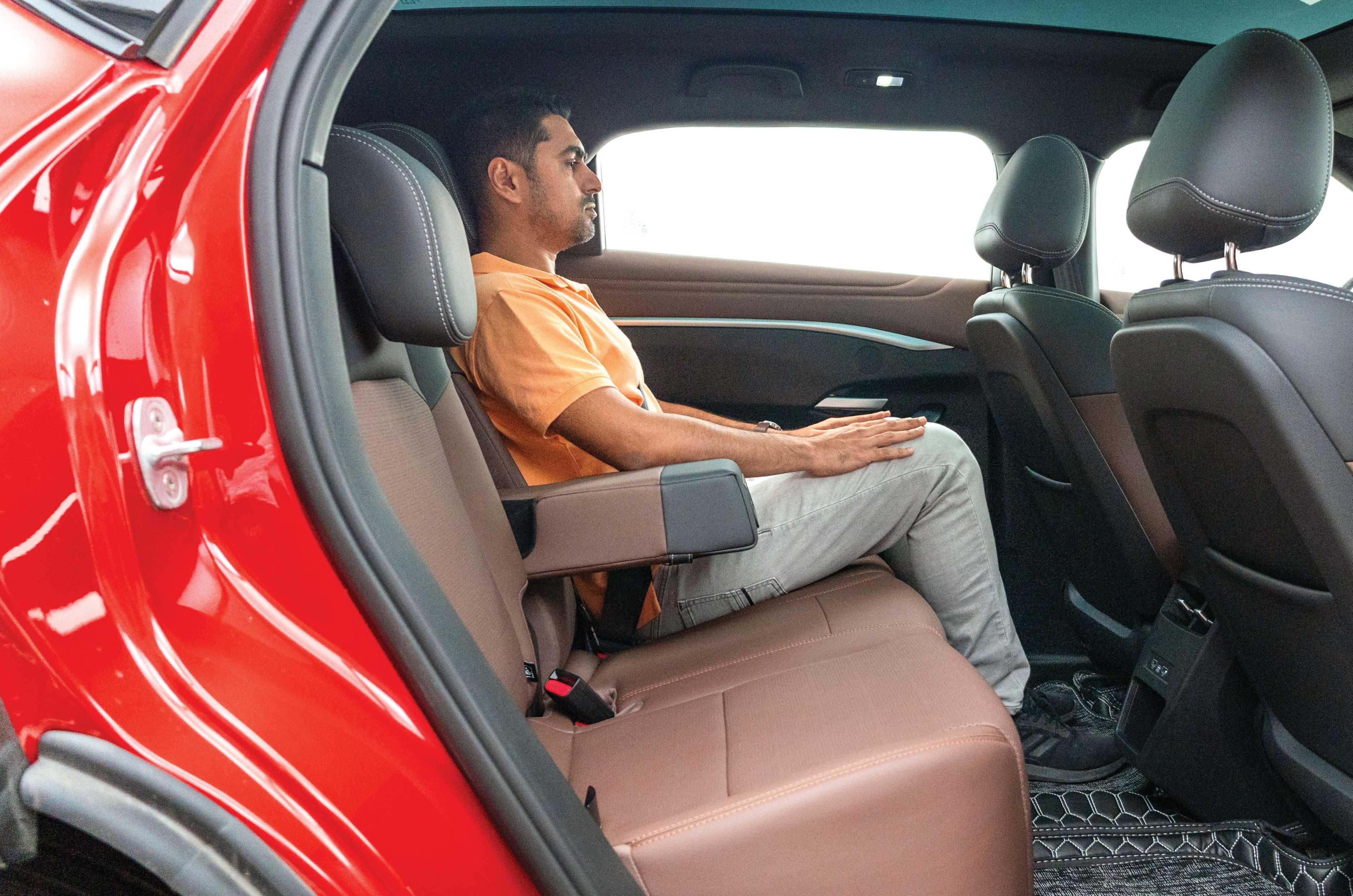
The back seat is spacious – headroom, knee room and legroom are adequate, but the raised floor means passengers will need to stretch their feet under the front seats for better comfort. The flat floor and bench make it reasonably accommodating for a third passenger. The high window line, however, eats into the cabin’s sense of airiness, especially in versions without the glass roof.
In terms of practicality, the front centre console houses cupholders, USB ports, a deep cubby, centre armrest and essential physical controls such as hazard lights, door lock/unlock and infotainment volume. There’s also a large storage shelf beneath the console, and the glovebox is generously sized. The door pockets have 1-litre bottle holders, but they’re too slim to hold much else. At the rear, you get AC vents, USB ports, seatback pockets, a fold-down armrest with cupholders, adjustable head restraints and three-point seatbelts for all occupants.
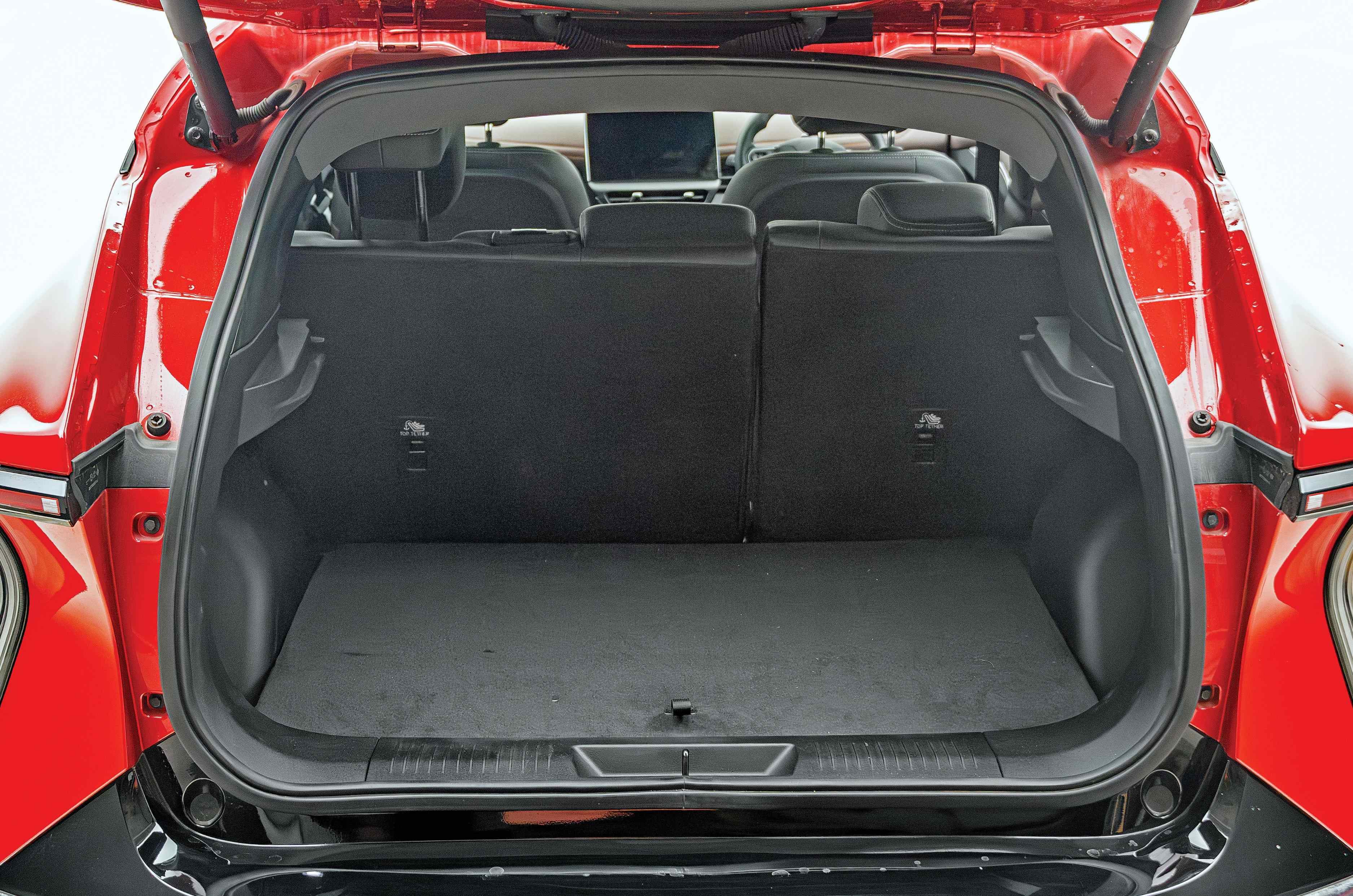
Boot space is rated at 537 litres (measured to the roof), and it can accommodate a fair amount of luggage. The rear seats can also be split-folded for additional space. However, the boot is quite shallow, and there’s neither a spare tyre nor a front trunk.
Features and safety – 8/10
Well-equipped, but dependence on screen for basics isn’t ideal.
Vinfast VF7 equipment checklist | |
| LED headlamps | Auto |
| Alloy wheels | 19-inch |
| Panoramic glass roof | Fixed |
| Power front seats | Driver’s |
| Touchscreen | 12.9-inch |
| Number of speakers | 8 |
| Android Auto/ Apple CarPlay | Wireless |
| Wireless charging | Yes |
| Powered tailgate | Yes |
| Parking camera | 360-degree |
| Auto dimming mirror | Yes |
| Cruise control | Adaptive |
| Lane centering assist | Yes |
| Blind spot warning | Yes |
| Airbags | 7 |
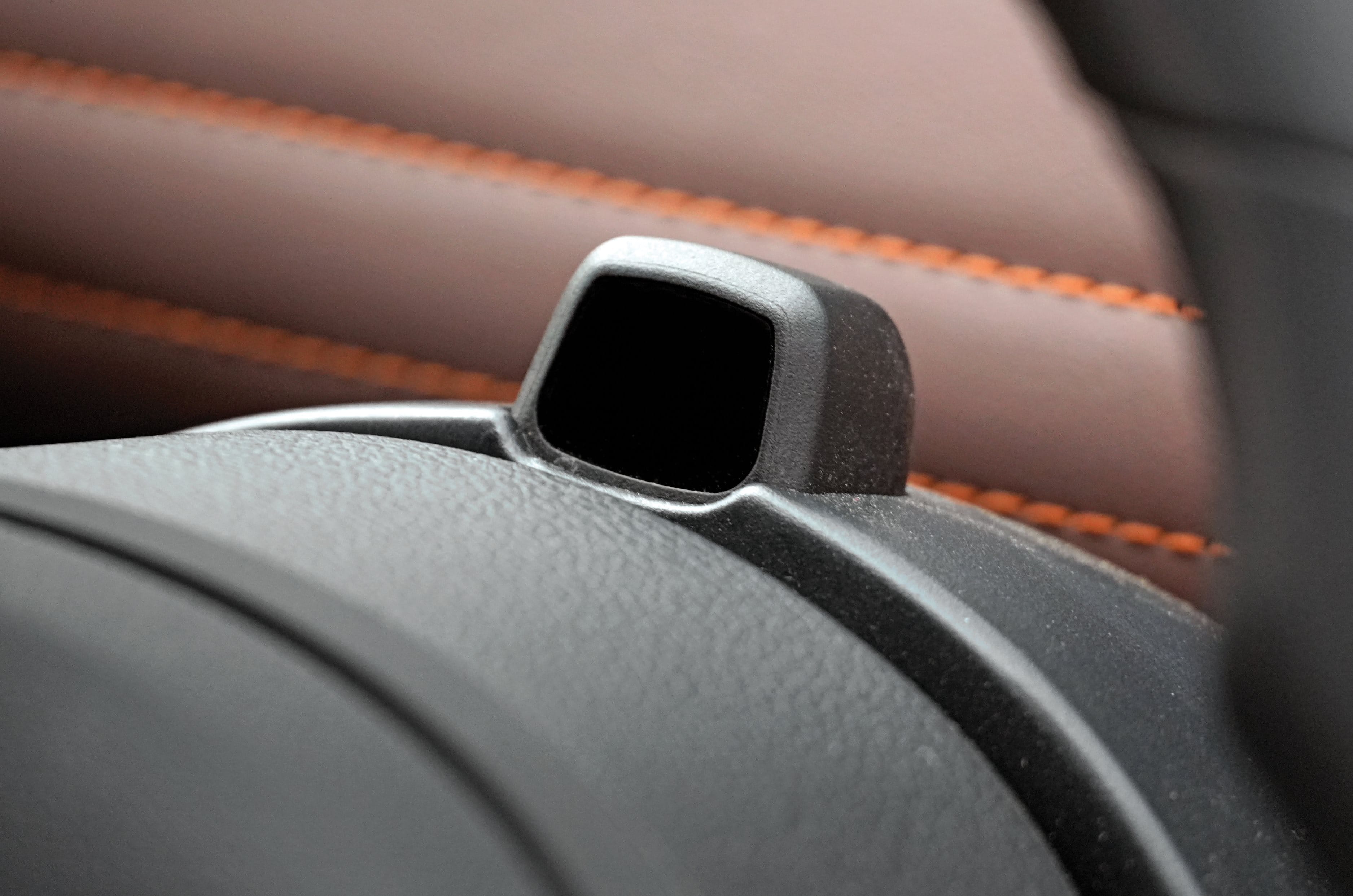
The Vinfast VF7 has scored five stars in Bharat NCAP for both adult and child occupant protection. Safety kit includes seven airbags (including a driver knee airbag), ESP, hill-start assist and ABS with EBD. It also gets ADAS features such as adaptive cruise control, lane centering, lane keep assist, blind-spot monitoring and high beam assist, among others. However, during our tests, the ADAS system behaved inconsistently – adaptive cruise control didn’t always slow down at a safe distance, and lane centering occasionally allowed the car to drift over lane markings.
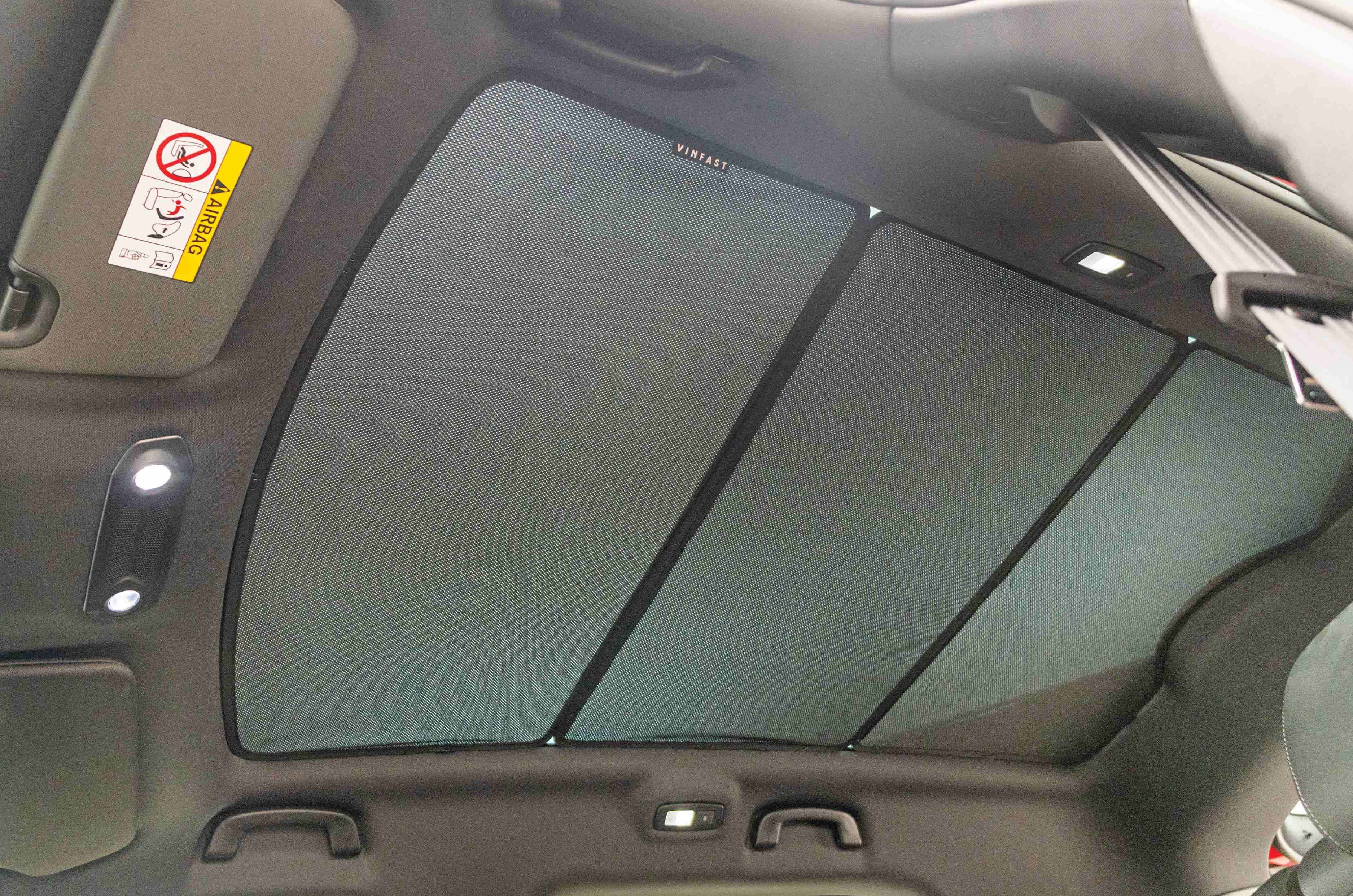
‘Infinity’ variants get a full-sized panoramic glass roof, which floods the cabin with light – and heat. Since there’s no factory-fitted sunshade, the cabin gets extremely hot during summer, forcing the air-con to work harder, which will affect range. Our test car featured an aftermarket manual sunshade, which lacked the finesse of an OEM solution.
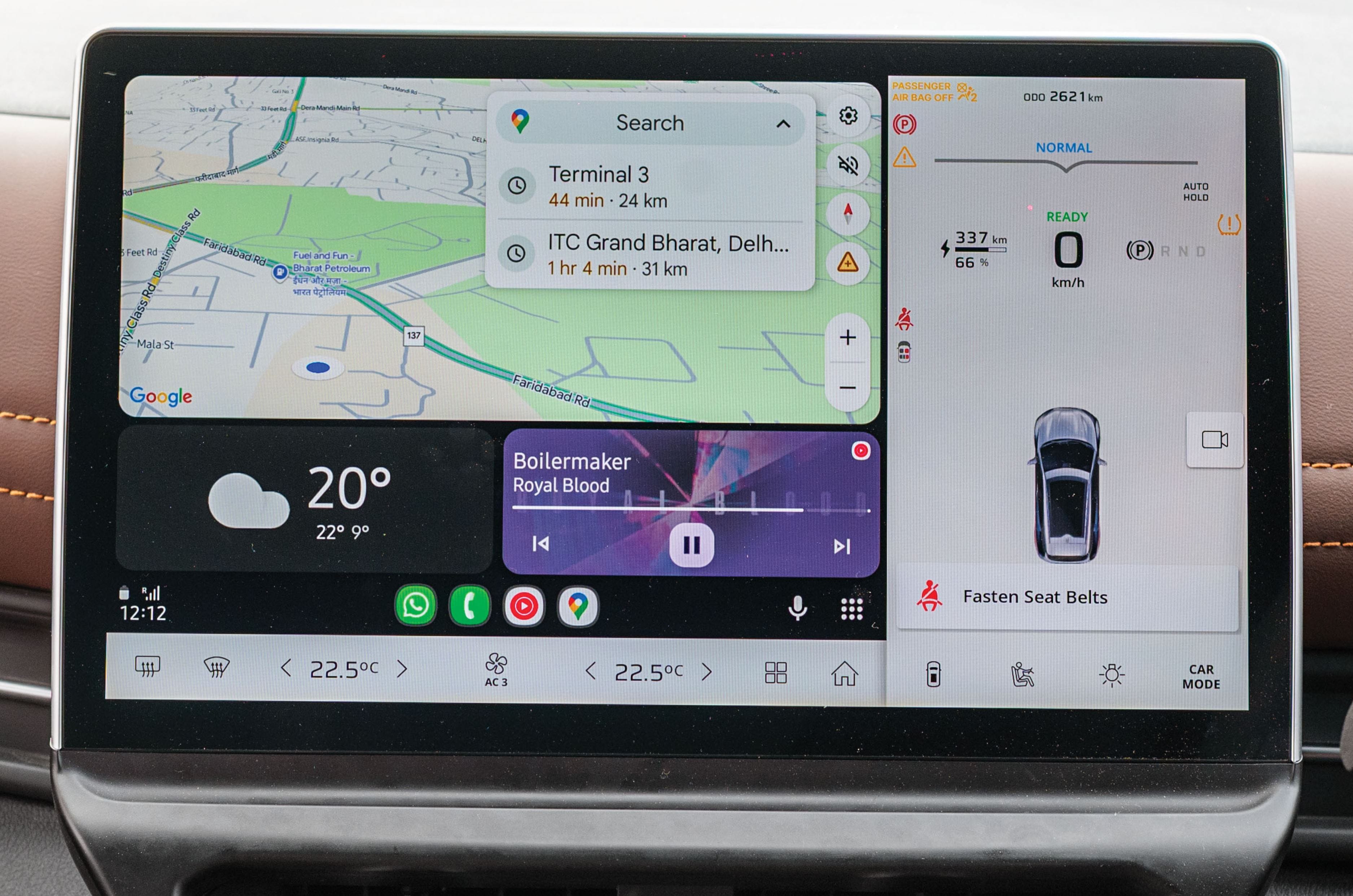
Users must rely on the 12.9-inch touchscreen for nearly every function, including mirror adjustments, climate control, drive modes, trip data, and even the speedometer. The interface itself is relatively straightforward and touch response is decent, but most functions require multiple presses, making it less intuitive. While it gets wireless Android Auto and Apple CarPlay, the 8-speaker audio system falls short of expectations at this price point.
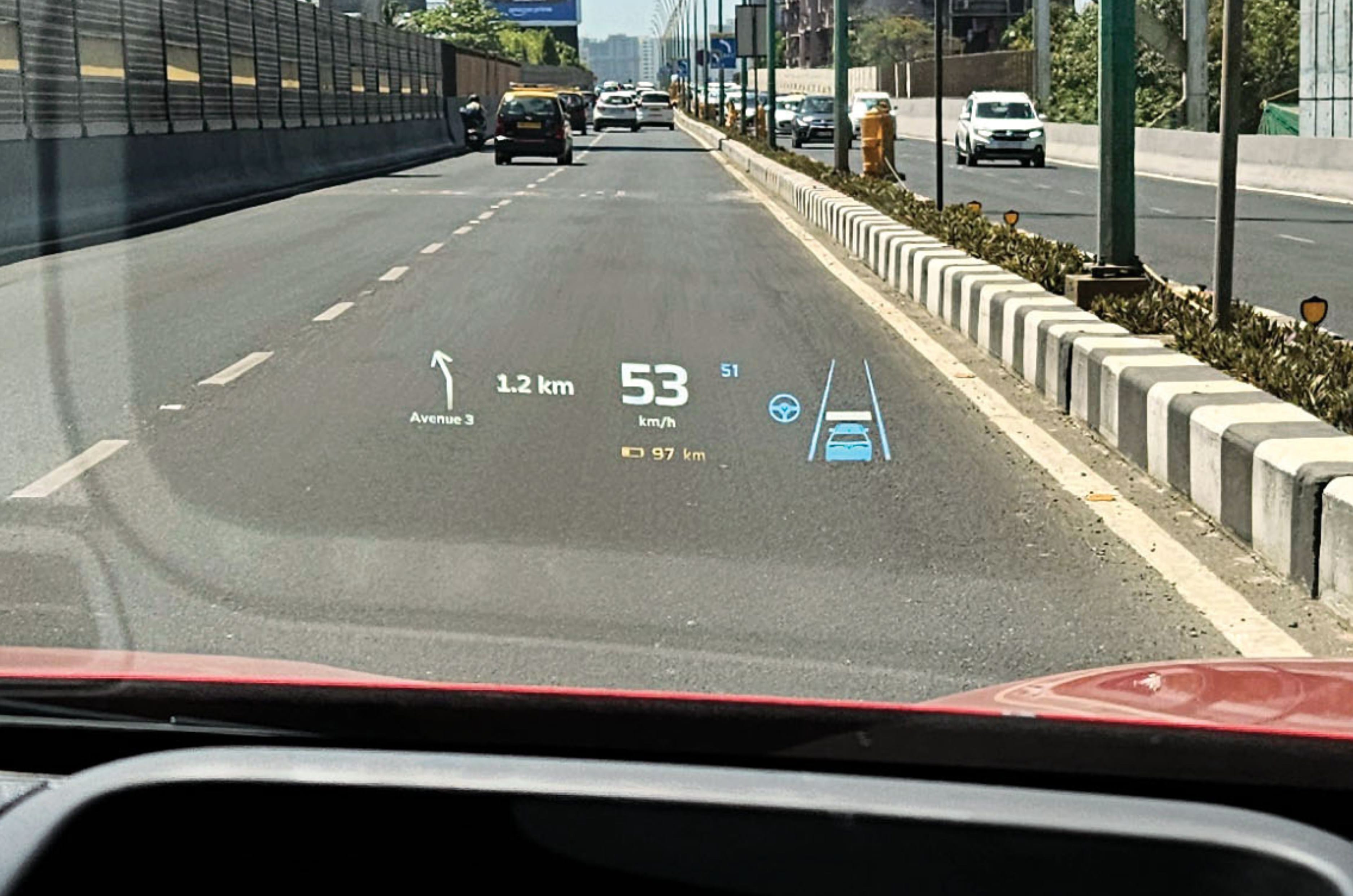
Other features include 19-inch alloys, auto LED headlamps and wipers, a 360-degree camera, head-up display, electronic parking brake with auto hold, wireless charging, auto-dimming inside mirror and a powered tailgate. One feature notably missing is powered pop-out door handles. The manual flush-type handles are very inconvenient to use.
Performance and refinement – 9/10
The quickest in its class, but a lot of road noise filters through.
Vinfast VF7 battery and motor | |
| Battery capacity | 70.8kWh |
| Battery type | Lithium-ion (LFP) |
| Motor type | Permanent magnet synchronous (front and rear) |
| Power | 354hp |
| Torque | 500Nm |
| Gearbox | 1-speed |
| Drive layout | All-wheel drive |
| Kerb weight | 2,218kg |
| Power-to-weight ratio | 159.60hp per tonne |
| Torque-to-weight ratio | 225.42Nm per tonne |
In its most powerful guise, the 70.8kWh battery powers two motors that produce a combined 354hp and 500Nm. That’s 41hp more than the Harrier EV AWD (though with 4Nm less torque), and crucially, the VF7 is 117kg lighter, which makes it feel noticeably sprightlier. It gets three drive modes – Eco, Normal and Sport – which alter part-throttle response, though full-throttle performance remains unchanged.
The motors pull strongly throughout, and those who enjoy brisk acceleration will appreciate its sharp responses. The VF7 sprints from 0-100kph in just 6.03 seconds and goes on to a top speed of 178kph. Rolling acceleration is equally impressive – 20-80kph takes just 3.16 seconds, and 40-100kph is dispatched in 3.95 seconds. For the money, the VF7 AWD is among the most powerful and quickest EVs available.
Vinfast VF7 acceleration times | |
| Time (sec) | |
| 0-10kph | 0.61 |
| 0-20kph | 1.11 |
| 0-30kph | 1.59 |
| 0-40kph | 2.05 |
| 0-50kph | 2.53 |
| 0-60kph | 3.03 |
| 0-70kph | 3.62 |
| 0-80kph | 4.30 |
| 0-90kph | 5.12 |
| 0-100kph | 6.03 |
| 0-110kph | 7.08 |
| 0-120kph | 8.30 |
| 0-130kph | 9.69 |
| 0-140kph | 11.26 |
| 0-150kph | 13.15 |
| 0-160kph | 15.26 |
| 0-170kph | 17.91 |
| 1/4 mile | 14.48 |
| 20-80kph (rolling) | 3.16 |
| 40-100kph (rolling) | 3.95 |
Refinement is generally good, with negligible motor whine filtering into the cabin. However, road and tyre noise become noticeable at highway speeds.
Regenerative braking, though, is a bit peculiar. There are four modes – Off, Low, Medium and High – but deceleration in each feels relatively mild, and there’s no single-pedal mode. In practice, you’ll still need to use the brake pedal frequently, especially in Low and Medium settings. In our deceleration tests from 80-20kph, it took 636.14m/46.46s in Low, 308.11m/22.24s in Medium and 161.48m/11.73s in High.
For comparison, the Harrier EV slows from 80-20kph in 130.64m/8.89s in its strongest setting, and 161.42m/10.40s in its mid setting – similar to the VF7’s strongest mode. There’s also no quick access to regen levels via paddle shifters; like most functions, they must be selected through the touchscreen.
The brakes themselves inspire confidence. There’s a strong pedal bite, and this 2.2-tonner stopped from 80kph in an impressive 24.82 metres.
Efficiency – 7/10
Respectable efficiency, but range falls short of 510km claim.
Vinfast VF7 tested battery efficiency and range | |
| City | 5.10km/kWh |
| Highway | 5.92km/kWh |
| Average | 5.51km/kWh |
| Range | 361/419/391km (city/highway/average) |
The smaller 59.6kWh battery pack is claimed to deliver 438km, while the larger 70.8kWh single-motor variant has a claimed range of 532km. The dual-motor version tested here has a claimed range of 510km. Interestingly, unlike the Harrier EV AWD, which gets a front induction motor and a permanent magnet synchronous motor (PMSM) at the rear, the VF7 has a PMSM on both axles – these are great for performance and acceleration; however, it doesn’t have the same free-spinning, low-drag advantage of an asynchronous secondary motor.
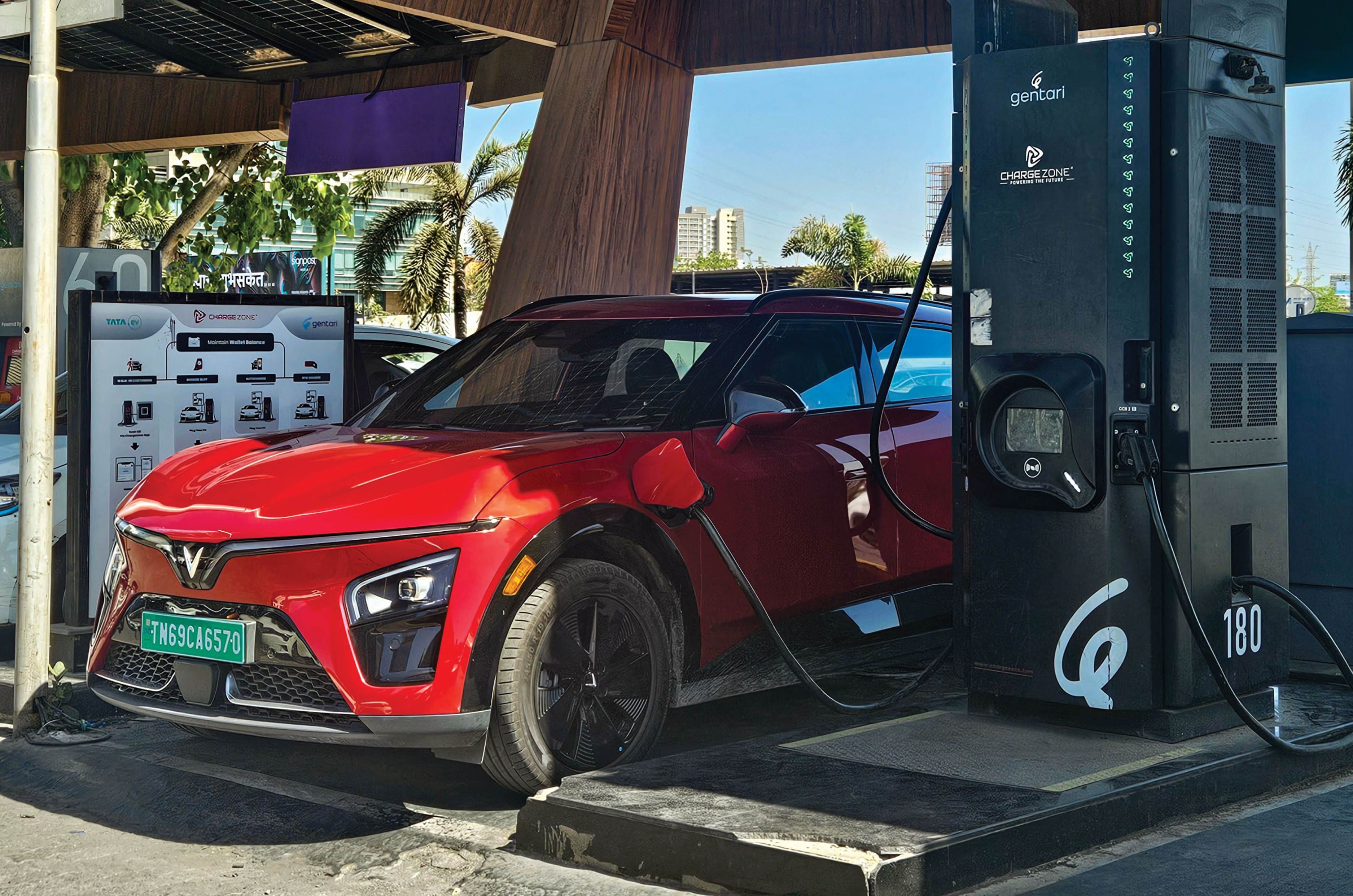
In our tests, however, the dual-motor version returned 5.10km/kWh in the city and 5.92km/kWh on the highway. Extrapolated, the city range works out to 361km, highway 419km, thus giving you a combined real-world range of 391km – well short of the company’s claim. We conducted the test in Eco mode; in the city, regen was set to ‘High’ with an average speed of 19.6kph, while on the highway, regen was set to ‘Low’ with an average speed of 55kph.
The VF7 uses a 400V electrical architecture with claimed DC fast charging speeds of up to 110kW and a 10-70 percent charge time of 28 minutes. However, when connected to a 180kW charger, it peaked at 95.5kW and charged from 20-80 percent in approximately 38 minutes. On an AC charger, speeds maxed out at 6.8kW, meaning a 20-80 percent charge will take around six and a half hours.
Ride comfort and handling – 9/10
Surprisingly comfortable yet engaging to drive.
Vinfast VF7 suspension, steering, and brakes | |
| Front suspension | MacPherson Strut, independent |
| Rear suspension | Control blade, independent |
| Steering type | Rack and pinion, electric |
| Turning circle | 11.2m |
| Front brakes | Ventilated disc |
| Rear brakes | Solid disc |
Ground clearance stands at 190mm (unladen), and the India-spec version rides on 245/50 R19 tyres – a more sensible choice for our conditions than the 20-inch wheels offered internationally. Right away, the ride quality impresses. The VF7 rides with a maturity and plushness reminiscent of some European models. There’s a hint of firmness at low speeds, but it rounds off sharp-edged potholes well without feeling crashy.
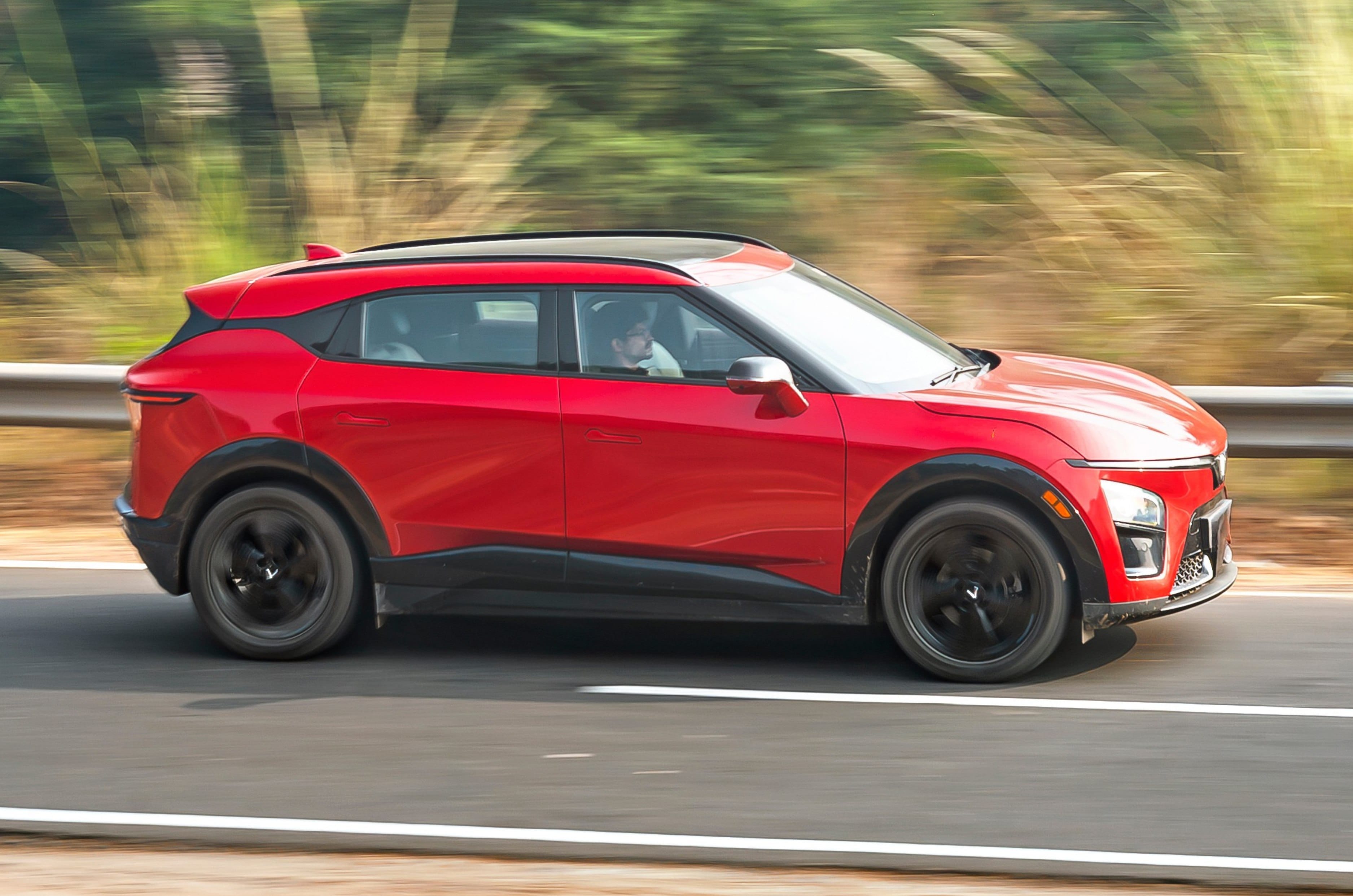
As speeds rise, the ride quality improves further. The VF7 feels stable at triple-digit speeds and recovers from dips and undulations confidently.
Vinfast VF7 braking performance | |
| 80-0kph | 24.82m, 2.27s |
| Level 1 regen braking (80-20kph) | 636.14m/46.46sec |
| Level 2 regen braking (80-20kph) | 308.11m/22.24sec |
| Level 3 regen braking (80-20kph) | 161.48m/11.73sec |
Users will also appreciate the relatively tight 11.2m turning circle. The steering feels direct and surprisingly pointy, inspiring confidence while cornering. The all-wheel-drive system further enhances grip, making the VF7 unexpectedly enjoyable to drive.
Buying and owning – 9/10
Strong value and long warranty enhances its appeal.
The Vinfast VF7 range starts at Rs 21.89 lakh for the entry-level Earth version with the 59.6kWh battery and goes up to Rs 26.79 lakh for the Sky Infinity AWD tested here. The latter is Rs 2.20 lakh more affordable than a top-spec Harrier EV AWD, making it strong value for money. Like Tata, Vinfast sells a wallbox AC charger at an additional cost of around Rs 45,000.
The company is also offering three years of free maintenance, along with a 10-year vehicle and battery warranty. Buyers exchanging their ICE vehicles are eligible for additional incentives. There’s also a 75 percent buyback scheme after two years, or 55 percent after five years. Customers can either avail of free charging on Vinfast’s network or opt for an upfront cash benefit instead.
Verdict – 8/10
Distinctive, quick and well-priced electric crossover that scores on performance, comfort and quality.
The Vinfast VF7 undercuts key rivals on price while delivering impressive performance, making it a strong value-for-money proposition. In AWD guise, it’s genuinely quick and surprisingly rewarding to drive, with mature road manners. The cabin feels plush, space is generous, and the feature list is fairly comprehensive too.
That said, the experience isn’t without its shortcomings. The heavy reliance on the touchscreen for basic functions, the lack of a factory-fitted sunshade, inconsistent ADAS performance, mild regenerative braking and below-average refinement all take some sheen off. Some buyers will be left wanting a stronger real-world range, which falls well short of the company’s 510km claim.
Even so, the VF7 stands out as a distinctive, quick and well-priced crossover that scores on performance, comfort and interior quality. Vinfast’s aggressive sales push and buyer incentives further enhance its appeal. If the brand irons out the usability quirks and improves range, the VF7 is a compelling alternative to the established Indian rivals.
from Autocar India https://ift.tt/4kdJABS


Comments
Post a Comment