Off-roading in a Toyota Land Cruiser Dakar Rally truck: Unbreakable
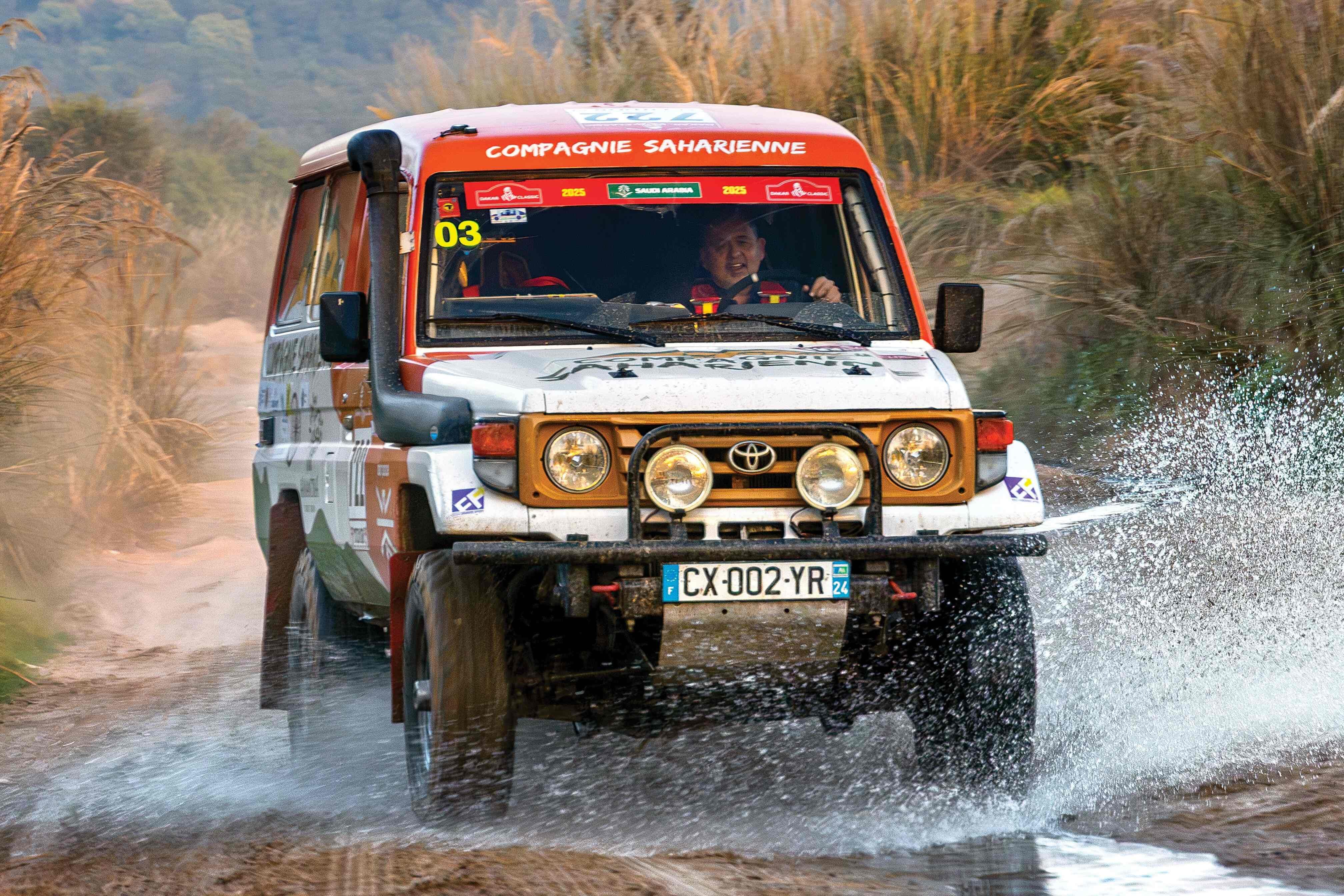
The Toyota Land Cruiser 70 Series is widely considered to be one of the toughest SUVs ever. Simple in construction, engineered with massive tolerances in place and built to last, it is simply the most Toyota of Toyotas. Perfect then to enter what must be one of the toughest races around – the Dakar Classic; now run through the heart of Saudi Arabia. But let’s not monkey around; this is one tough challenge – especially for these classic cars – as it is full of chassis, suspension and engine braking stages.
The Dakar has always been dominated by tough SUVs, and here, a tough, robust build and an ability to keep going are more important than being marginally faster over the long, long stages. And so it is with the Classic. The HZJ78 DKR, as this particular 70 Series is known, is a 1998 edition, reworked for the slam-dunk, hardcore special stages of the Dakar. Prepared in France by specialist Compagnie Saharienne, it has already taken Indian rally driver Sanjay Takale to the finish of the Classic Dakar, something he managed to do with this SUV at his first attempt, making him the first Indian driver to do so.
Hulk strength
What makes the Land Cruiser 70 Series ideal for the job is the overbuilt chassis, the engineered-to-take-a-pounding suspension arms, the truck-like rear leaf springs, and the robust manner in which everything is attached to the chassis.
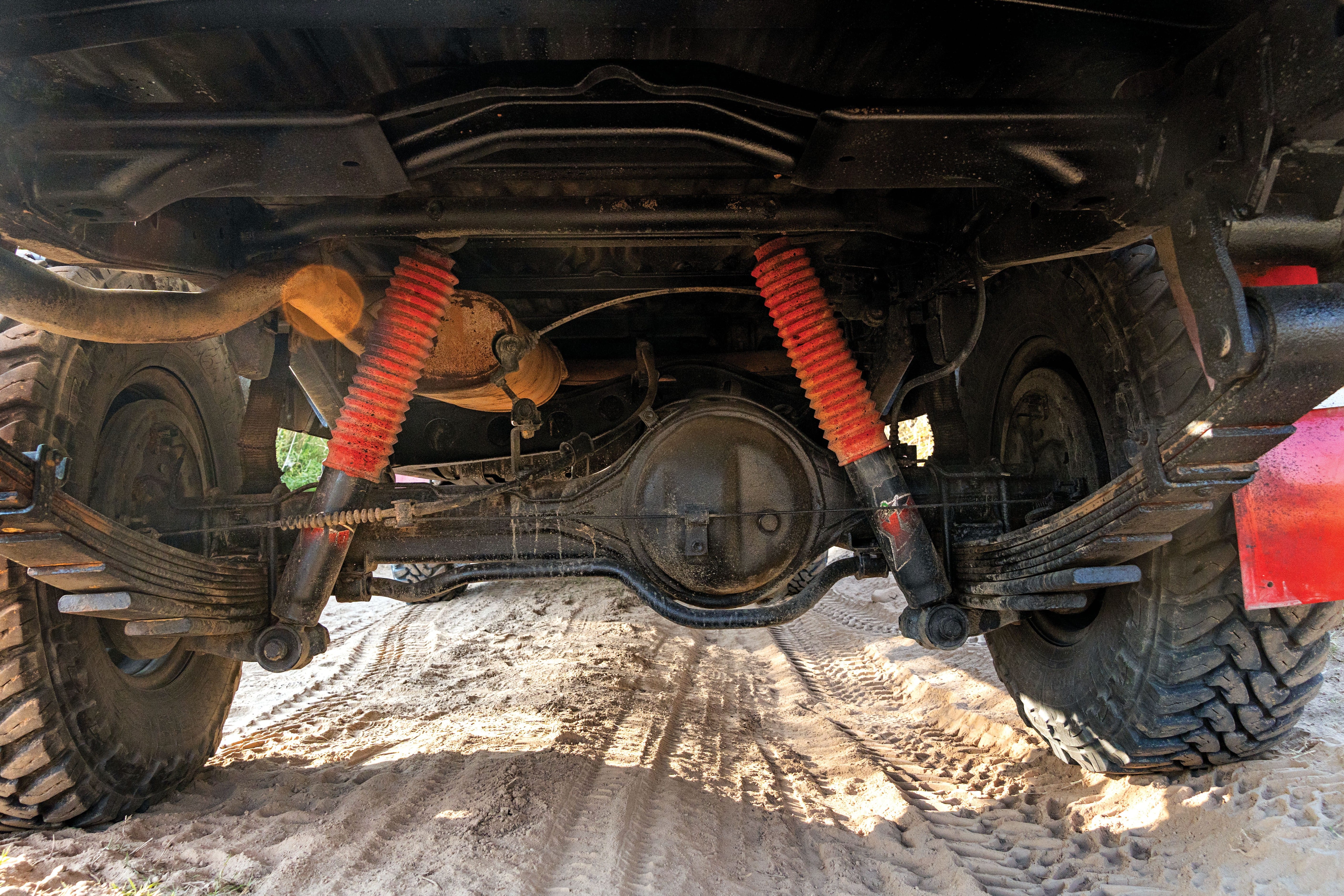
To make it even more indestructible, Compagnie Saharienne has taken the HZJ78’s ladder frame and reinforced it further so it can deal with the big drops and twisting forces encountered in the dunes. Then the suspension is considerably raised, re-tuned for the lighter body and fitted with positive rate coil springs. Motorsport dampers are used, and additional support dampers sit alongside the main units up front.
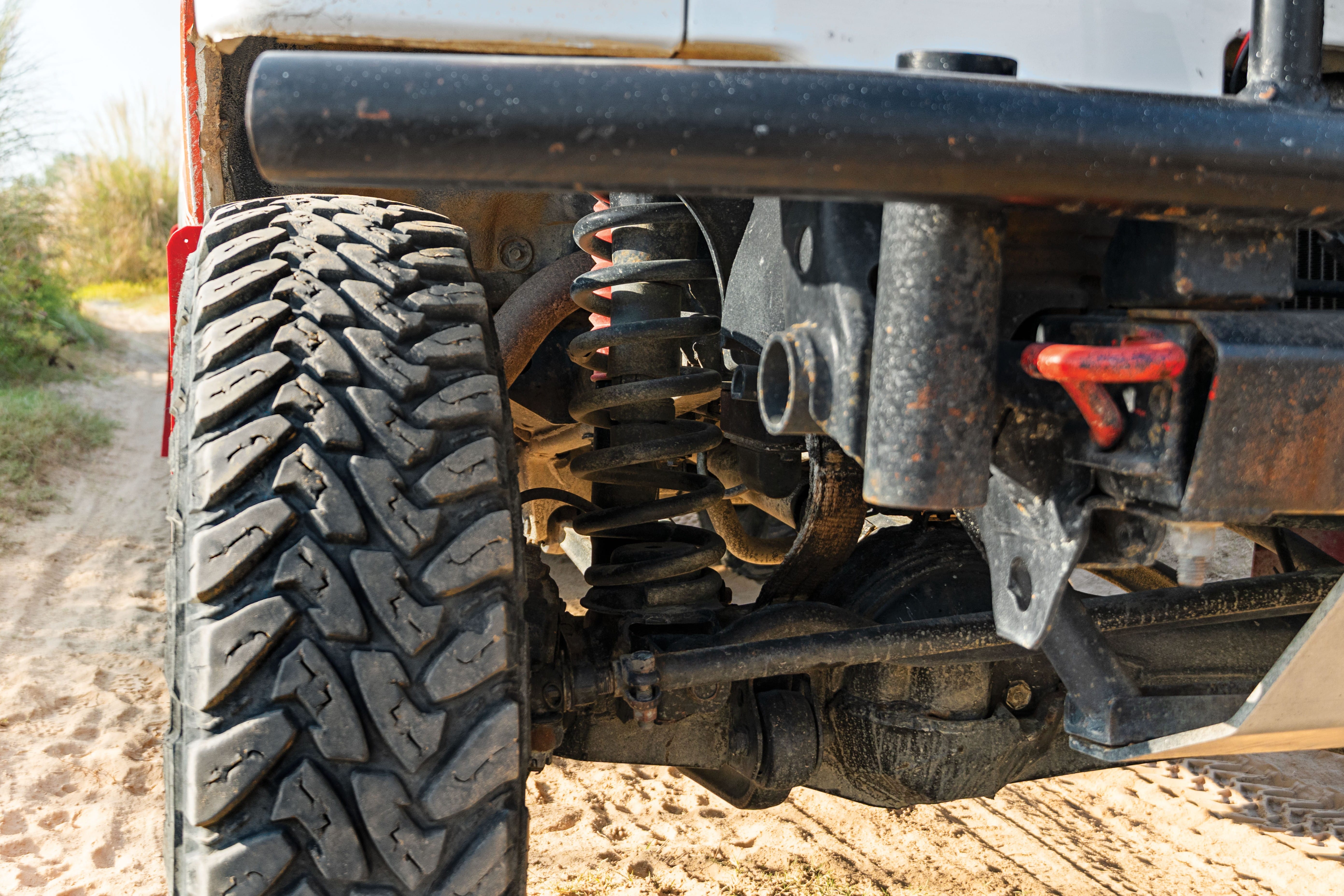
Also used are heavy-duty shackles that limit suspension overextension and protect driveline components; stuff like driveshafts and axle housings, components that often get overloaded when you are repeatedly launching off washouts or cresting dunes. Also added on are special anti-roll bars to keep it on an even keel.
To make it faster, weight is taken out by stripping the vehicle of unnecessary features – rear windows, seats and windscreens. At around 2.1 tonnes, the car is not light (despite the 200 odd kilos reduced) per se; the idea is to remove non-essential mass while retaining and enhancing structural integrity. The last thing you want is to compromise the SUV’s ability to take punishment. In the Dakar, a broken component is a race-ender, and a slightly heavier but intact car is a finishing car.
What comes as no surprise is that a lot of the bits come from the Australian version of the 70 Series; remember, it was the Aussies who first fell head over heels with the 70 – a ‘ute’ (utility vehicle) you can put your life in the hands of in the outback, they’d say.
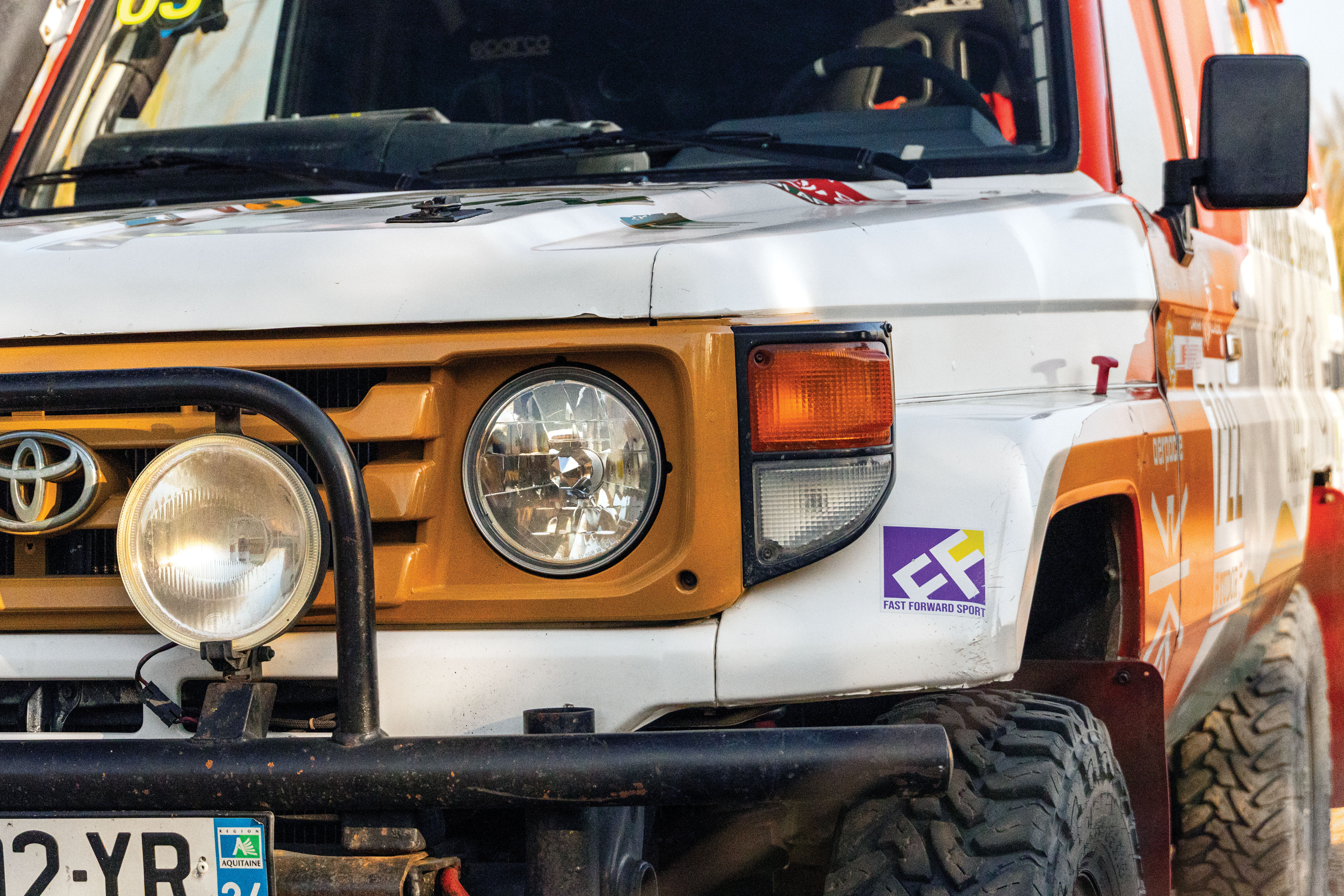
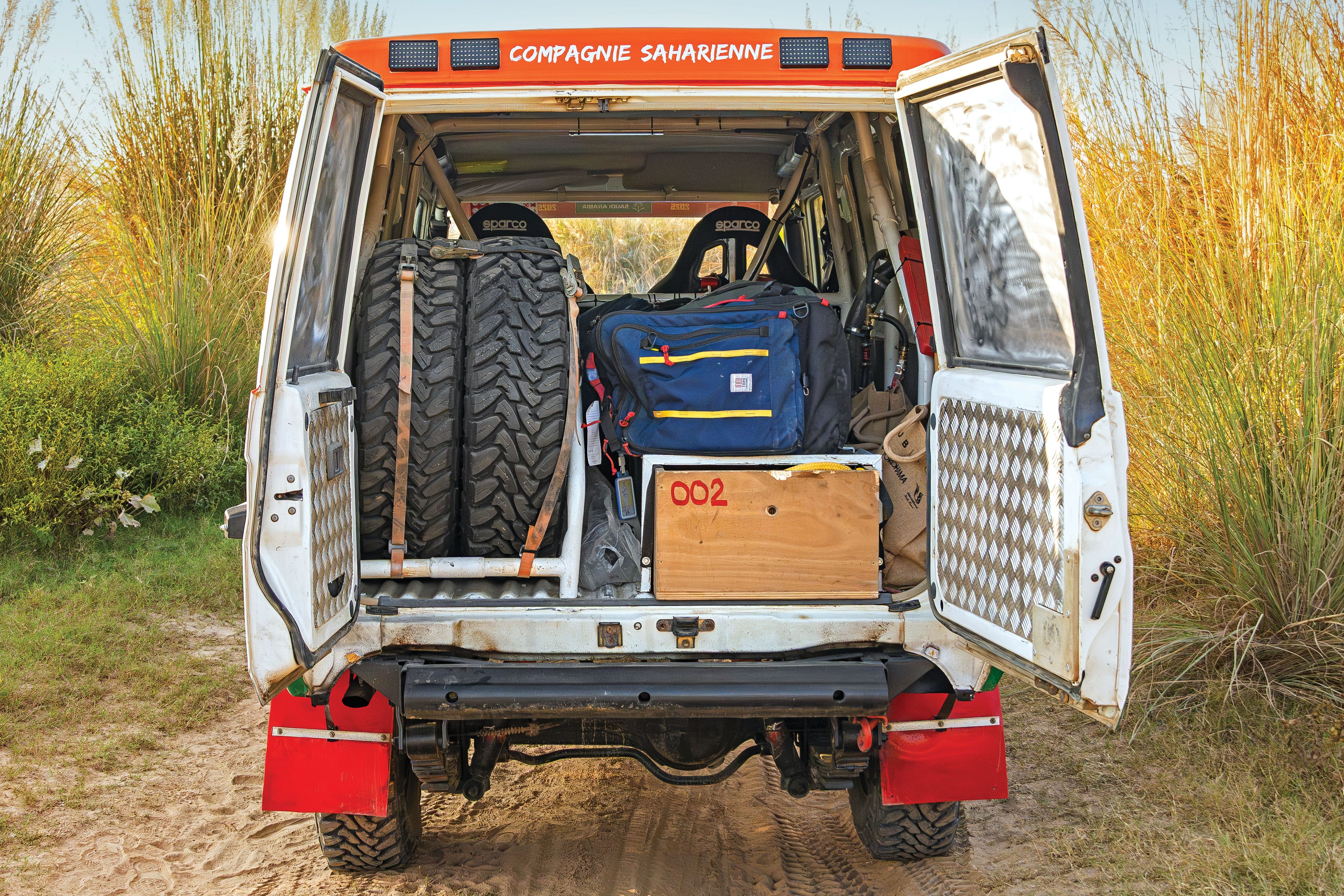
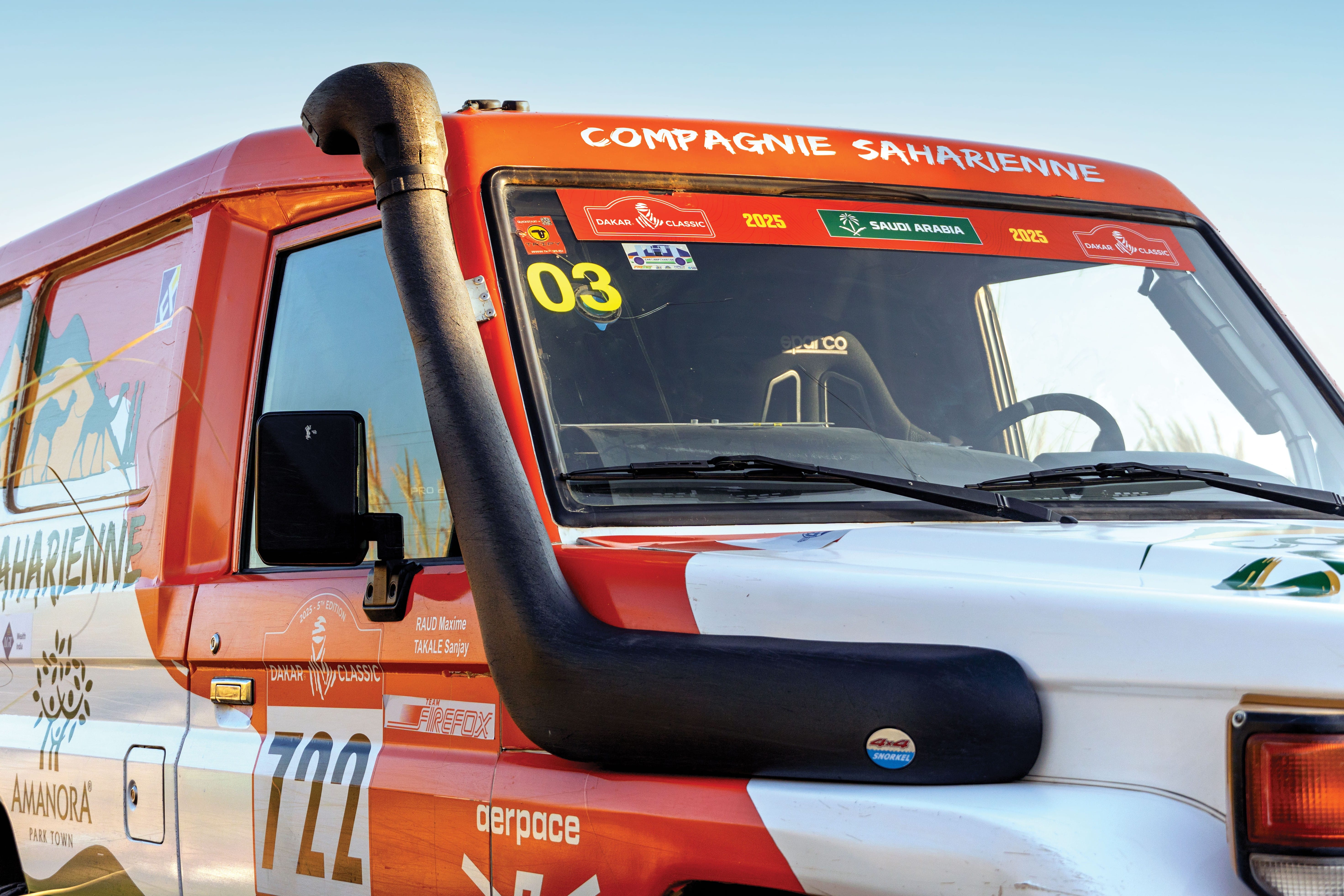
Changes on the outside include a snorkel that snakes its way up the A pillar to prevent sand getting in the engine, the front bumper has been shortened to reduce the chance of snagging on dunes, and the fuel capacity is upped – the dual tanks can take 300 litres! The 70 Series bits you can see are the upright grille, the chunky pyramid-like indicators and ‘cupboard’-type rear doors. The orange, white and green paintwork is Sanjay’s cool nod to the Indian flag.
Under the bonnet sits a 4.2-litre naturally aspirated straight-six diesel – an old school unit chosen for reliability and a strong mid-range. Power is increased to upwards of 160hp, up from 130hp, by tuning the injector pump and making some other changes.
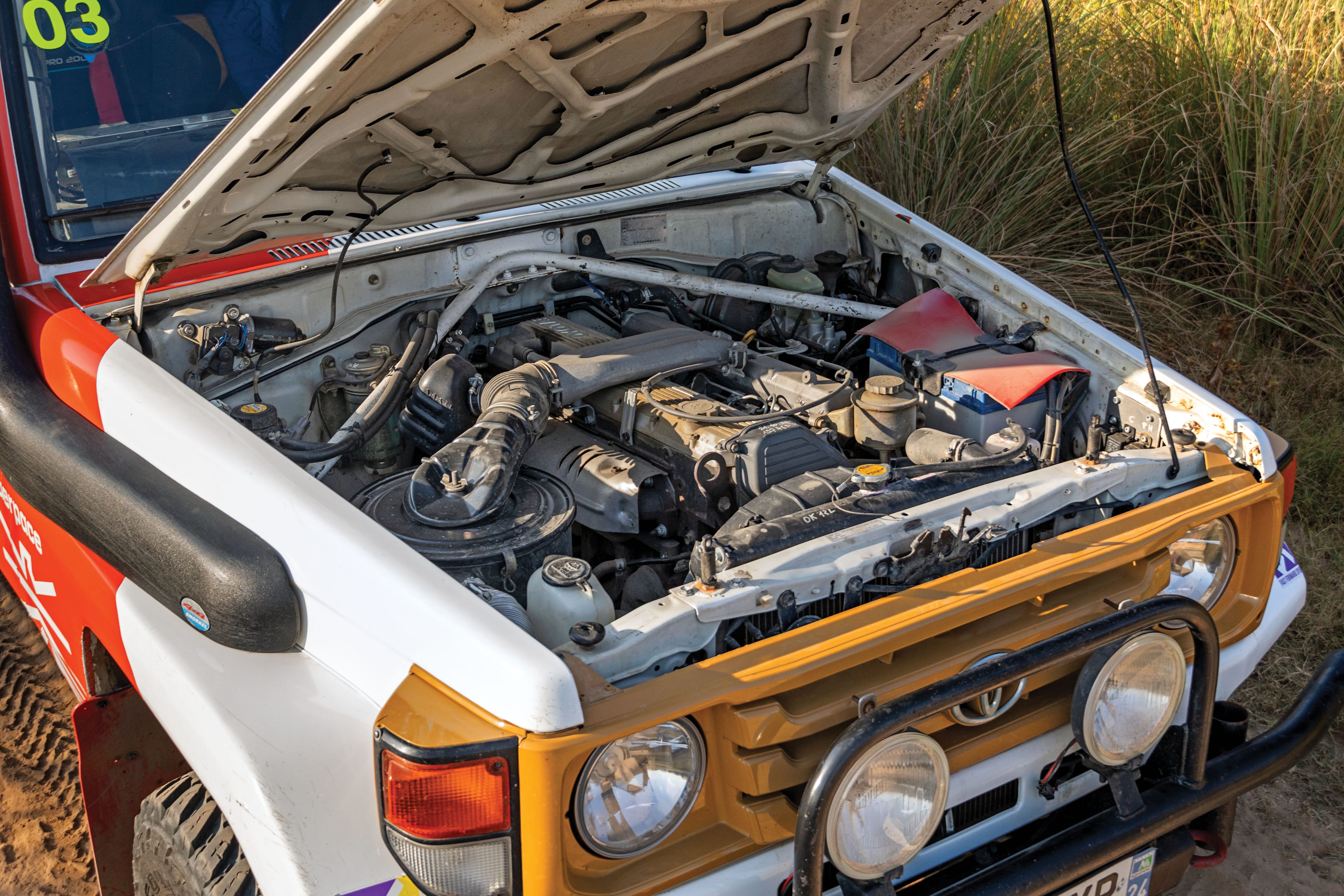
Sure, it lacks the shove of a turbocharged unit, but what you get in its place is a broad, tractable mid-range and a temperament built for longevity. In desert terms, that mid range is paramount. Momentum is everything on sand, and the engine’s steady torque delivery lets the driver carry speed without constantly having to modulate engine speed precisely.
Get, set, growl
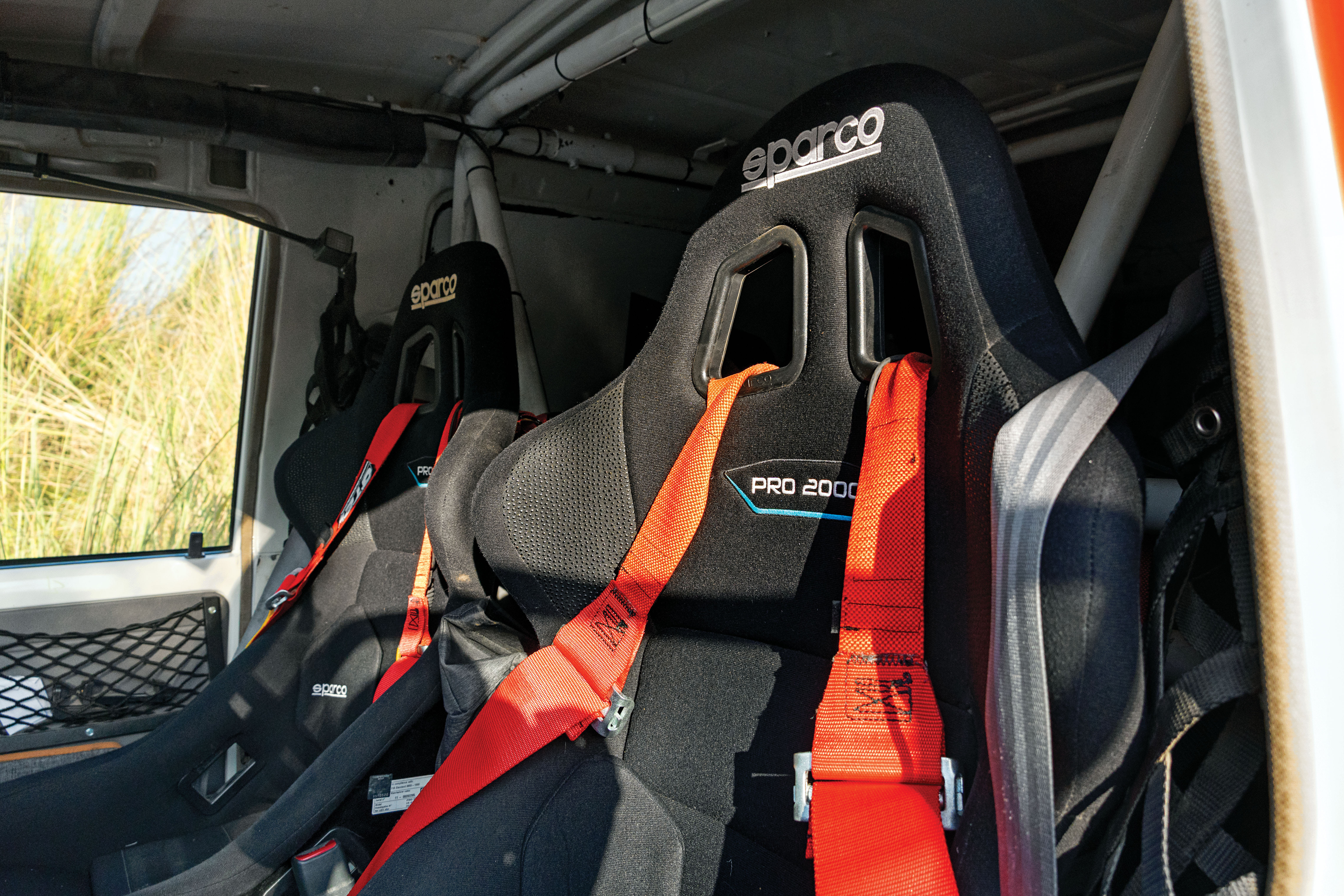
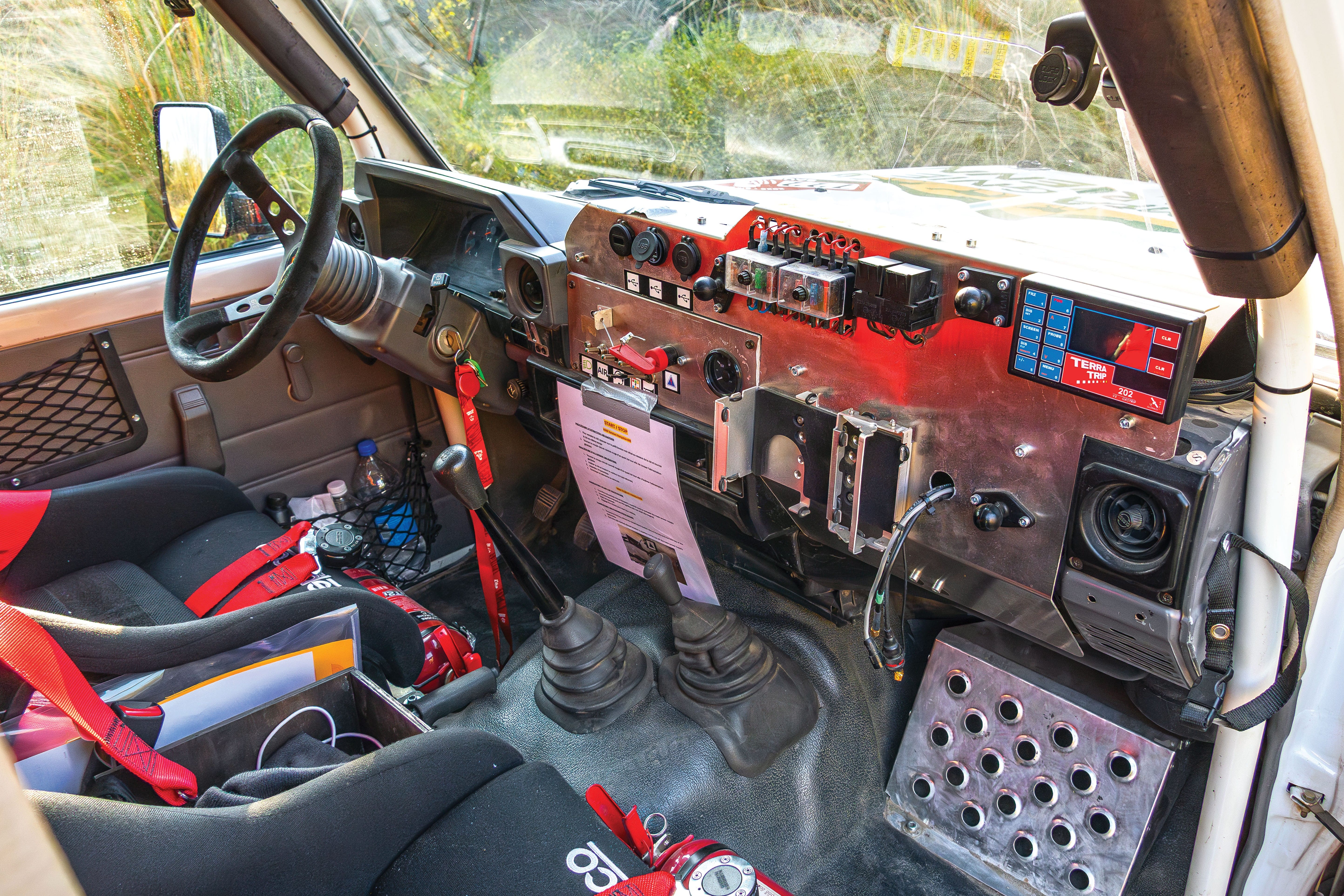
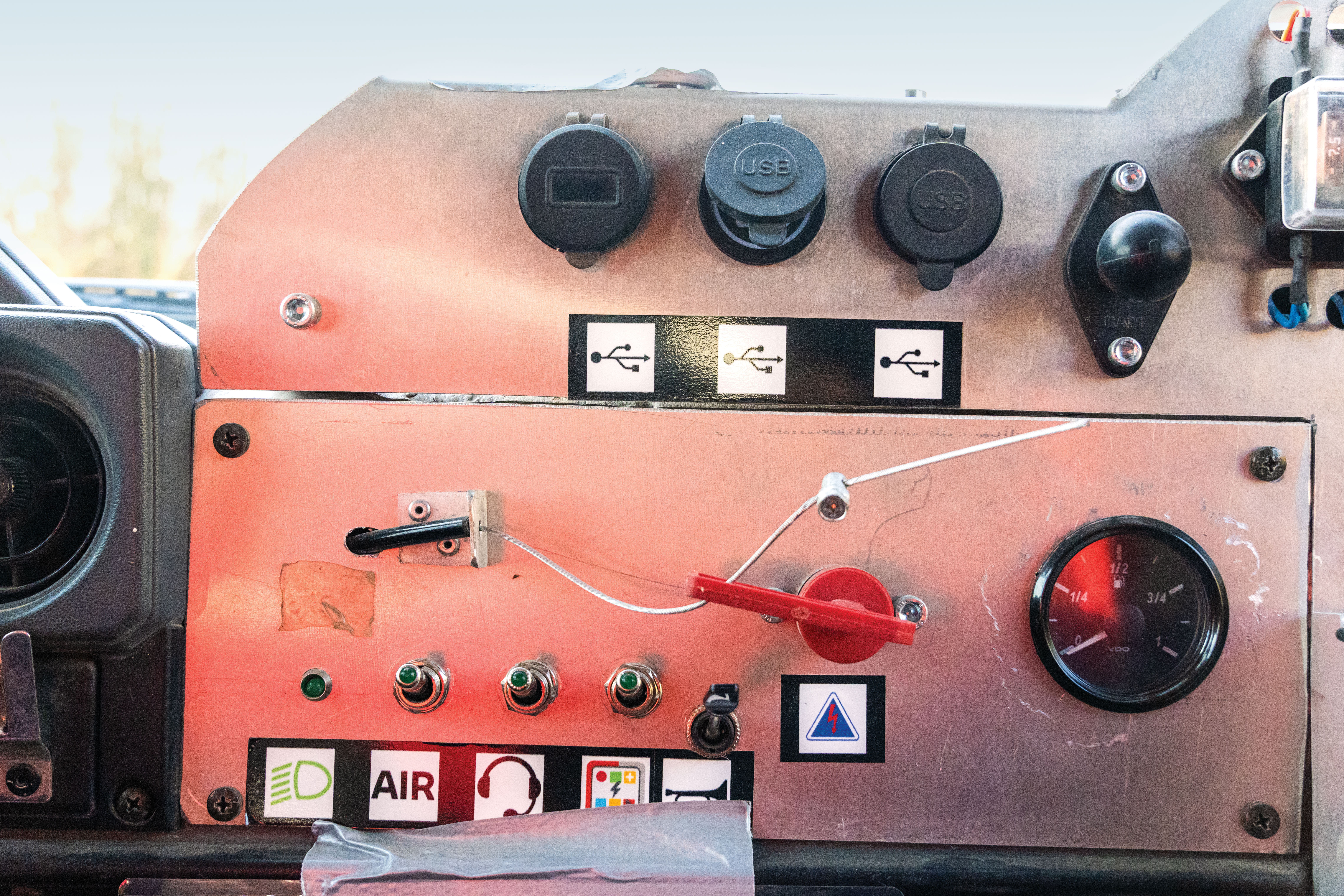
Step inside the cabin, and the interior is functional to the point of austerity. Reinforced racing seats with multi-point harnesses, rally instrumentation, navigation aids and big switches. You can barely see the old-school Japanese dash; the vents and instrument panel are the only Land Cruiser bits remaining.
Starting it up initially feels weird. The rattle of the big diesel is so unlike a race car, and even worse is the sluggish demeanour. But as I begin to rev the engine harder, the old-school diesel smoothens up, probably down to the fact that it uses indirect injection, and once in the mid-range, the smooth straight-six really starts coming into its own.
It responds more eagerly, has a wider powerband than modern diesels, and then, because there is no sudden peak in torque, the feeling of ever-increasing power feels great. Performance isn’t explosive by any means, and the Land Cruiser gathers speed steadily rather than accelerating hard, but once it gets moving and the torque starts ramping up, this Dakar SUV has plenty of energy; just what the doctor ordered for the soft, sandy Chandigarh river bed we are driving in.
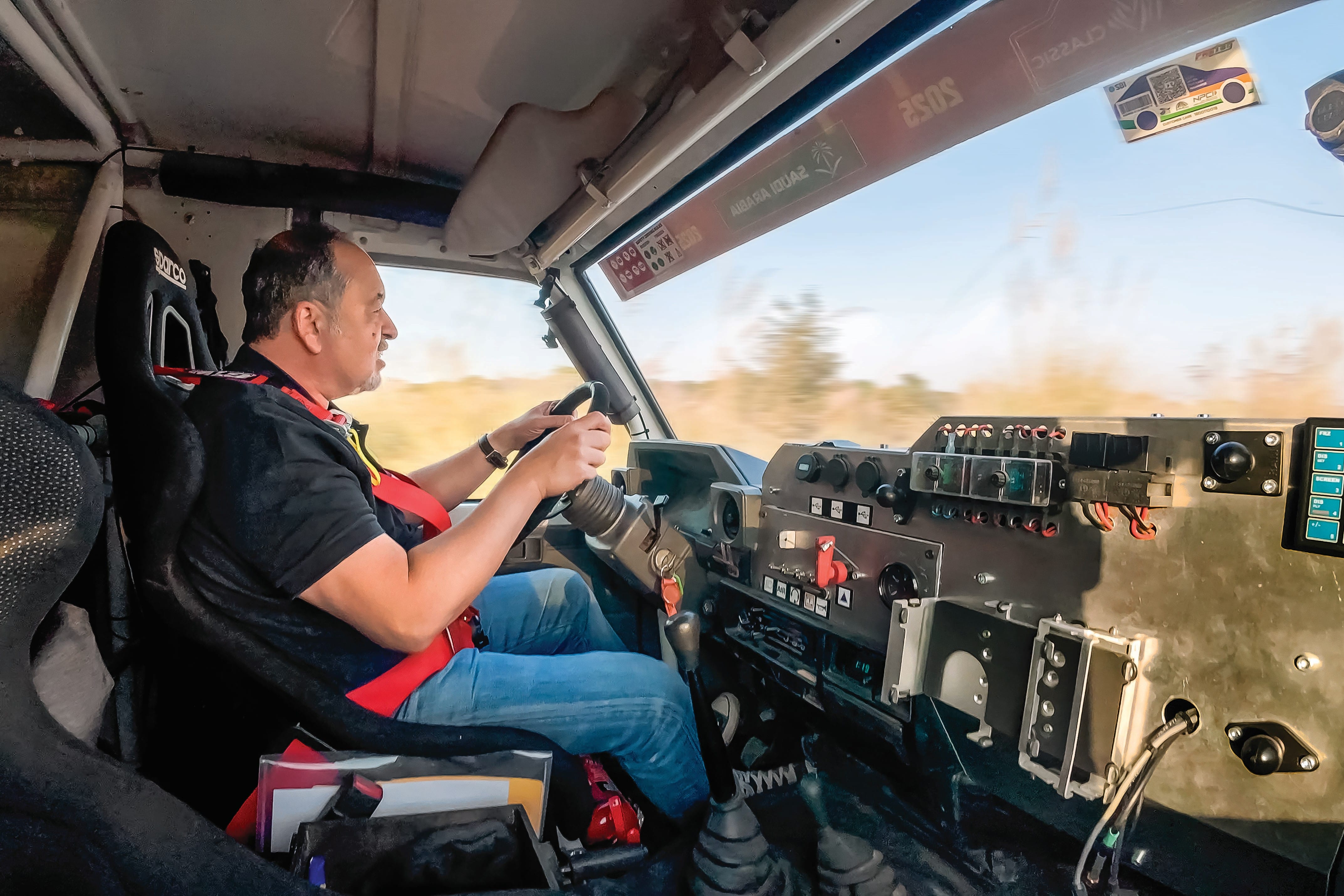
Then, as we climb into and back out of sections of dry river, with steep gradients and all manner of challenges, I understand the Land Cruiser’s reputation for being “unbreakable”. It certainly feels that way from behind the wheel as the biggest drops, rocky outcrops, and bone-jarring sprints over uneven and hard-packed sand and rocks are traversed in an almost nonchalant manner. Far from feeling challenged, it feels like it’s in its element – hopping, skipping and muscling its way over obstacles with disdain.
This holds true even when I step up the pace, the suspension soaking up impacts with a sense of calm. Like it is built to run at these speeds over this terrain. Day after day. Whereas a standard 4x4 might be tossed like a cork by a rutted section, the long travel and well-damped rebound-free 70 Series remains composed, tracks dead straight, and requires only small steering corrections. Neat.
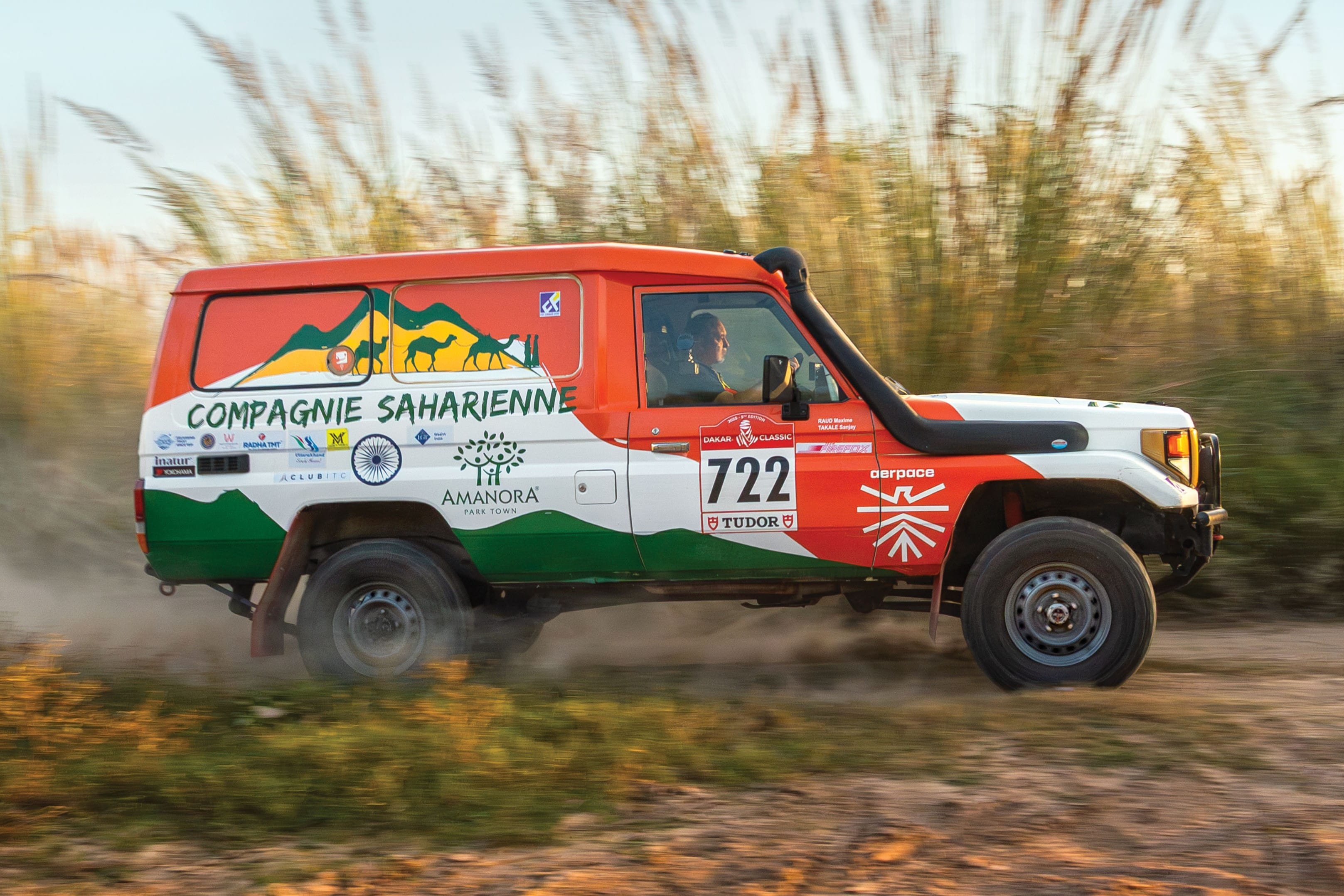
Once I get into the rhythm of things and learn how to place the SUV and bridge the difficult sections, my pace improves. Sure, this is not a modern rally car with explosive speed and cat-like agility. This is a heavy, honest SUV that rewards anticipation, smooth inputs, planning and patience with momentum, allowing you to hold on to high speeds in sections where others have to slow down. It’s fast because it is stable, because it can take the hard knocks and can carry on regardless.
Endurance champ
This HZJ78 DKR may not have the demeanour of a typical rally car, and acceleration and outright grip over rough surfaces are not its forte. What it does, however, is to hold on to a high average speed over challenging terrain by not having to slow down. How to keep moving when everything around you is trying to stop you; that’s its real skill. In an era of ever-increasing technology and complexity, there’s something quietly appealing about its approach, a reminder that endurance motorsport rewards simplicity, patience and raw mechanical strength.
First Indian to finish the Dakar Classic Rally
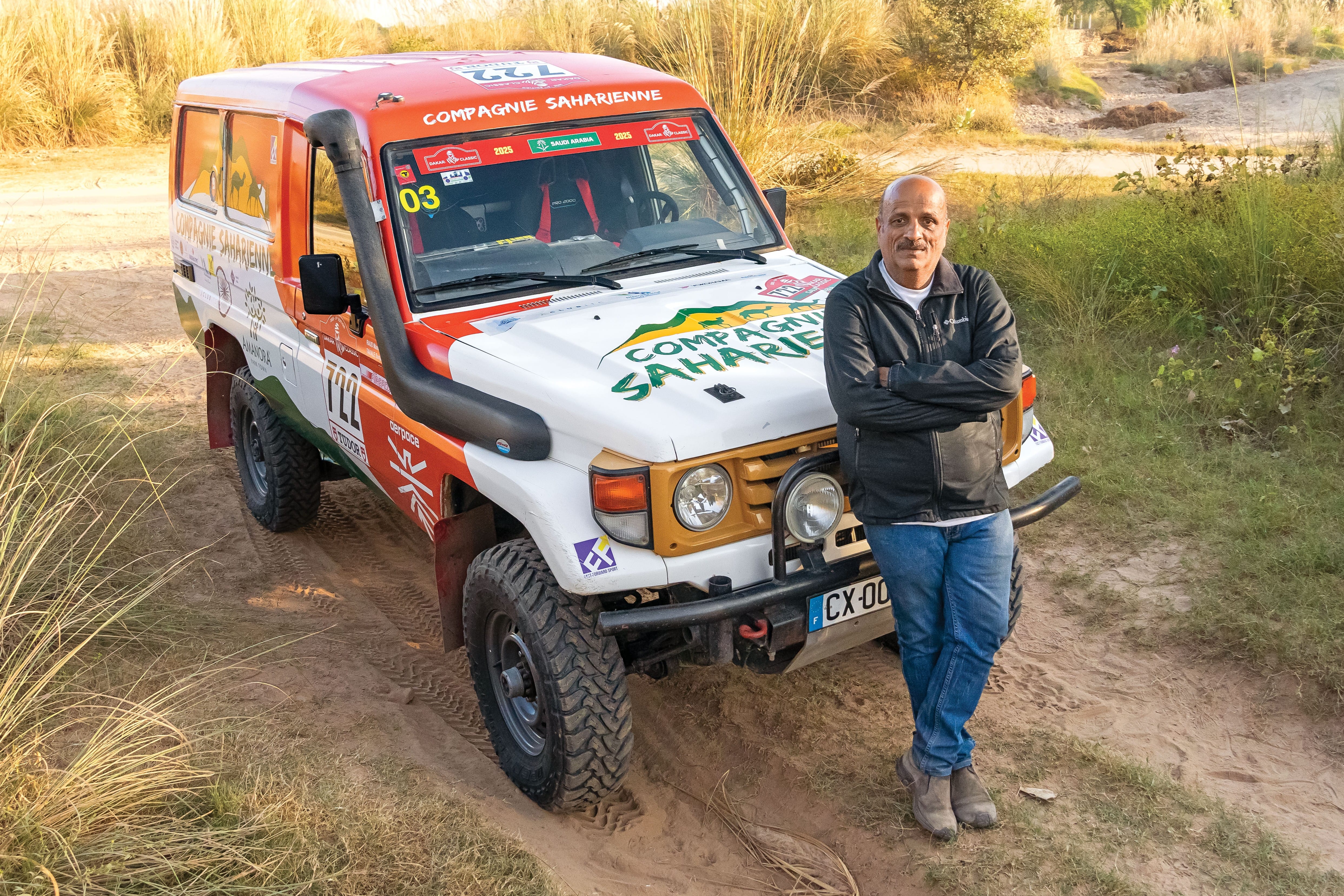
“Finishing Dakar is like winning Dakar.” The sentiment is hard to argue with. Sanjay says the rally breaks you and rebuilds you to be tougher. Hydration and mental resilience are as important as mechanical sympathy, and fatigue is a constant adversary; days on the rally start before dawn and finish long after sunset. Takale finished 18th overall out of 96 cars and 11th in class on his first attempt; seems modest on paper but carries enormous weight if you look at them in context. For a driver who spent decades in motorsport, shifting from lighter rally cars to heavier 4x4s, the 2025 Dakar Classic was both a personal milestone and a demonstration of what careful preparation and respect for the conditions can achieve. And Sanjay says this is only the beginning.
from Autocar India https://ift.tt/nkoAJFp


Comments
Post a Comment