In-depth look at the JSW Gecko Sherp: It's like nothing else
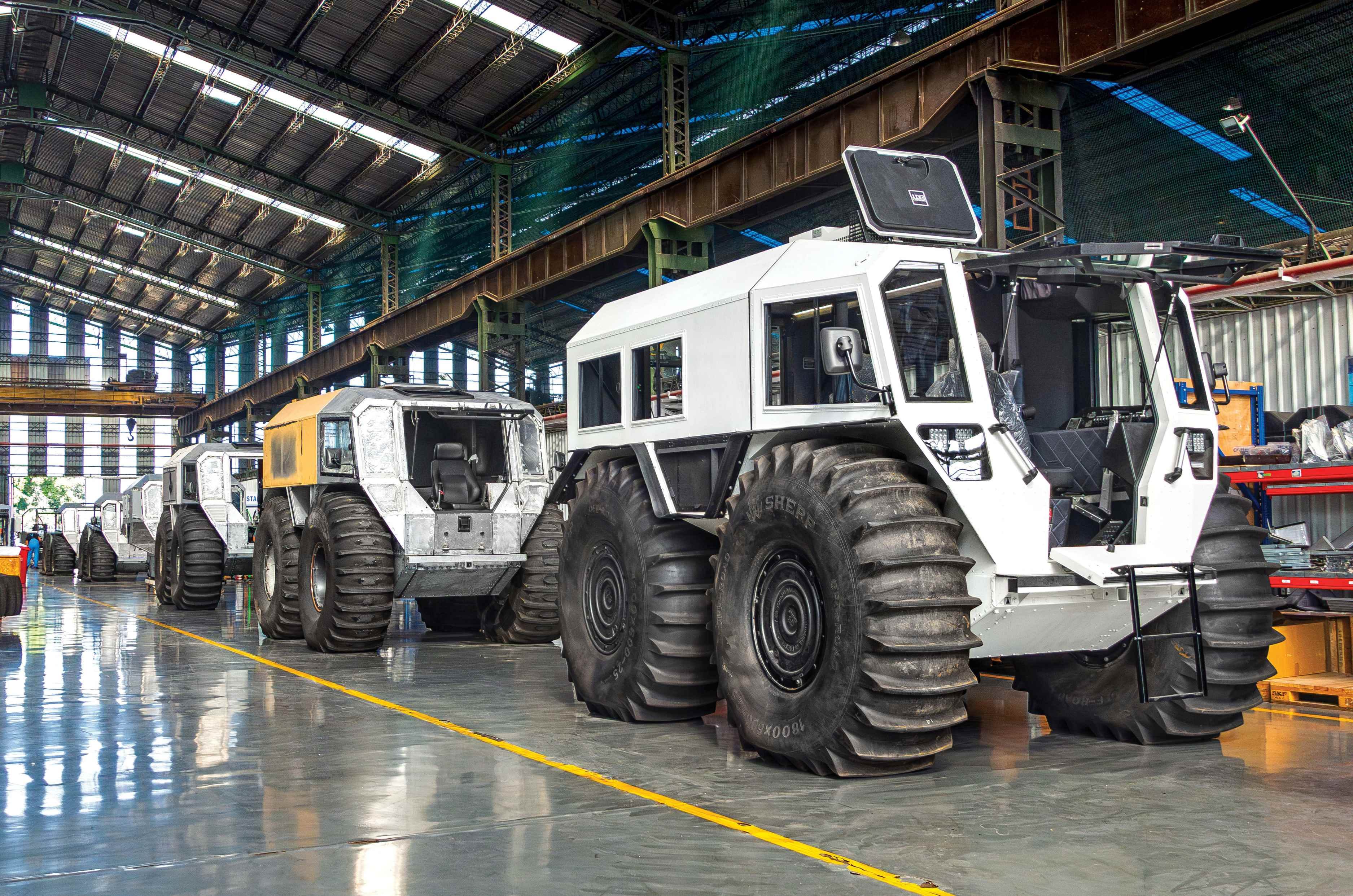
The world’s greatest off-roaders offer impressive skills. Steep inclines, slippery surfaces, sand, snow, rocks – this intrepid bunch can do them all. None, however, can come close to managing what the Sherp can. Ladies and gents, say a big hello to what has to be one of the world’s greatest wheeled off-roaders.
An off-highway vehicle whose journey begins where regular off-roaders throw their hands in the air and give up. Even more fascinating is that the Sherp SMV N1200 is now manufactured in India at JSW Gecko Motors in Chandigarh. So, come with us as we take you through the production process, the design philosophy, and how this vehicle is operated.
The hull floats
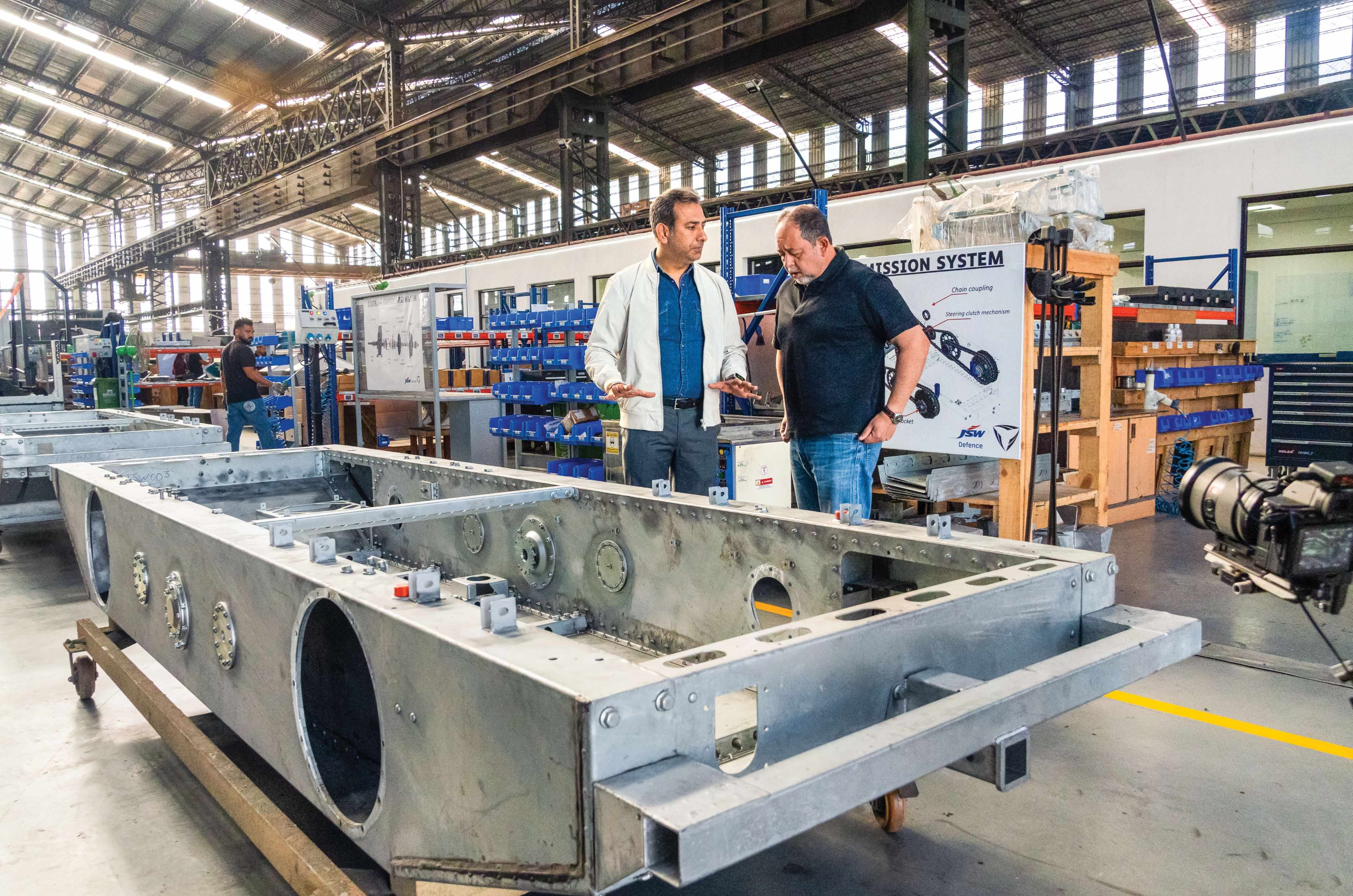
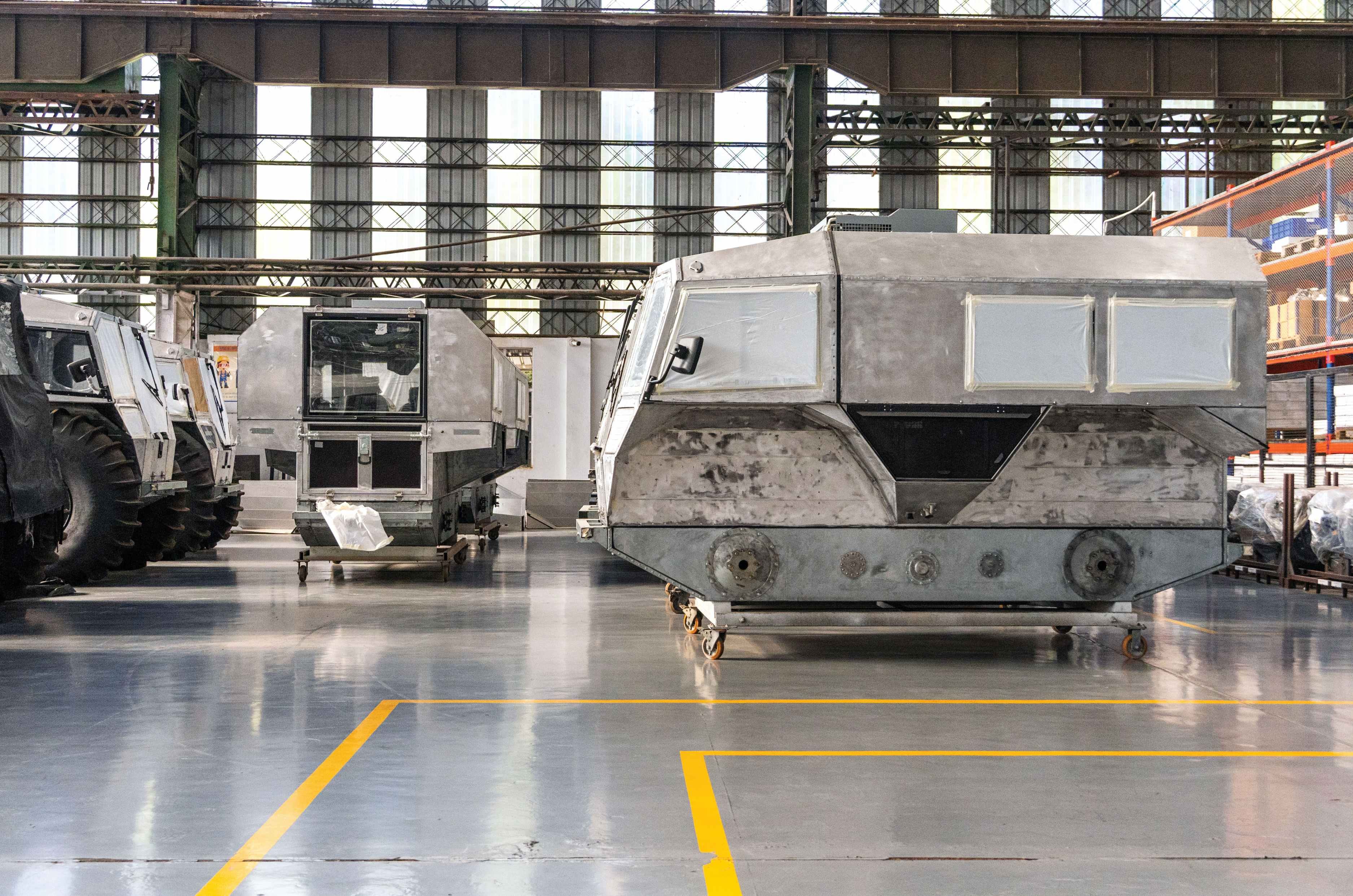
Every Sherp begins with its boat-like hull. JSW, also one of India’s largest steel producers, supplies high-strength steel in various sections, that’s then welded and assembled into the basic structure of the vehicle. The hull is designed to be watertight and durable, forming the backbone of the Sherp’s amphibious capability.
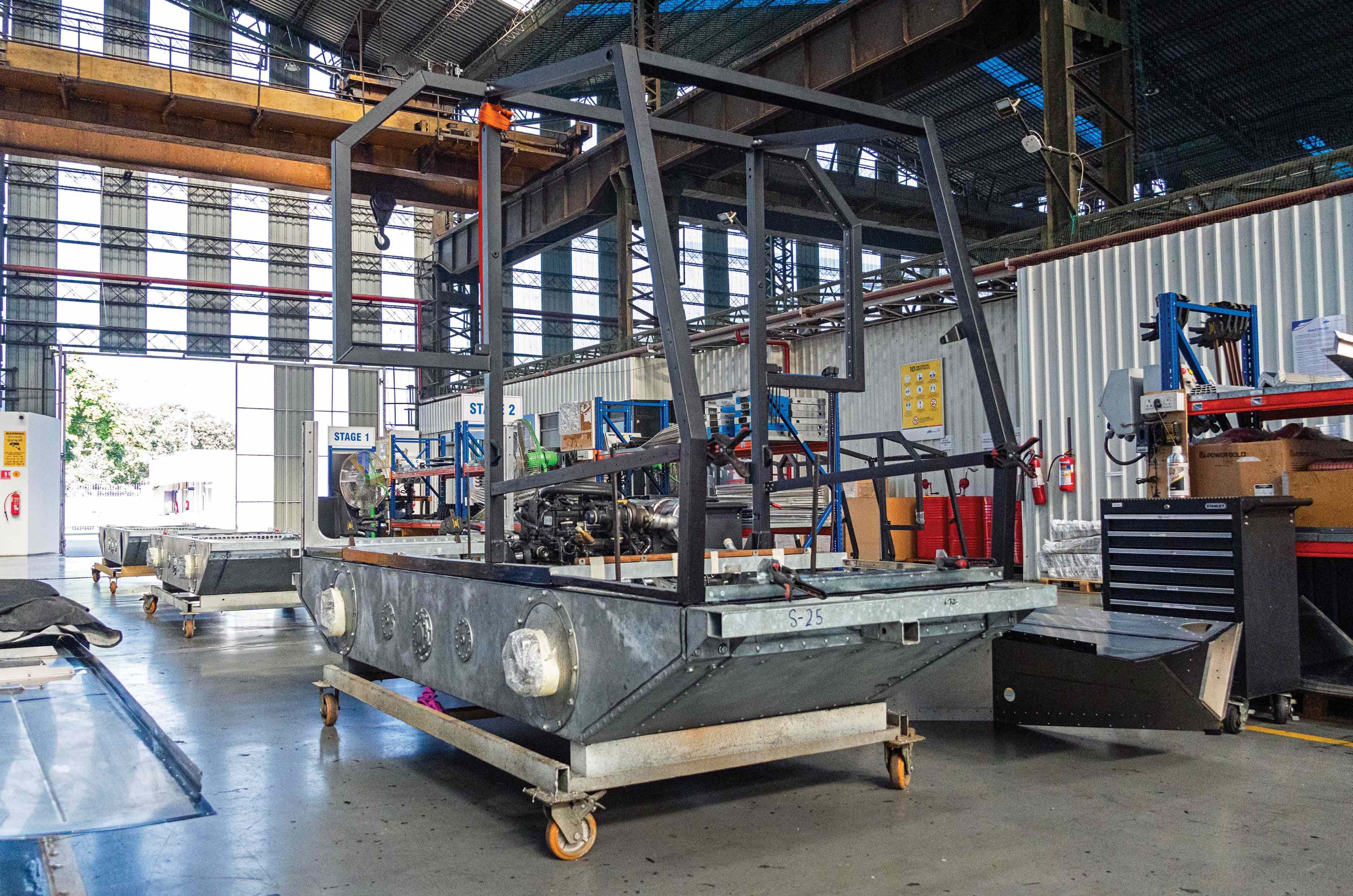
Even more critical is the chain drive system. A complex mechanism that runs inside a sealed oil bath on either side of the hull, it ensures constant lubrication and protection from water, dust, and other environmental factors. Sprockets and drive units, manufactured locally, are fitted here. Sealants are applied to make the hull completely waterproof; a critical requirement for a vehicle that is expected to float and move through water.
Engine makes just 190Nm of torque
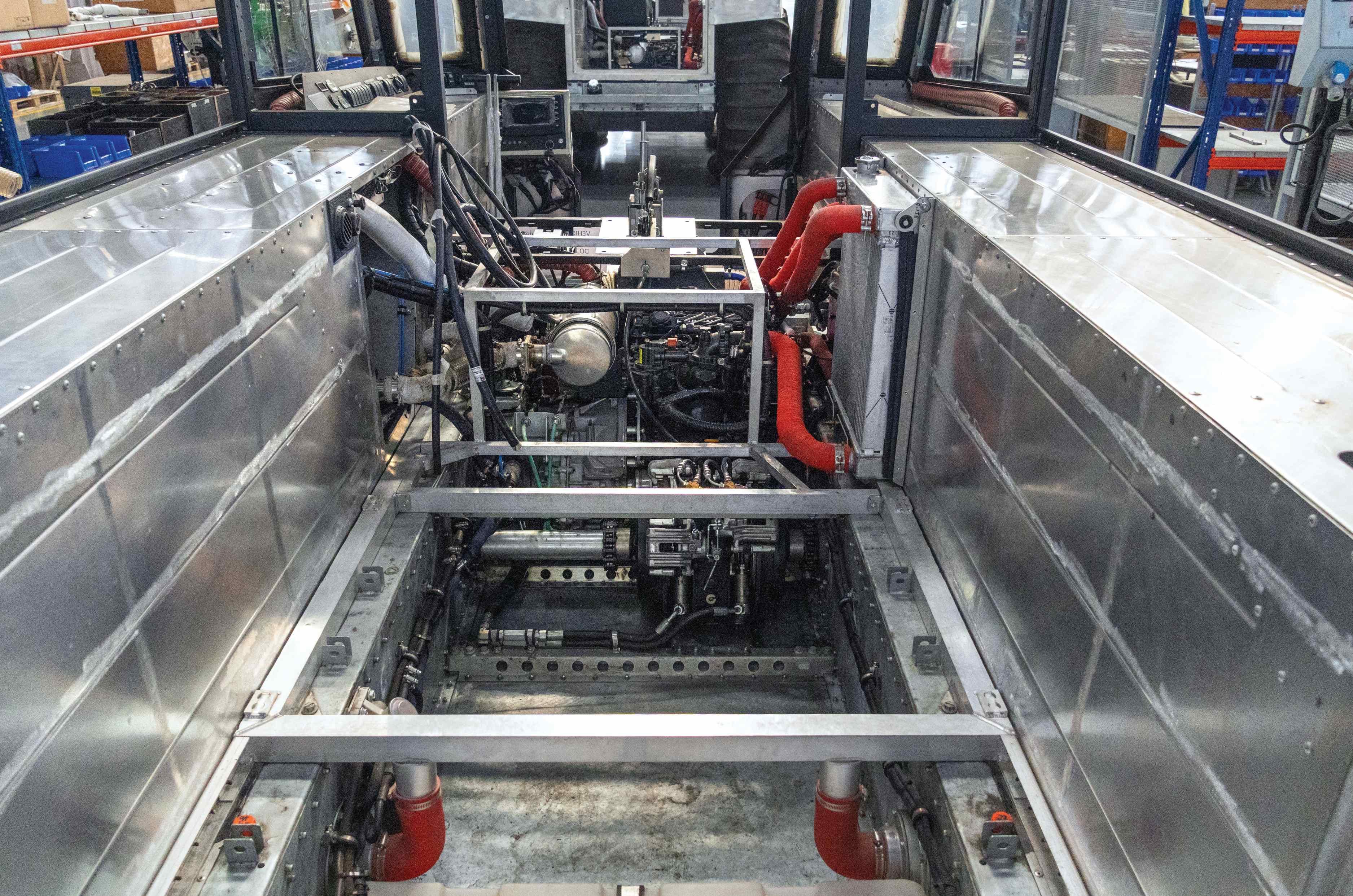
The engine is installed next, and for all its size, the Sherp SMV N1200 is powered by a Hyundai-sourced 1.8-litre three-cylinder diesel engine that produces only 55hp and 190Nm of torque. Unlike car engines, though, this industrial unit is designed to run at a steady RPM for extended periods, and the torque is multiplied by a six-speed manual gearbox from Renault. The torque is further multiplied by as much as a factor of three
by the large 63-inch-diameter tyres, much like a tractor.
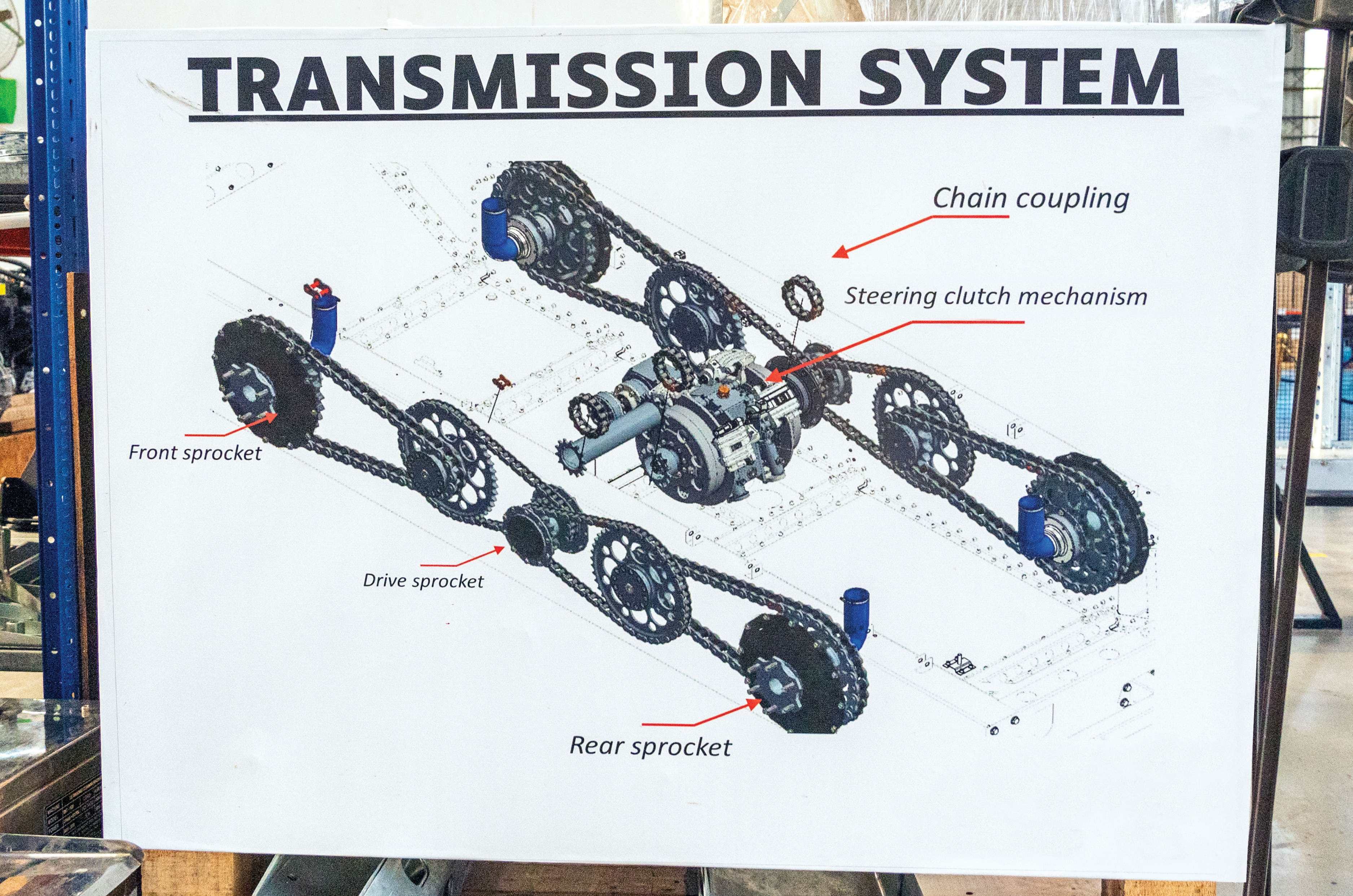
Steering is achieved through differential control rather than a conventional steering rack. By engaging clutches and brakes on either side, power is directed unevenly, allowing the vehicle to turn much like a tracked tank. It is a system that is simple, robust and effective in extreme conditions.
Fuel stored in the wheels
Fuel storage is one of the Sherp’s most distinctive features. The main diesel tank holds 95 litres, but the total capacity is 320 litres. The additional fuel is stored inside the wheel’s housing, at 58 litres per wheel!
The tyres are inflated using exhaust gas, via a pipe at the centre of the wheels that maintain around 3 PSI. The wheels also act as flotation devices, and the Sherp can float even with all four tyres deflated. The ridges on the tyres serve another purpose: they act like paddles, propelling the vehicle through water at speeds of 6-7kph.
Where are all the controls
Cooling is handled in a manner reminiscent of racing cars. Radiators are mounted inside side pods, ensuring efficient airflow. An air filter supplies clean air to the engine, while aluminium body panels and glass are fitted to complete the exterior.
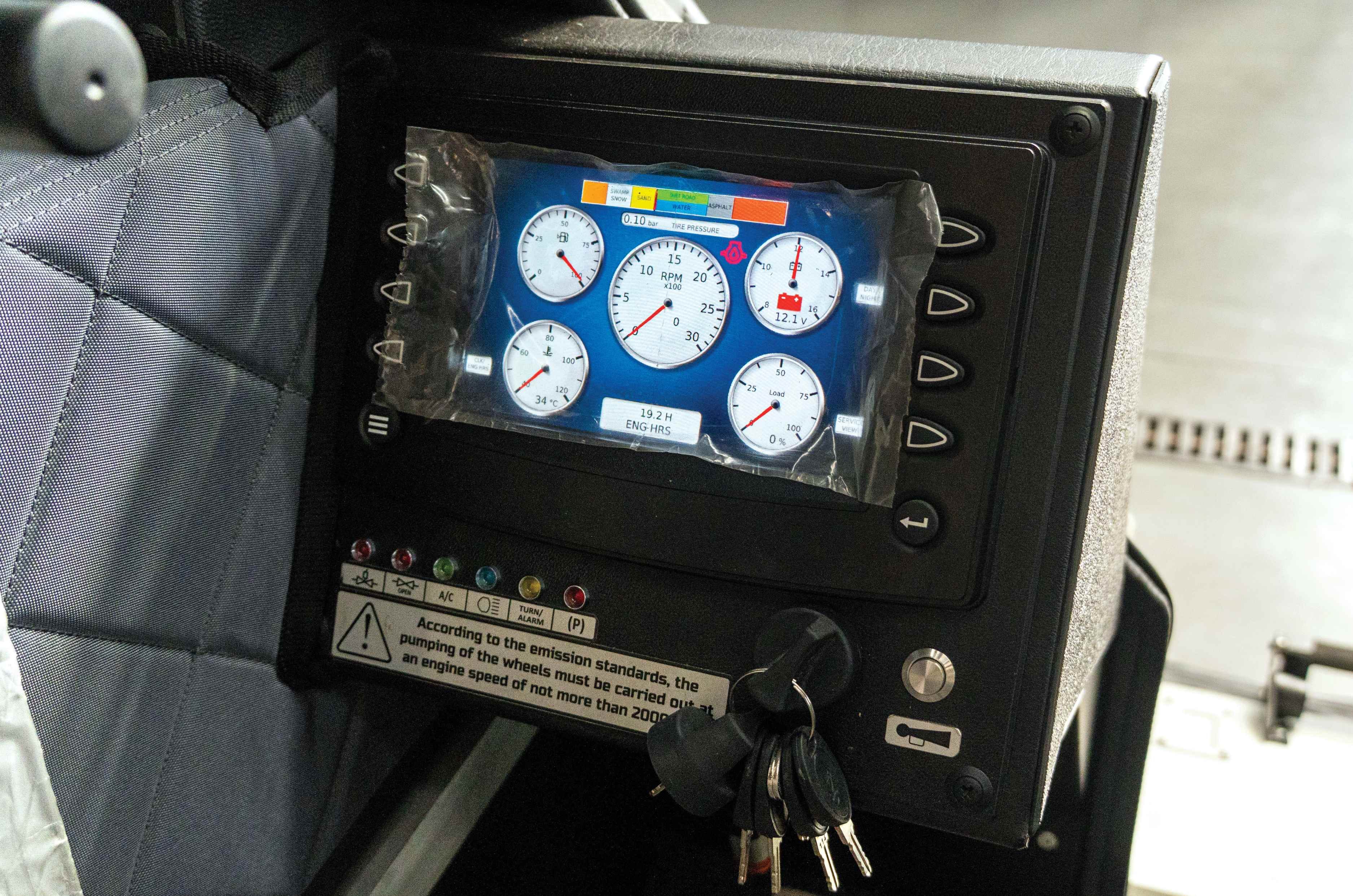
Inside, the design is functional. Entry is through the front, with a windscreen that opens to reveal a stepladder. Controls are mounted on the side panel, operated through switches rather than touchscreens. The manual gearbox is managed via a foot clutch, while acceleration is also controlled by a pedal.
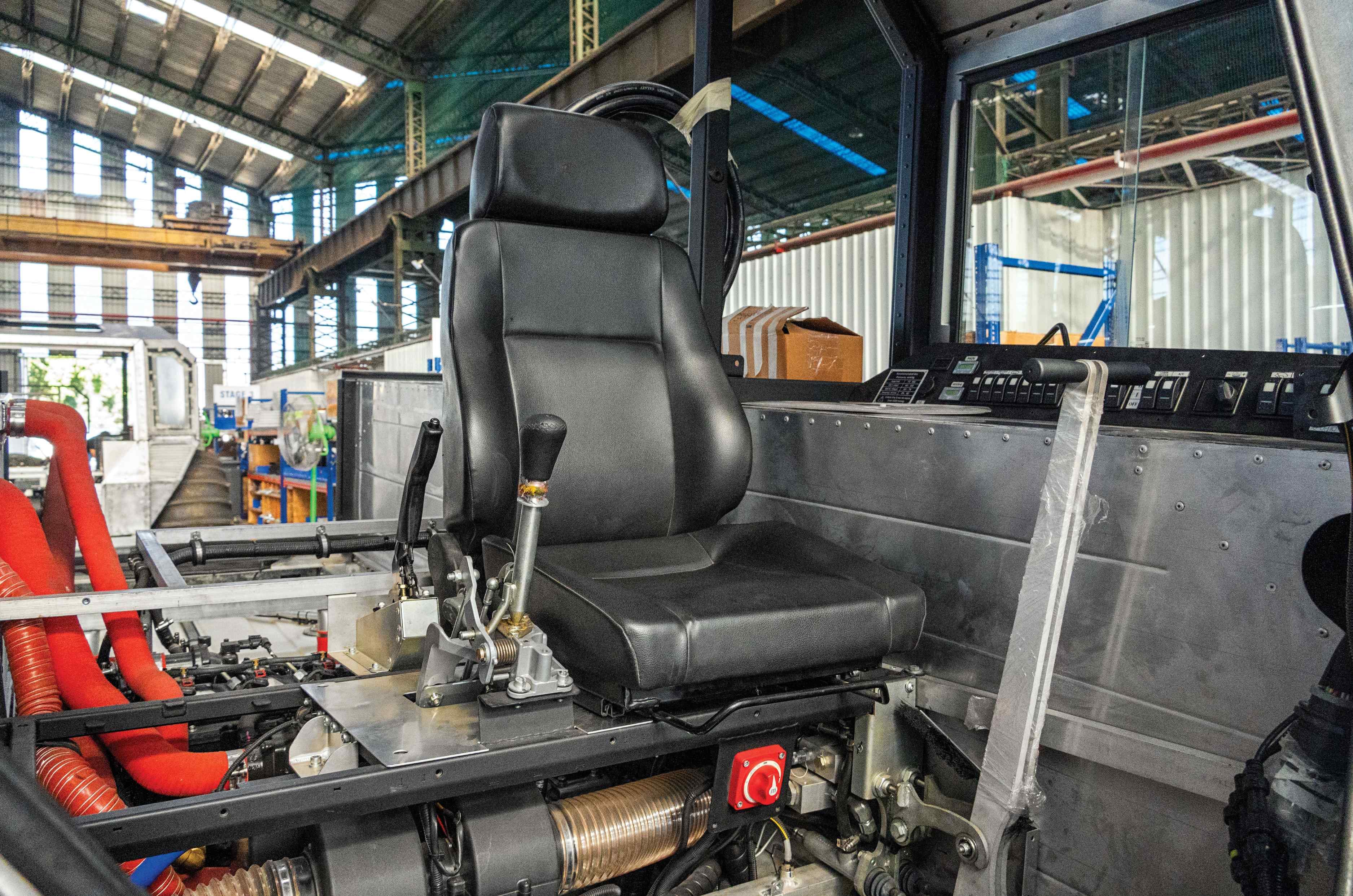
There is no brake pedal, though. Need to brake? Pull both levers back, like the Benz Patentwagen of 1886 – the first car. And steering is achieved using the two levers to brake or slow either side, à la tracked vehicle.
There's no suspension
One of the most striking aspects of the Sherp is the absence of a suspension. The tyres alone absorb shocks and impacts. This design reduces complexity and maintenance requirements. So, how does the Sherp manage this? The vehicle relies on its large, low-pressure tyres to cushion occupants from rough terrain.
Forget seven, it seats nine
The Sherp SMV N1200 seats nine people – two in the front and seven in the rear. The cabin is spacious, with handles provided to help occupants stabilise themselves as the vehicle pitches and rolls. Unlike typical military vehicles, the interior is finished to a higher standard, with attention to comfort.
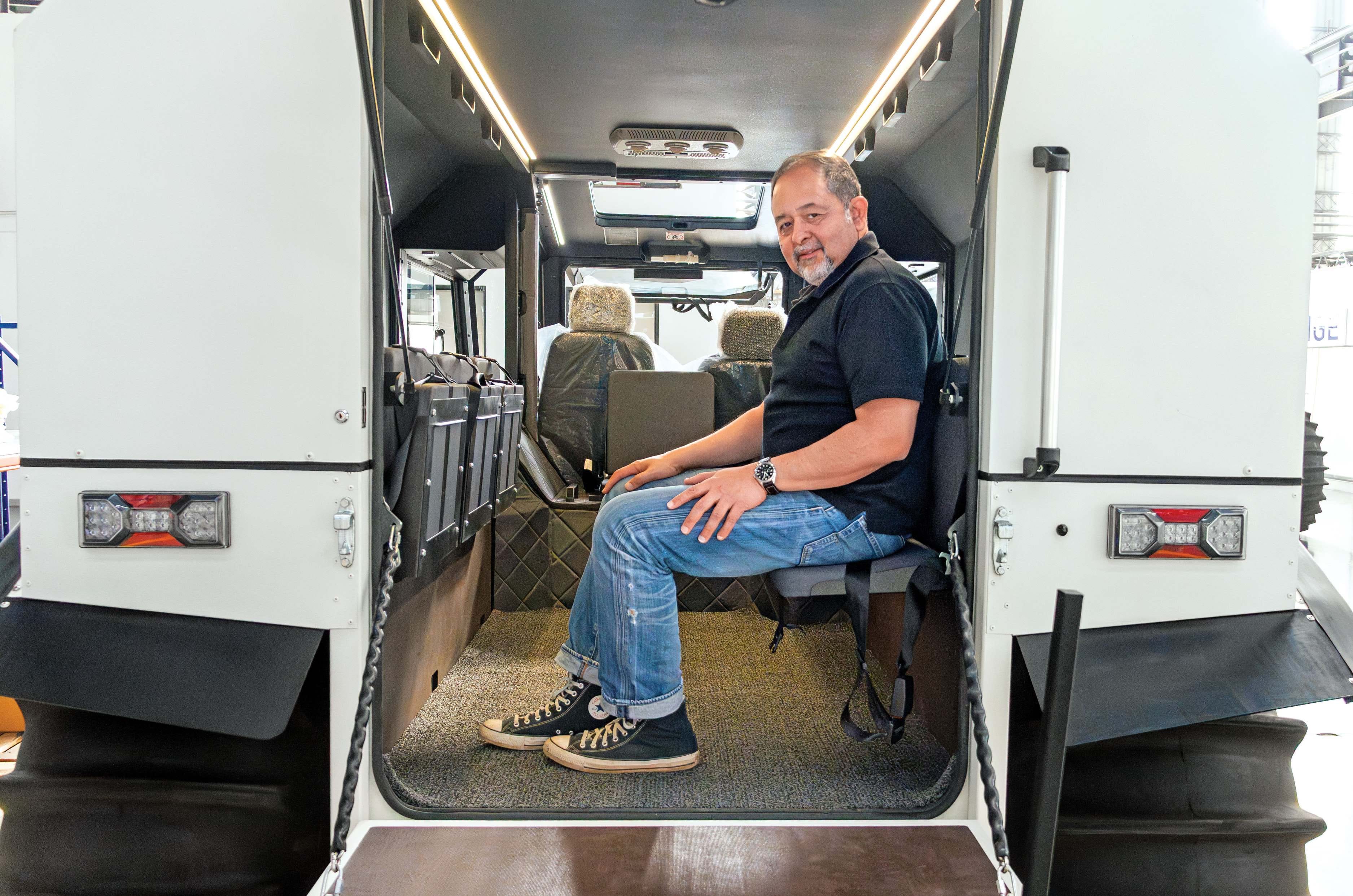
Heating is provided by a separate and tiny turbine, also powered by diesel. This turbine can also pre-heat the engine oil before startup, ensuring smoother operation in cold environments. Though the turbine does not drive the vehicle, it plays a crucial role in maintaining cabin comfort and mechanical reliability.
The instrument panel is a collection of switches and gauges. Functions include lights, indicators, wipers, tyre pressure monitoring, cabin heating, air conditioning and fuel heating. The latter is particularly useful in cold climates, where diesel can thicken before ignition.
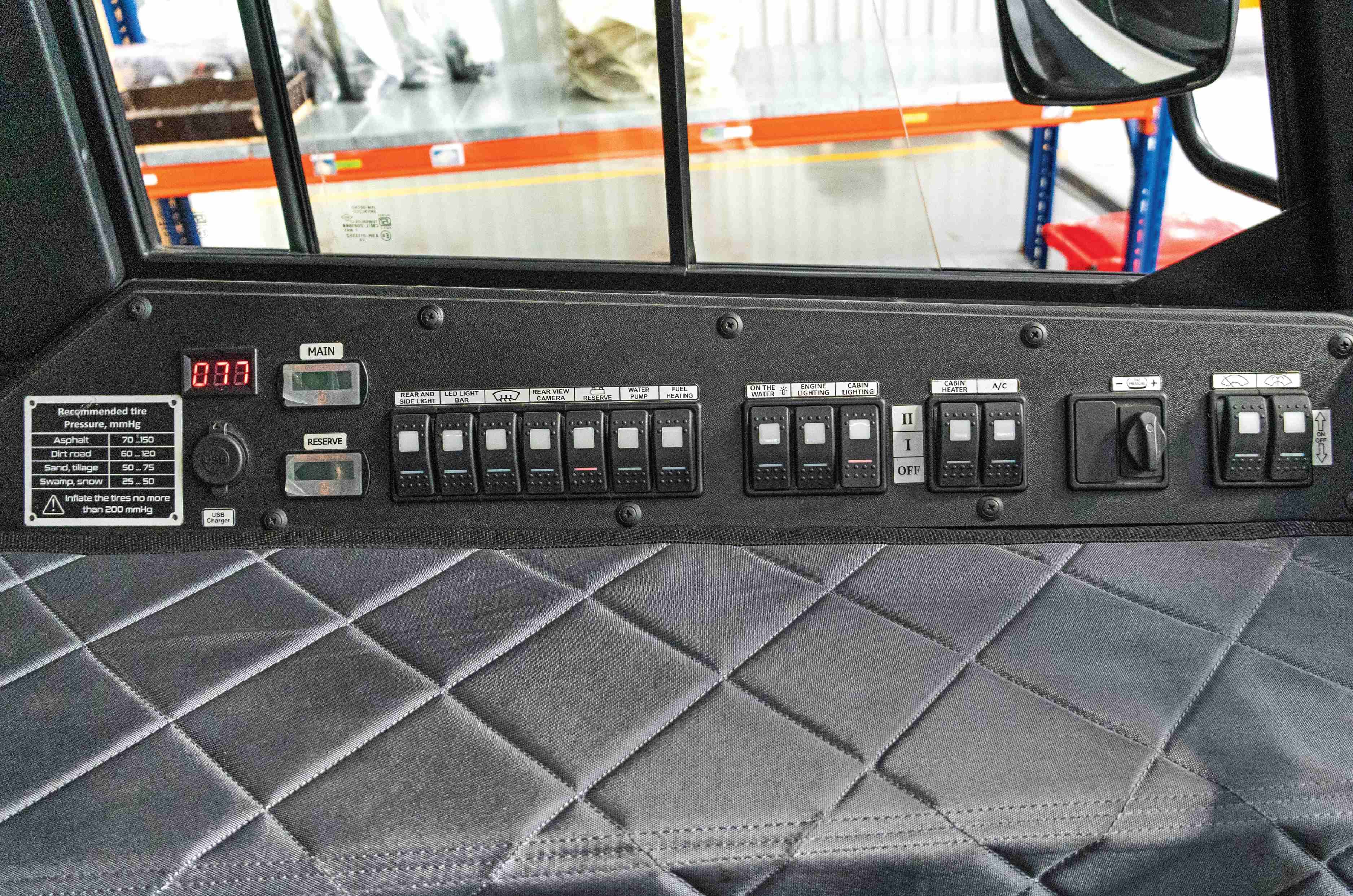
A bilge pump is fitted to remove water from the cabin if necessary, while rearview cameras and LED lighting enhance visibility. A chart provides guidance on tyre pressures for different conditions, ensuring operators can adapt the vehicle to varied terrain.
Two left feet
Operating the Sherp is unlike driving any conventional vehicle. The absence of a steering wheel, reliance on levers, and differential steering system require practice. Braking and turning are achieved through the same controls, demanding coordination.
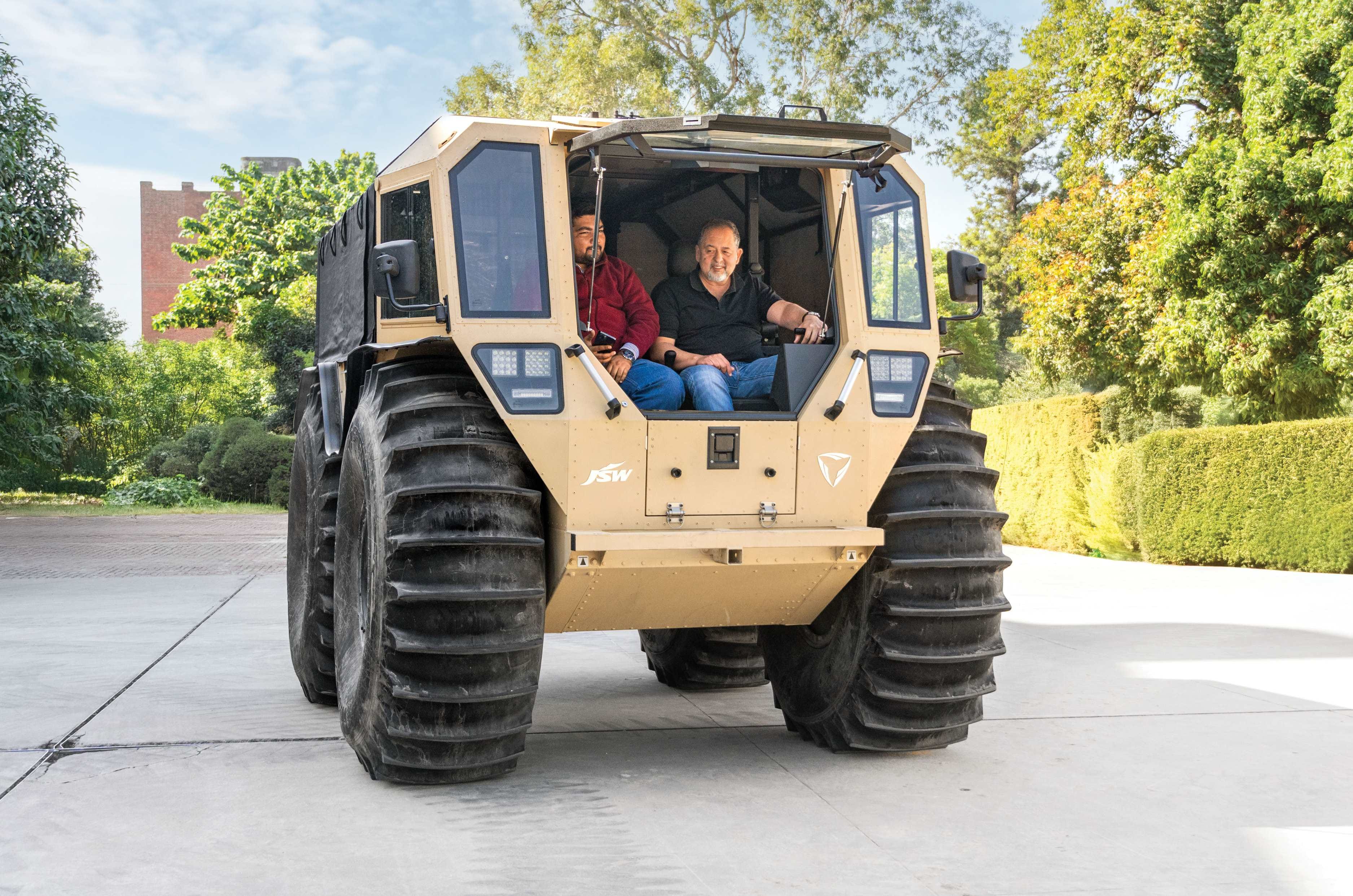
Acceleration is steady rather than rapid, reflecting the engine’s industrial nature. The driving experience, nonetheless, is rewarding, offering a sense of control over terrain that is difficult to traverse.
In a class of one
In the end, the Sherp SMV N1200 is a reminder that innovation and good ideas can overcome almost any obstacle. Built – not just assembled – in Chandigarh, it is a vehicle that helps motorised transport traverse hitherto unreachable corners of India you could only trek out to. And that is why this is a vehicle that will go out to many of our forces.
from Autocar India https://ift.tt/Hi5BzKW


Comments
Post a Comment