Hero Destini 110 Fuel Economy Tested and Explained
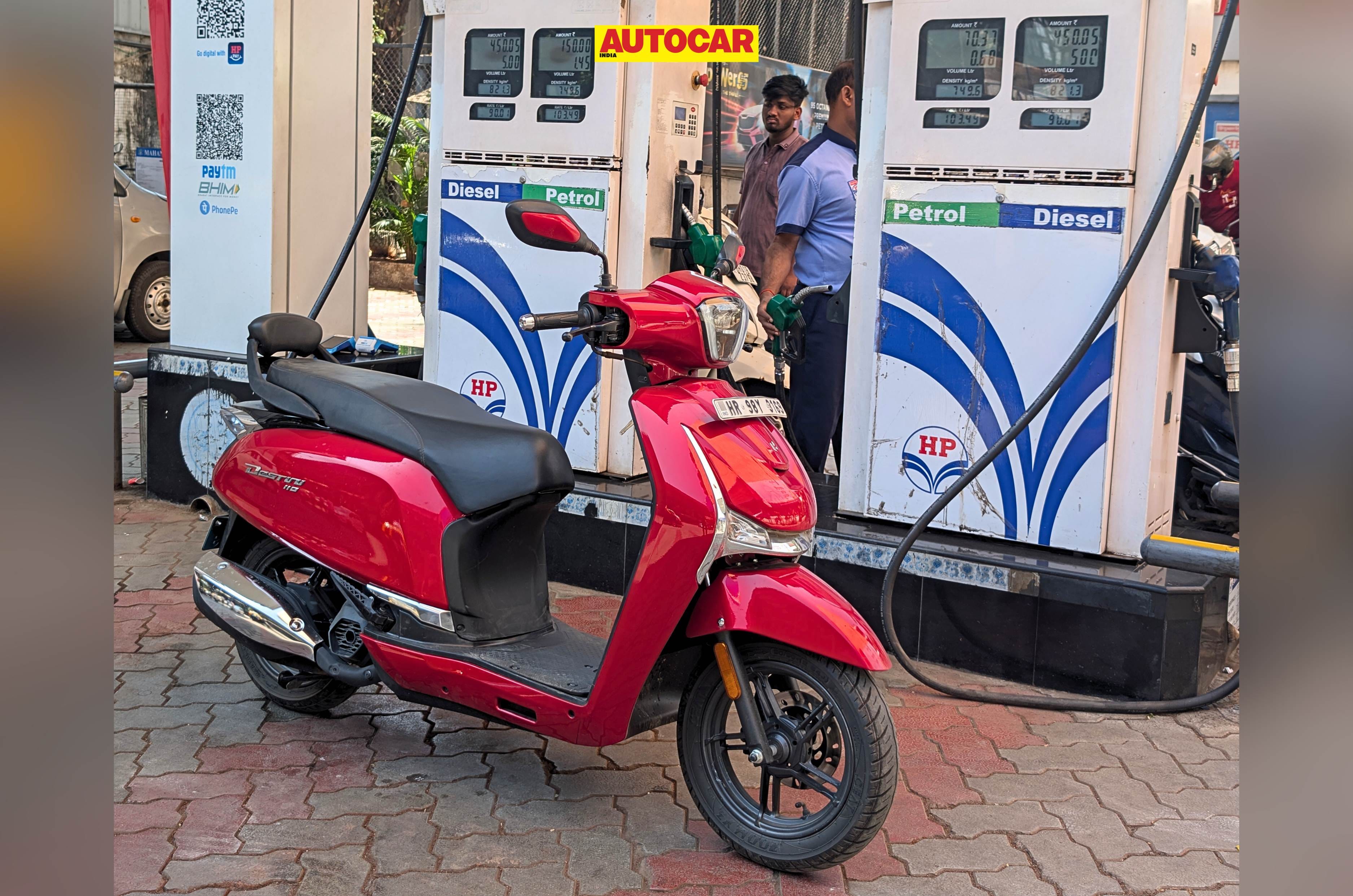
The Hero Destini uses a 110.9cc, single-cyl, air-cooled engine putting out 8.1hp at 7,250rpm and a peak torque of 8.7Nm at 5,750rpm. It also features Hero’s i3S (idle stop-start system) feature which cuts off the engine after a few seconds at a signal and restarts with a twist of the throttle and engaging the brake together.
Hero Destini 110 real-world fuel efficiency
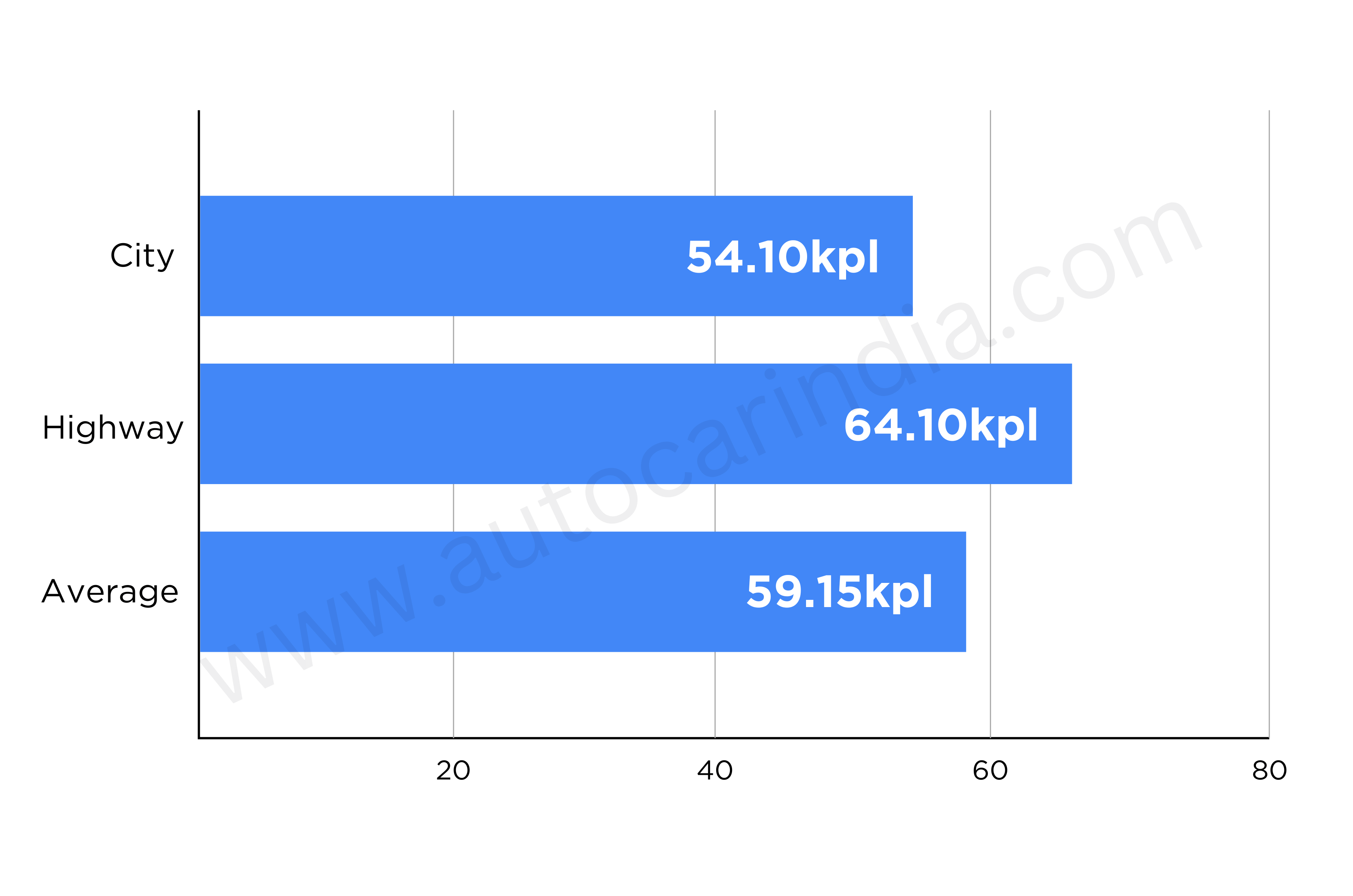
Hero Destini 110 managed 54.10kpl in the city and 64.10kpl out on the highway.
For this test, we ran the Destini on the highway for 51.3km, after which the bike needed 0.80 litres of fuel to fill up the tank again. Therefore, we arrived at a highway fuel economy number of 64.1kpl for the Destini 110. Once that was done, we rode the Destini through the busy streets of Mumbai for 46.1km, after which the fuel tank needed 0.80 litres. Thereby, we achieved a city fuel efficiency figure of 54.1kpl.
Hero Destini 110 fuel economy analysis
The Hero Destini 110 is a family-oriented scooter that offers decent performance for daily commuting. For our city fuel efficiency run, we were cruising, keeping a steady pace, and not unnecessarily accelerating. Meanwhile, out on the highway, we kept a speed of between 65kph to 70kph for most of the time. The scooter also has a live average fuel efficiency indicator, allowing riders to extract the best mileage. Overall, the mileage figures are good for its segment, but keep in mind that mileage figures will vary depending on riding style and conditions.
Autocar India’s fuel-efficiency testing
Our fuel-efficiency testing routine starts by first brimming the tank and ensuring the bike is running the manufacturer’s recommended tyre pressures. The bike is then ridden on fixed city and highway routes, where we maintain average speeds that best mimic real-world scenarios, as well as keeping speed limits in mind. The payload on the bikes is kept constant by balancing rider weights and ballast, ensuring consistency across different vehicles and riders. At the end of the test cycle, the fuel tank is once again filled to the brim, giving us an accurate figure of how much fuel has been consumed against the trip meter reading.
from Autocar India https://ift.tt/W2uGMof


Comments
Post a Comment