Toyota Camry real world fuel economy tested, explained
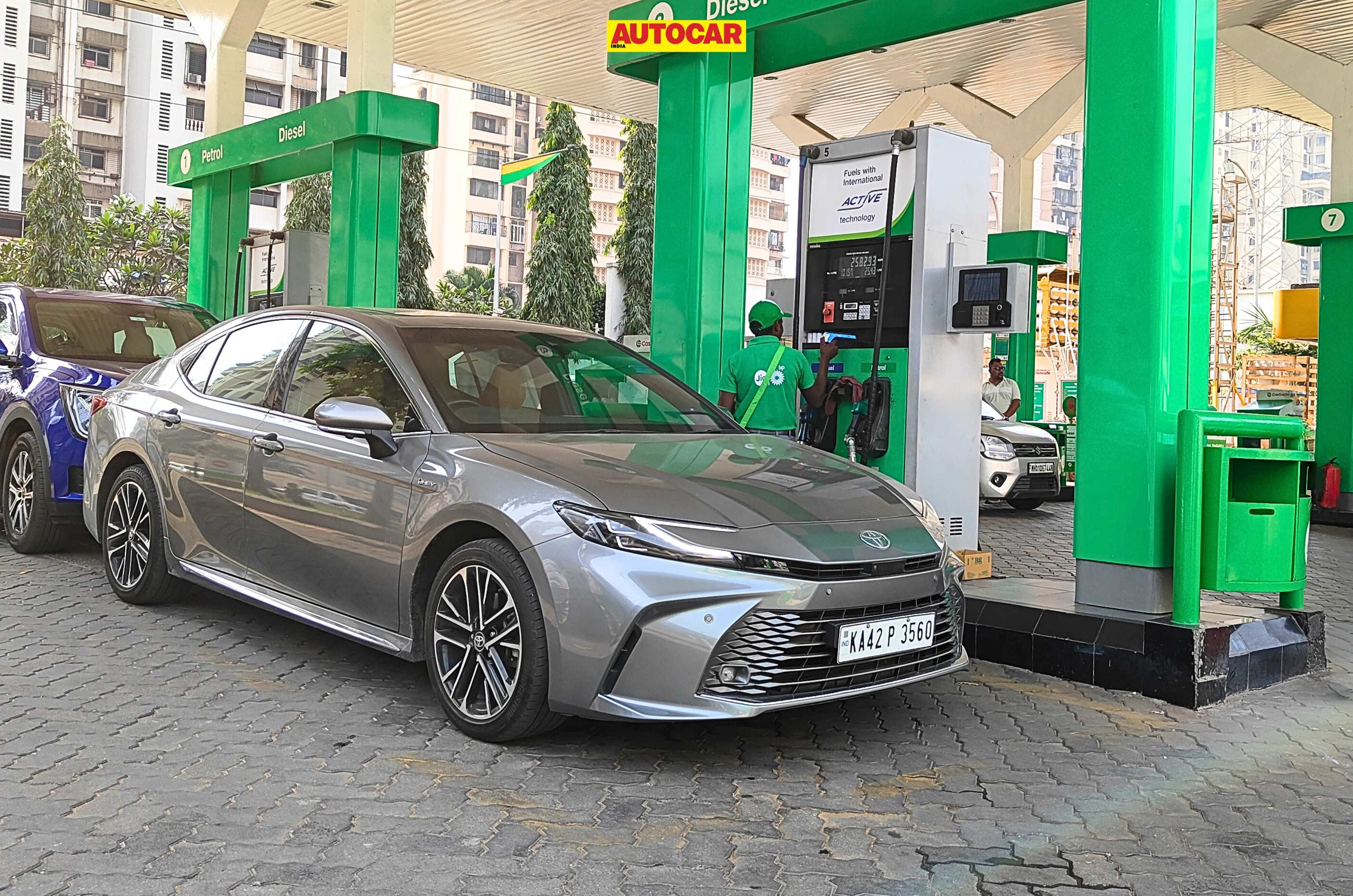
The Toyota Camry is an entry-level luxury sedan that has been launched in India with a fifth-generation hybrid powertrain. It is priced at Rs 47.48 lakh (ex-showroom), but the headline figure is its fuel efficiency, which, according to Toyota, is up to 25.49kpl. We now put this Japanese flagship sedan to the test to find out whether it is as efficient as the company claims.
- Has 3 drive modes: Eco, Normal and Sport
- Gets new-gen lihium-ion battery
- Weighs 1,645kg
Toyota Camry Hybrid real-world mileage test
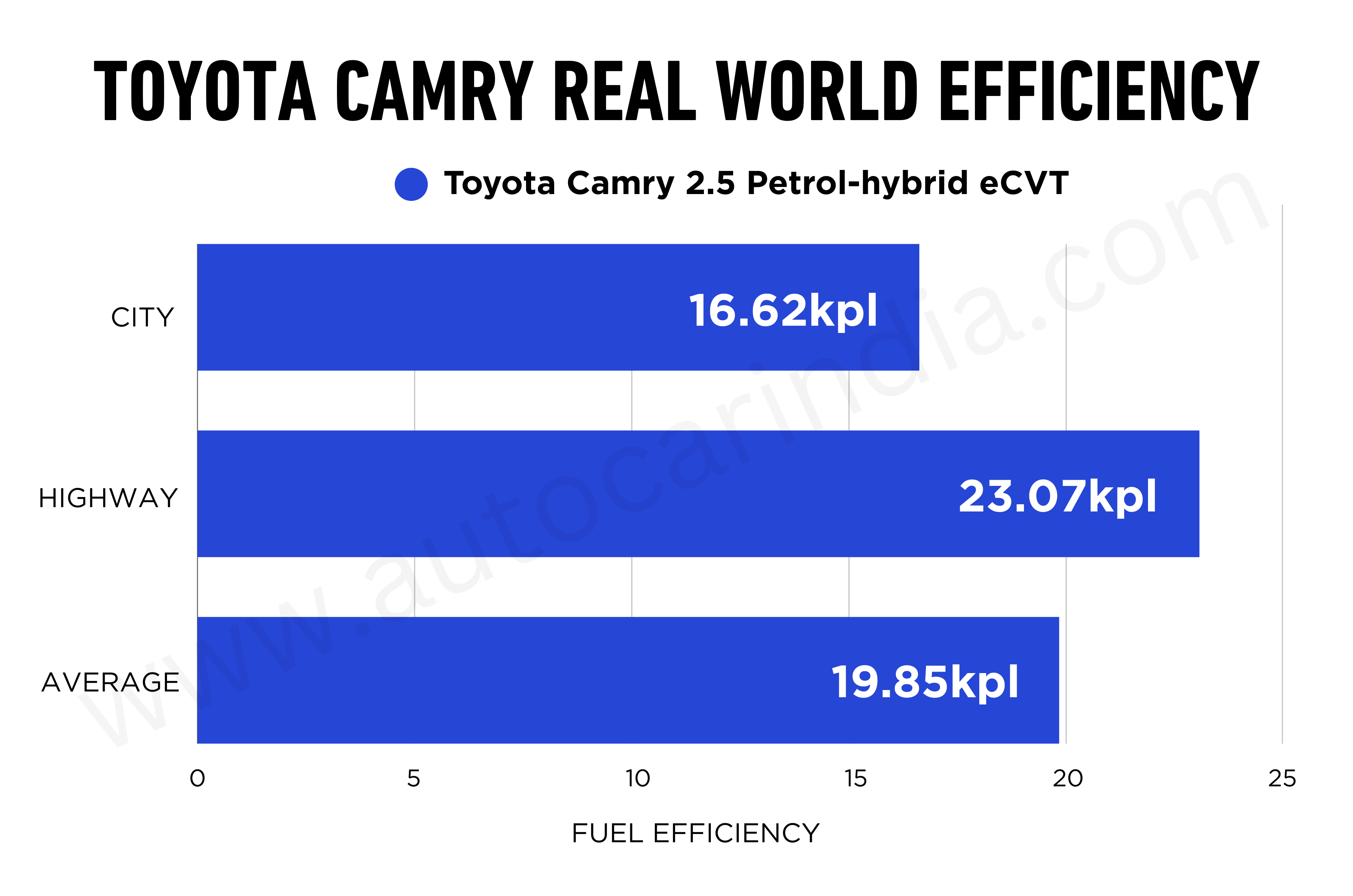
Toyota Camry hybrid has a staggering average real-world mileage of 19.85kpl.
The Camry now deploys a new fifth-generation hybrid powertrain with a lithium-ion battery, which is said to be lighter and more advanced than the nickel-metal hydride unit available in the outgoing version. The hybrid system produces a maximum output of 230hp, and power is transmitted to the front wheels via an e-CVT (electronic continuously variable transmission).
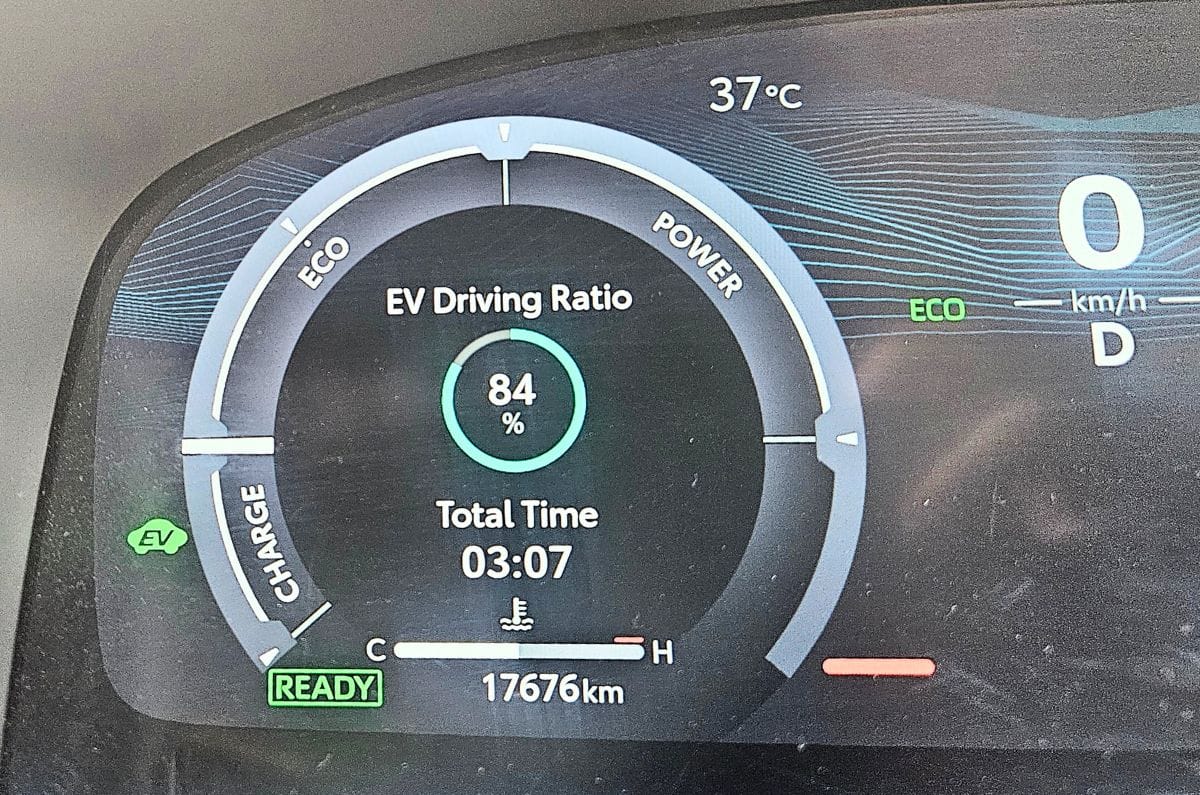
Also new is a drive meter that indicates an EV driving ratio. During our real-world tests, conducted in Eco mode, we noticed that the car remained in EV mode for over 80 percent of the time.
In the city, the Camry hybrid delivered an efficiency of 16.62kpl despite ambient temperatures hitting 38deg C. Temperatures during our highway drive were relatively cooler, and on account of its aero design and efficient powertrain, this 1.6-tonne delivered a staggering 23.07kpl.
Autocar India’s fuel efficiency testing
Before our real-world fuel efficiency tests, we fill our test cars’ tanks to the brim and maintain tyre pressures based on the manufacturer’s recommendation. These cars are driven in fixed city and highway loops in and around Navi Mumbai, and we maintain certain average speeds. Throughout the tests, the air conditioning is set to 22deg C in full-auto mode, and other electricals, such as the audio system, indicators and wipers, are used when required, just like a regular user would. Periodic driver swaps further neutralise variations in driver patterns. At the end of each cycle, we calculate efficiency by filling the tanks to full again.
from Autocar India https://ift.tt/y0i1UcX


Comments
Post a Comment