Power of the chip matters more than power of the engine, says Visteon CEO
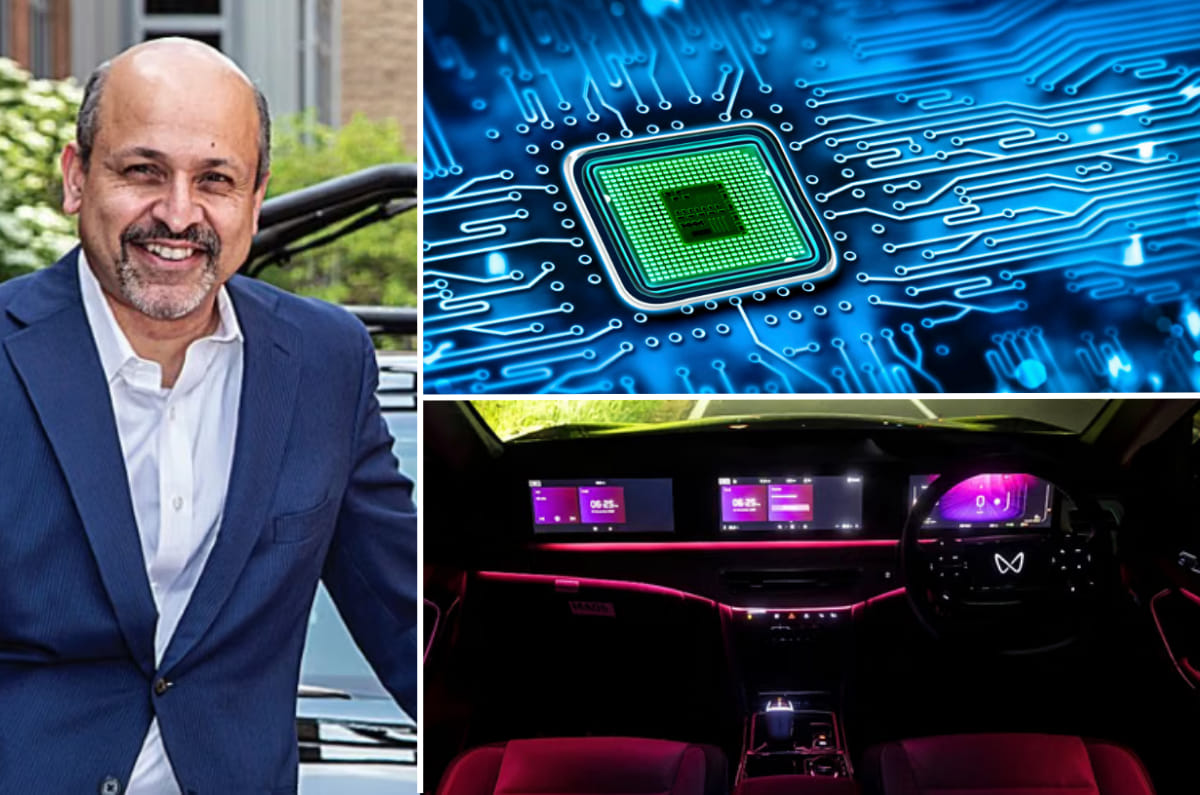
For decades, the engine was the heart of a car. Power, refinement and fuel efficiency were the key measures of progress. Today, that focus has shifted. Increasingly, what sets cars apart is not what sits under the bonnet but the technology running behind the screens. In many ways, technology has moved from being an add-on to becoming the backbone of modern vehicle design. Speaking in a recent interaction with Autocar India, Sachin Lawande, the CEO of Visteon, said, “Today, the power of the chip matters more than the power of the engine.”
Touchscreens, digital clusters, connected services and driver-assistance systems have become central to how buyers judge a car. In many segments, especially mass-market, technology and features now matter as much as – if not more than – outright performance.
As Lawande put it, “We all grew up in an era where cars were about powerful engines. Now, the generation buying cars isn’t looking at horsepower – the focus is on technology.”
Cars are now software-led machines, not engine-led ones
Modern cars rely on hundreds of chips and multiple control units to function. These handle everything from infotainment and navigation to safety systems, power management and climate control.
Buyer expectations have also changed. They want interfaces to be quick and intuitive, updates to happen wirelessly and for features to feel as seamless as they do on smartphones. As a result, carmakers are investing heavily in computing power, display technology and software integration.
“The car is the most sophisticated piece of technology most consumers will ever own,” said Lawande, adding, “There is nothing in your home that has more semiconductors or more software than a modern car, and it has to work reliably in far harsher conditions.”
The chip shortage was a wake-up call
The global semiconductor shortage following the pandemic highlighted how dependent the auto industry has become on chips. Production lines stopped, waiting periods grew, and some cars were launched without key features.
It also exposed the vulnerability of supply chains and the auto industry’s lower priority compared to consumer electronics. For manufacturers, it was a clear reminder that semiconductors are now as critical as steel, engines or gearboxes.
“The chip crisis exposed how shallow the automotive supply chain really was. In many cases, the entire industry was operating with less than ten days of inventory, which made disruptions unavoidable,” the Visteon CEO remarked.
Why chips will define the future of cars
As cars become more connected, electrified and software-driven, the demand for computing power will only grow. Advanced driver aids, smarter safety systems and more personalised in-car experiences all depend on capable hardware and well-designed software.
“The way cars are being developed is changing,” Lawande said. “Software is no longer fixed at the time of launch. It keeps evolving over the vehicle’s life, and that makes computing power and electronics far more central to how modern cars are designed and updated.”
Engines still matter, especially for efficiency and emissions, but they are no longer the sole measure of advancement. Today, the real progress in cars lies in computing power, software capability and how intelligently technology is integrated.
from Autocar India https://ift.tt/hEpJFeU


Comments
Post a Comment