Opinion: Nissan Gravite leaves some important stones unturned
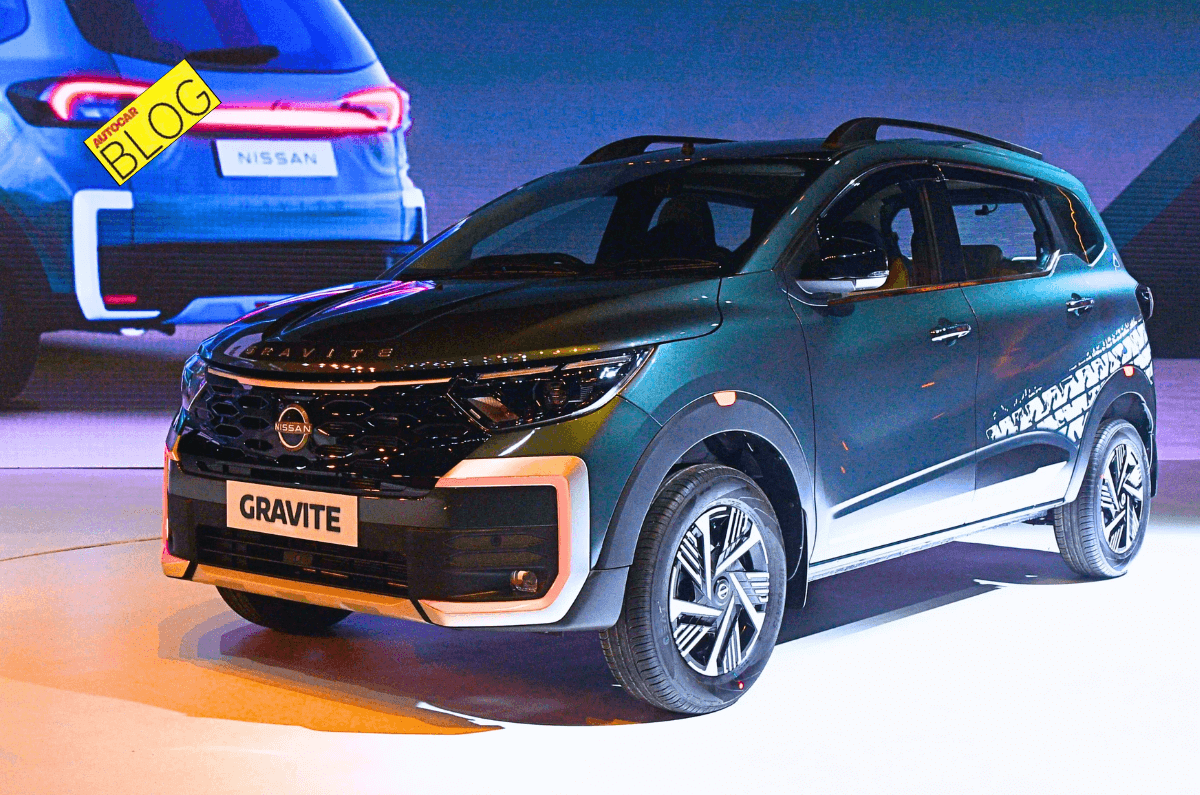
Renault India first launched the Triber in August 2019, followed by its long-overdue facelift in July 2025. Fast forward to February 2026, and Nissan has introduced its version of the Triber, called the Gravite. Apart from a handful of cosmetic differences, the two platform siblings remain largely identical. This also means that Nissan has let a golden opportunity to address the Triber’s known gaps slip by. Let me explain.
The Triber, and by extension the Gravite, demonstrate how clever packaging enables three rows of seating within a sub-four-metre MPV footprint. Seat comfort is good, and the second and third rows are equipped with dedicated AC vents. However, USB charging is reserved for the front passengers, despite the strong focus on overall occupant comfort. Another feature that could have boosted the Gravite’s appeal is a 360-degree camera setup, but like its Renault counterpart, it makes do with only a rear camera. And in case you didn’t notice, the new Gravite carries over the pre-facelift Triber’s dashboard, which naturally raises the question: why stop short there?
Even on the limited-run Launch Edition, based on the top-spec Tekna variant, alloy wheels are absent. Yes, this version does bundle in goodies like a JBL sound system and a dual-channel dashcam, but skipping alloy wheels feels out of step. What makes it more puzzling is that the Triber at least offers them as an option, whereas the Gravite misses out entirely, at least at the time of writing.
Renault and Nissan have long sold badge-engineered models in the country, yet the Kiger and Magnite, respectively, manage to look clearly distinct. To the untrained eye, they don’t even come across as the same underlying vehicle. Applying a similar approach to the Gravite could have gone a long way in giving it a stronger visual identity.
For those lamenting the absence of a turbo-petrol option, it’s worth noting that one had earlier been considered for the Triber and, had it made it to the facelift, the Gravite could have inherited it too. Renault India’s marketing and sales VP, Francisco Marques, had previously stated that most Triber buyers view it as a fuel-efficient family car, with limited demand for outright performance. As a result, the sole 72hp, 1-litre naturally aspirated engine continues, aided by its localisation and the cost efficiencies that come with it. The 100hp, 1-litre turbo-petrol unit seen in the brands’ compact SUVs may seem like an obvious solution, but it remains unlocalised, and introducing it would have significantly pushed up costs, potentially upsetting the aggressive pricing of these MPVs.
Given how the Triber has dominated a segment that has seen no real competition over the years, this could have been a chance for Gravite to step a notch ahead. Even now, that window hasn’t completely shut, Nissan India, if you’re listening.
from Autocar India https://ift.tt/0tKC6NU


Comments
Post a Comment