An in-depth look into how armoured cars are built: Armour all

Armour and protection have been part of Indian history from as far back as the Bronze Age. Helmets, large metal breast-plates, chainmail and thick layers of leather have all been used for protection in battle. Survival depended on shielding the human body from harm, and that, in many ways, is basically what we are still doing today with armoured cars and SUVs.
While we may not be at war, and pitched battles are thankfully not something we have to contend with, a subset of super HNI’s today still need protection from projectiles, bullets and explosive charges. People like political leaders, business tycoons, members of the judiciary and security forces all require vehicles that can protect them. That’s where companies like JCBL come in.
Stealth bomber
What started out as a company just adding extra metal and simple bulletproof panes for protection has today morphed into a professional outfit that can arm, protect and remanufacture vehicles to international standards. In fact, JCBL CEO Rushank Doshi says its armoured cars offer the same or very similar levels of comfort and convenience as compared to the stock cars. And that’s saying something, when every other car you do is a luxury car.
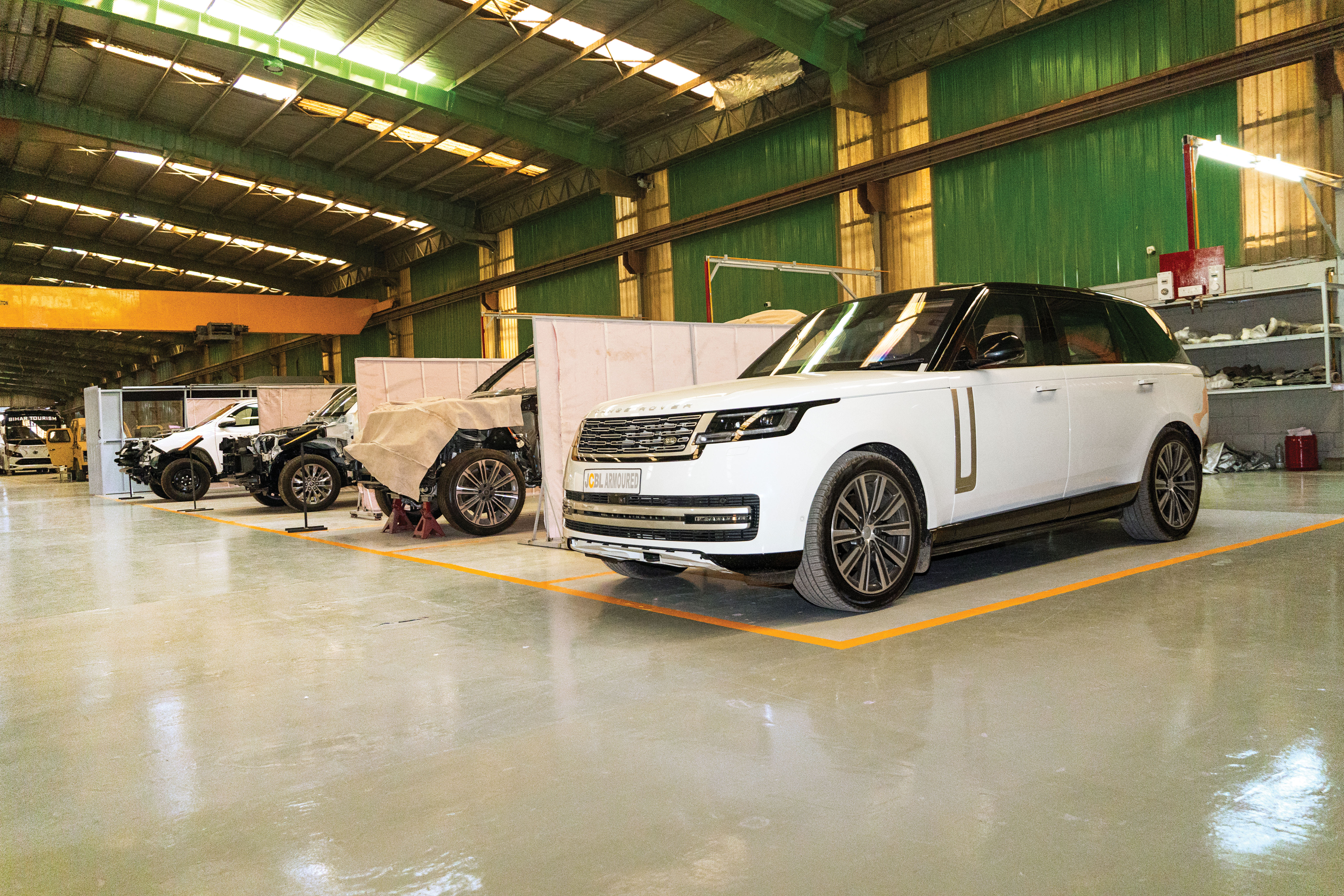
Sure, the doors of these armoured cars are several times heavier, and some small amount of space is taken up by the extra armour plating, but what impresses is that these SUVs still have the same luxury car vibe. They even look attractive and elegant from the outside. In fact, see one of JCBL’s armoured vehicles pass you by, and unless you know what to look for, you are unlikely to identify it as an armoured vehicle. This is exactly what owners of armoured cars want; anonymity. In fact, as we pass some Rolls-Royces and Range Rovers inside the factory, covers are hastily put on the cars. “Don’t shoot these cars,” comes the clear message; these cars clearly belong to owners who don’t want others to know their SUVs are protected.
Only light may pass

As we walk further into the factory, my attention is drawn by a set of glass panes riddled with bullet holes on display. Closer examination shows some bulletproof glass panels here are 40mm (1.6 inches) thick and have been shot with a pistol or a rifle. While some layers have been penetrated by the bullet, the integrity of the panel is still intact. Other panels include 32mm glass tested against pistol rounds. Then to illustrate just how tough a 40mm windscreen is, I’m asked to hit it with a hammer. As hard as I can! It’s a small hammer, and sure a sledgehammer would have been more effective, but I duly comply. Several times, my blows getting harder and harder. The windscreen, however, stays intact even after several hard blows; which frankly comes as a surprise.
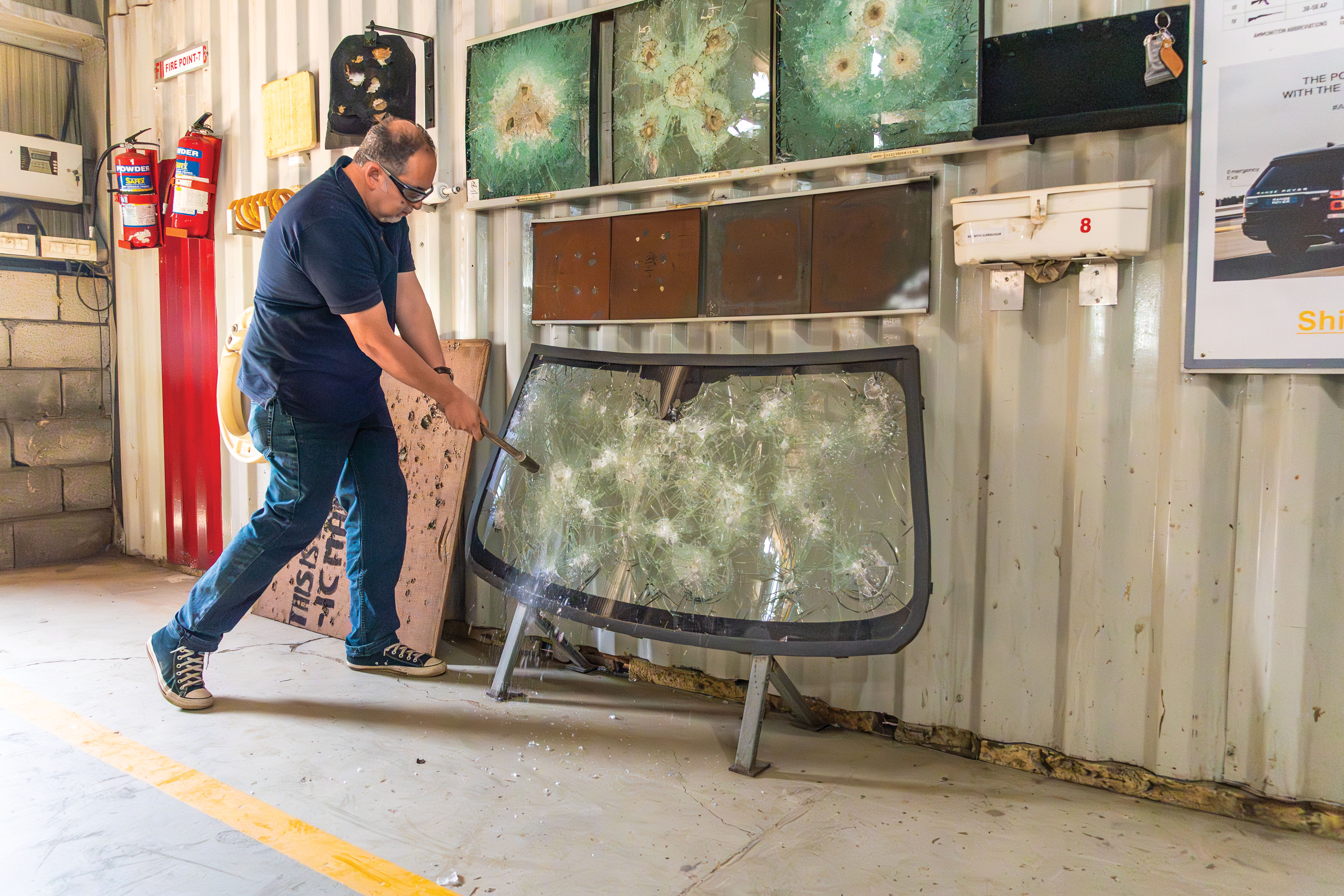
Even more fascinating, how otherwise brittle glass is made bulletproof. Generally done by layering multiple sheets of glass and polycarbonate (a tough plastic), the energy of the bullet is absorbed and dispersed across the layers, preventing it from breaking through. While the outside layers are hardened to withstand the initial impact, the layered polycarbonate absorbs the energy and slows the bullet down. Ballistic glass is classified according to CEN (European Committee for Standardisation) protection levels. Ranging from BR2 to BR7, these glasses provide protection against rounds such as 9mm for BR2, 0.44 Magnum for BR4, 7.62mm for BR6 (assault rifles like AK-47s) and finally BR7 for armour-piercing rifle rounds.
Suit of armour
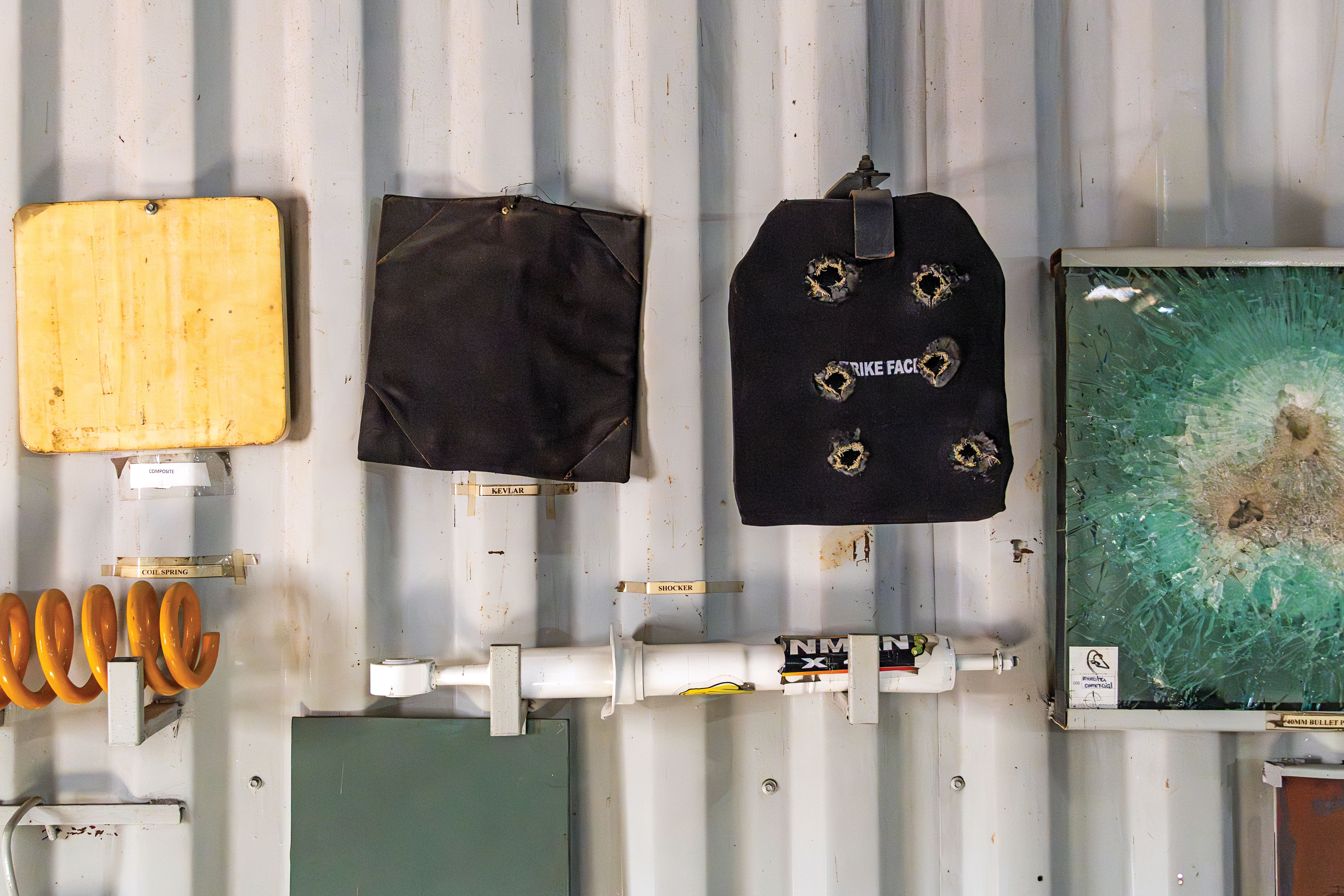
Displayed alongside are also examples of bulletproof materials. Panels of steel, composites made of layered sheets, and Kevlar, each display tested against different calibres of ammunition. One composite has been shot with a 7.62mm rifle round; it penetrated partially but did not exit the rear.

Further up in the factory, a Toyota Fortuner undergoing upgrades reveals the extent of modifications. The battery is enclosed in a steel box, and the other component specially shielded is the fuel tank; it’s protected by a layer of heavy-gauge steel around and beneath it.
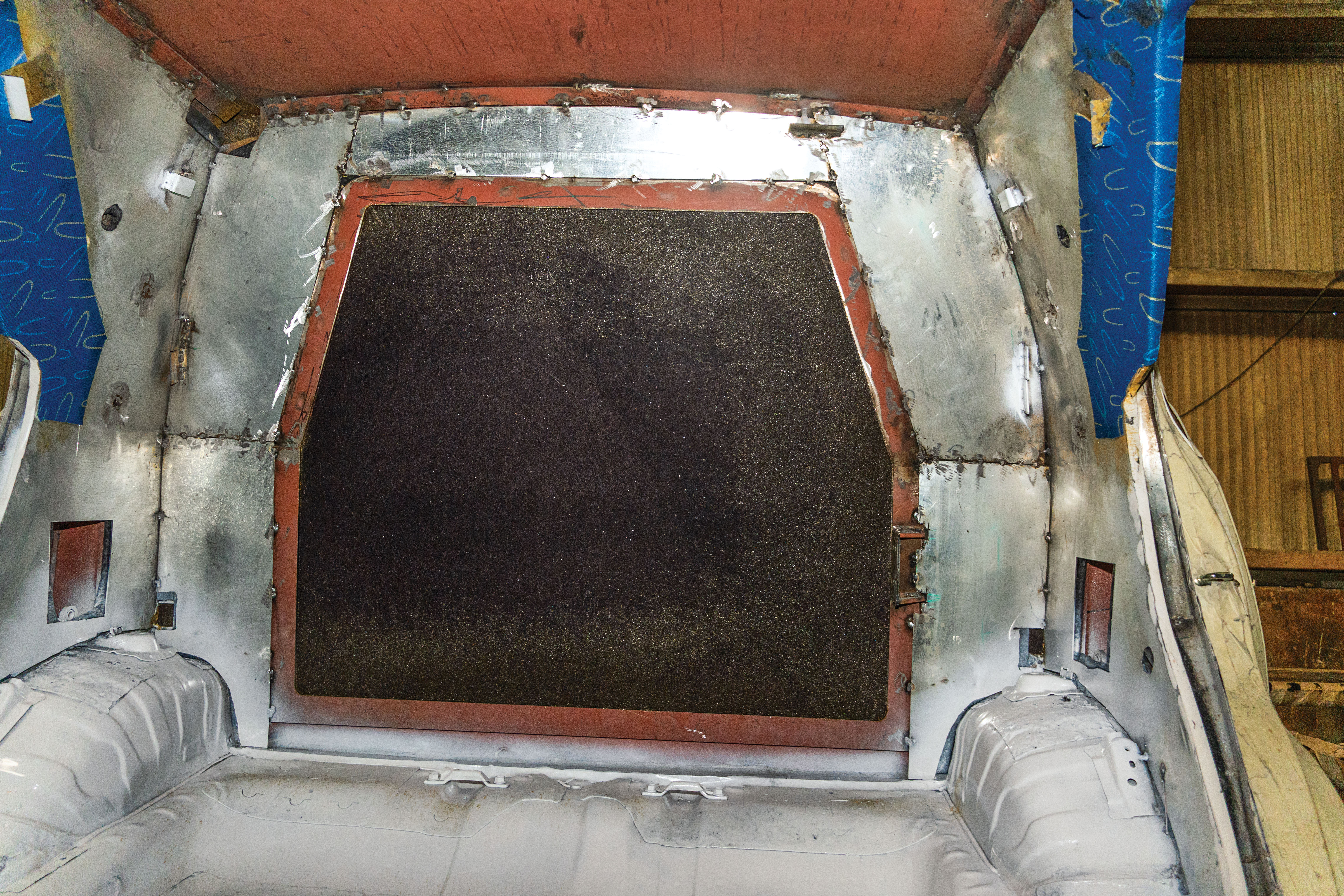
Inside the cabin, the rooflining isn’t just knitted or woven, it is made of a layer of ballistic steel. And metal reinforcements aren’t just fitted to the roof, the pillars and rear get the treatment as well, creating a sealed metal shell or safe-like compartment. Under the floor are Kevlar blankets, not installed for sound insulation but to protect against grenades thrown under the vehicle.
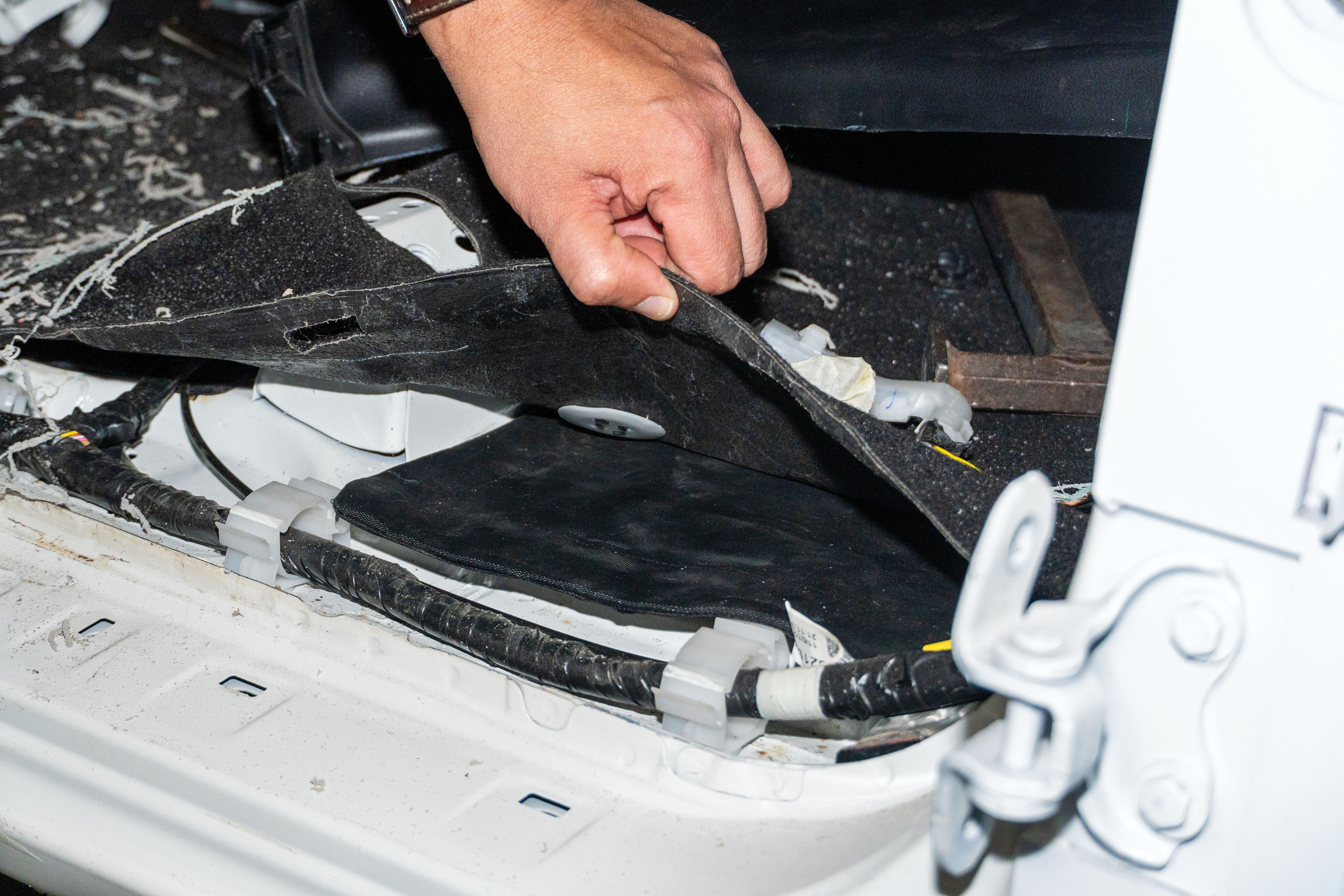
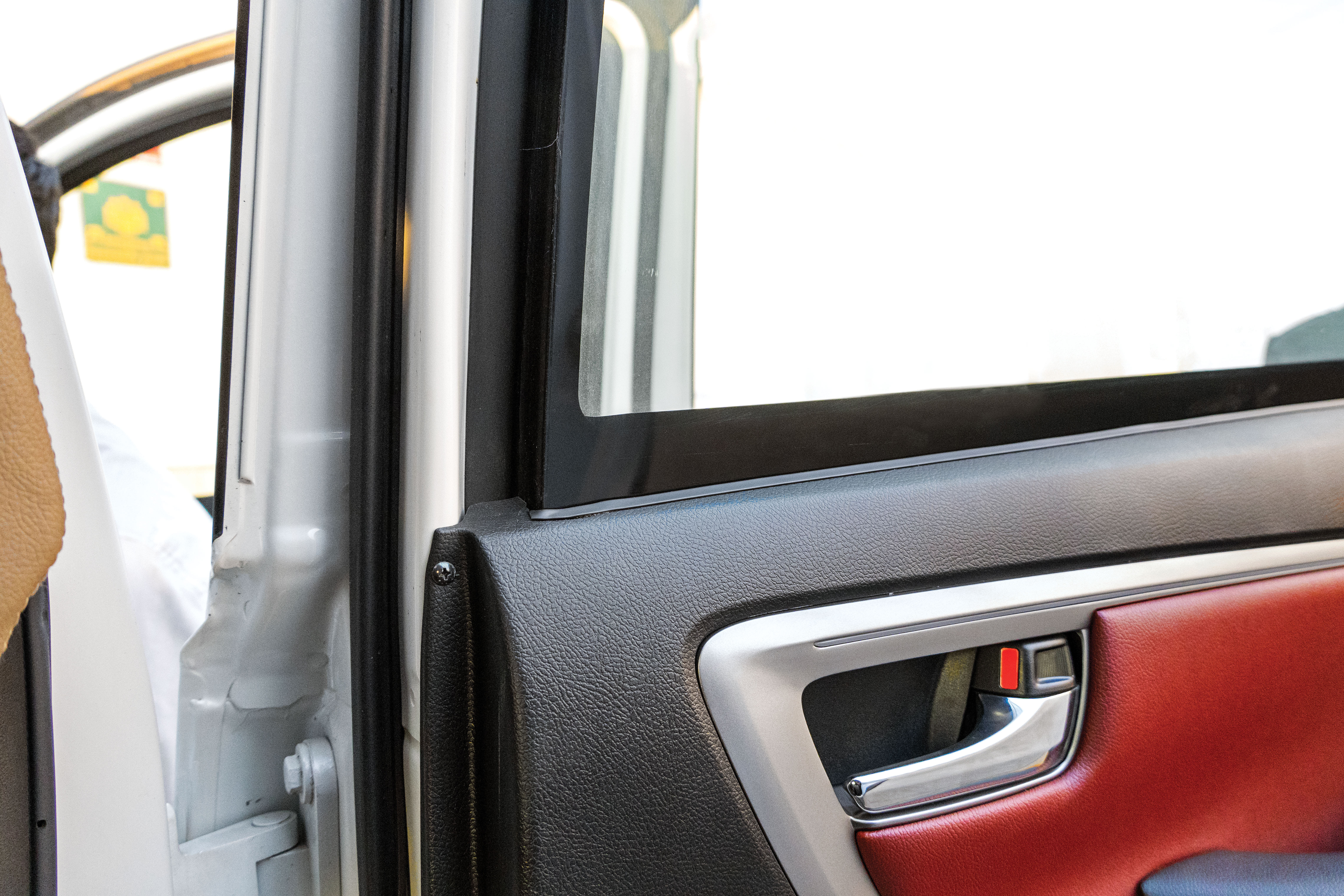
At the next station, we see the doors being put back on. They now contain bulletproof glass, layers of protective metal and composites. The doors now weigh around 80kg each, so the door frames need to be reinforced and big, uprated hinges need to be used. Also, up front, provision is made for the 40mm thick windscreen, the same type ‘tested’ earlier with a hammer, which also needs its own frame.
As we walk further along the ‘line’ to the next ‘station’, we see the wheels going back on. But the rims are not standard alloys, they are heavy-duty steel wheels, designed to carry the additional weight of the car, which is normally heavier by around 800kg or more. And this Fortuner even has run-flat inserts that can be used even if the tyres are fully shot out. To help handle all the extra weight, the Fortuner also gets upgraded springs and dampers.

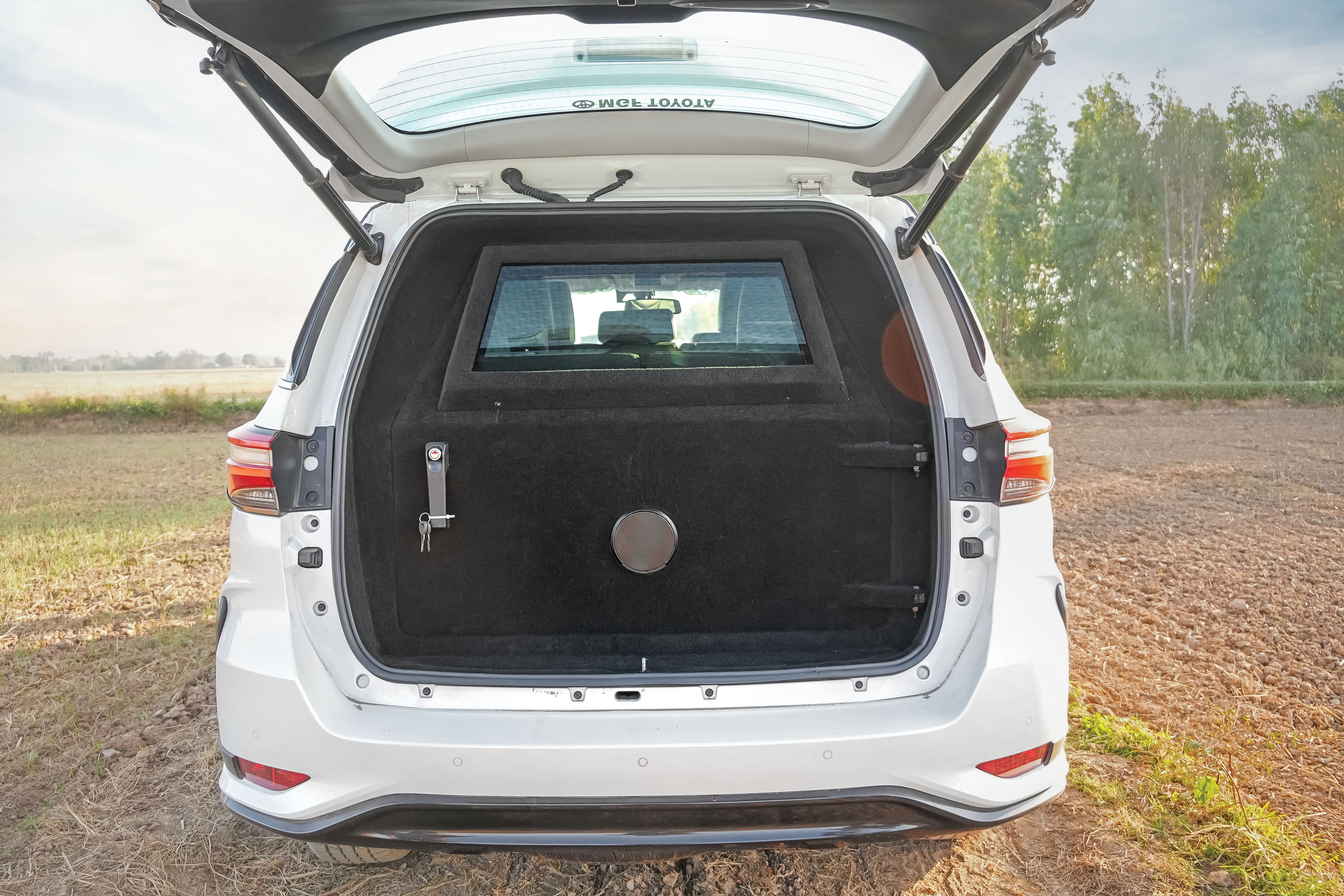
The rear fixed window, hatch and rear windshield, however, aren’t armoured. Inside the boot section is another solid metal door that has a window. This helps seal the occupants in a cocoon of safety and makes for a simpler solution. Also, a discreet opening allows occupants to reach through and operate a remote switch to release the hatch, in case they need to exit the car from the rear in a hurry and the doors are jammed or compromised.
Equally fascinating are other vehicles being converted inside the factory. A Toyota Land Cruiser and a Range Rover are fitted with similar protection levels, and an extended wheelbase Range Rover that has just been finished boasts of an extremely high Stanag level. No special wheels and tyres are needed for the Range Rover, however. The air suspension, alloys and brakes are strong enough to take the additional weight without modification, and inside, it retains the comfort and finish you expect of a Range Rover.
Real muscle
Getting behind the wheel of the armoured Fortuner, I need to exert considerable effort on the heavy door. Once inside the cabin, what comes as a surprise is that it’s as silent as a tomb. You are encased in heavy gauge metal and thick glass, so it would be.
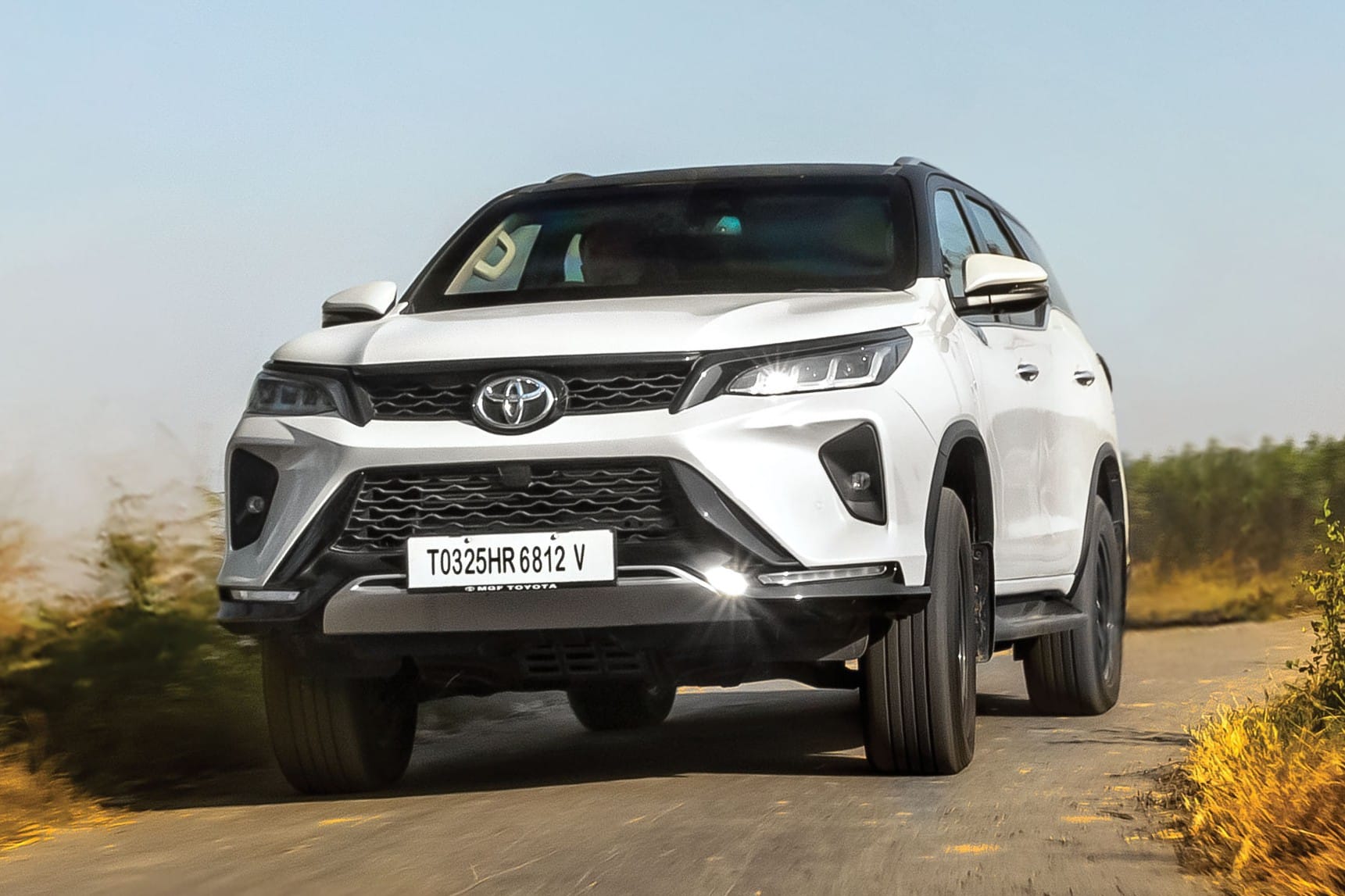
Then I start the diesel engine... but I barely hear the distinctive ‘old-man-coughing’ or chugging sound of the Fortuner starter. Even better, I can barely hear the diesel idle. It’s like I’m wearing earplugs! Once on the move, I immediately feel the extra weight and heft of the encased-in-steel chassis. While the torque from Toyota’s 2.8 GD diesel engine is good in lower gears and the Fortuner initially pulls well, I do feel the additional 800 odd kilos of armour when I need to accelerate from a steady speed. It isn’t quite like ‘dragging anchor’, but stir in turbo lag and that extra ton of weight, and you have a recipe for lethargy.
With the additional weight and the uprated springs, dampers and anti-roll bars, the Fortuner even rides much better. There’s almost no bobbing, hopping or secondary movement, and craters are ridden through almost silently. Sure, I feel the extra weight around corners, and the additional weight is impossible to ignore in tight turns, but at no point do I feel the Fortuner isn’t fully in control of all its mass. This, however, isn’t an SUV you want to corner hard in.
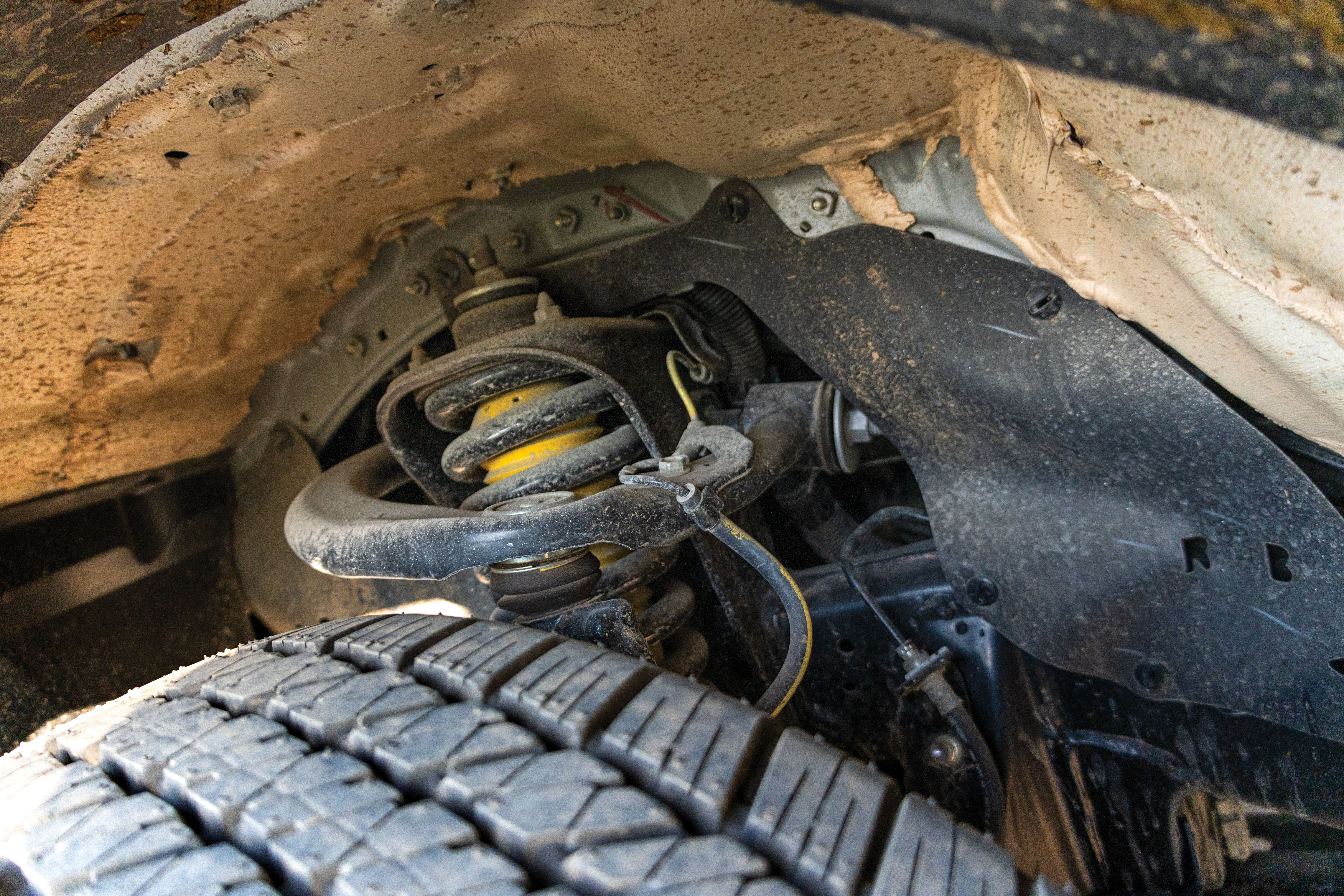
Also, the brakes need more bite and that’s despite the fact that this car already has uprated pads. You need more initial stopping power, heat dissipation is likely to be an issue after repeated hard stops and that’s especially true if you are trying to flee a dangerous situation or are on a long downhill section. And with all the extra weight, it will consume considerably more diesel. Still, for all the extra protection and the otherwise friendly driving manners, this SUV acquits itself pretty well.
So you want more protection?
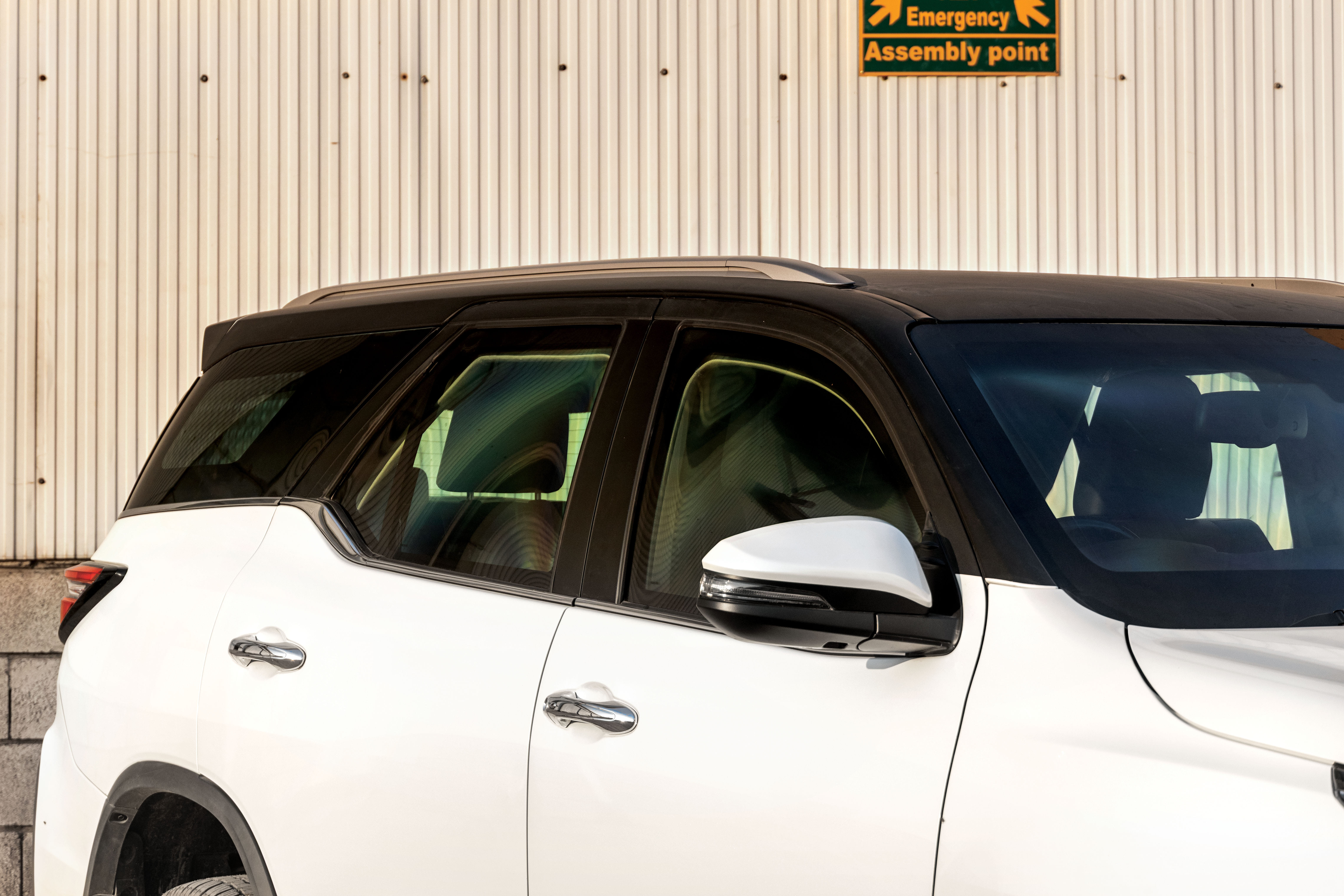
Taken together, the modifications illustrate the complexity of armouring a civilian vehicle. Reinforced suspension, run-flat systems, Kevlar blankets, ballistic steel and bulletproof glass all contribute to a package that is significantly heavier yet functional. And while the manner in which the vehicle drives is altered, it’s something drivers can easily adapt to.
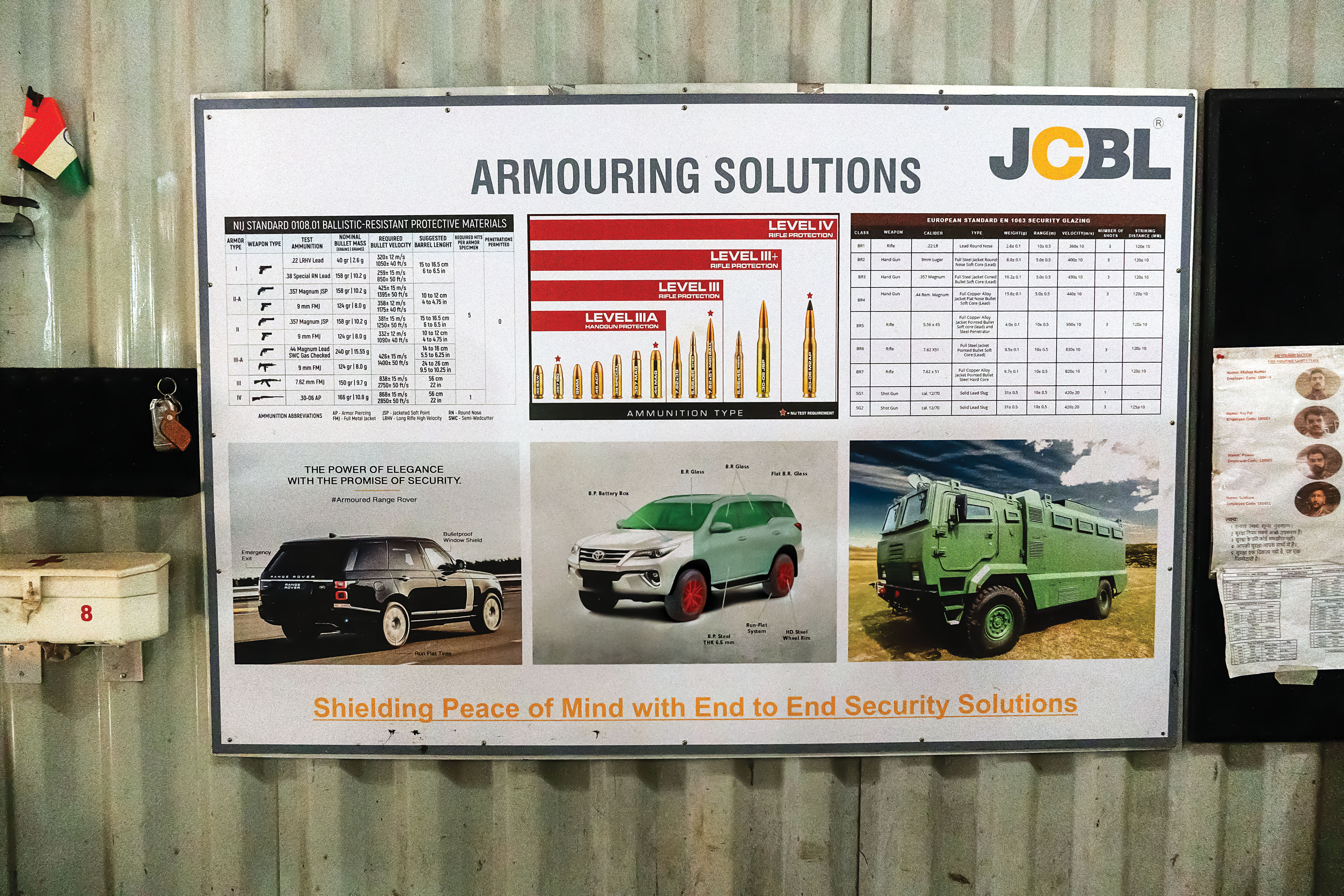 Before you sign on the dotted line, however, remember, all armoured vehicles must comply with CMVR rules and norms, you need clearance from the RTO, and higher-spec vehicles may need approval from the Home Ministry. So, what’s the bill likely to be? It’s difficult to be precise as options are plentiful, but the price of armouring a Fortuner at JCBL ranges from Rs 25 lakh to around Rs 40 lakh, depending on what you want or need on your car. Want to armour a luxury SUV? The increase in material cost and quality means prices range from Rs 55 lakh to Rs 1.5 crore. Then again, a small price to pay for safety.
QnA with JCBL CEO Rushank Doshi
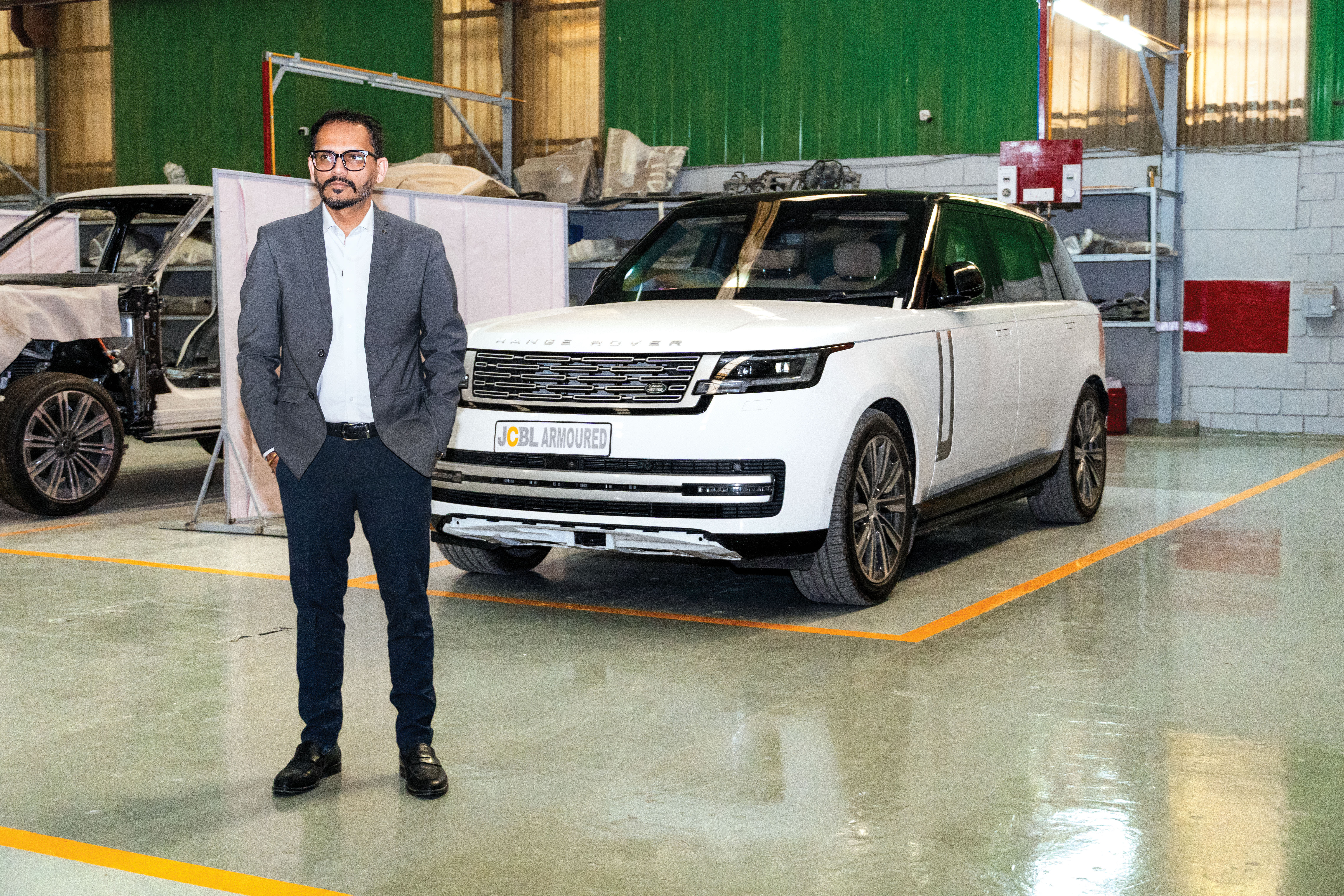
What makes JCBL armoured cars different and special?
We are bringing down the weight of bulletproofing from 1.2 tons to 800kg, which is the lightest in India. To do this, we are using composite armour and Kevlar to keep weight down. This makes JCBL armouring solutions unique.
Has the range and number of cars you receive for armouring increased over the years?
There is a sea change from 2010 or 2015 to today as far as the armouring industry is concerned. The reason is that it has today become something of a necessity for a certain strata of owners. This is true of luxury vehicles especially, and the service we offer can go up to Stanag levels 1, 2, 3; whatever the customer needs.
from Autocar India https://ift.tt/1xOz7yn


Comments
Post a Comment